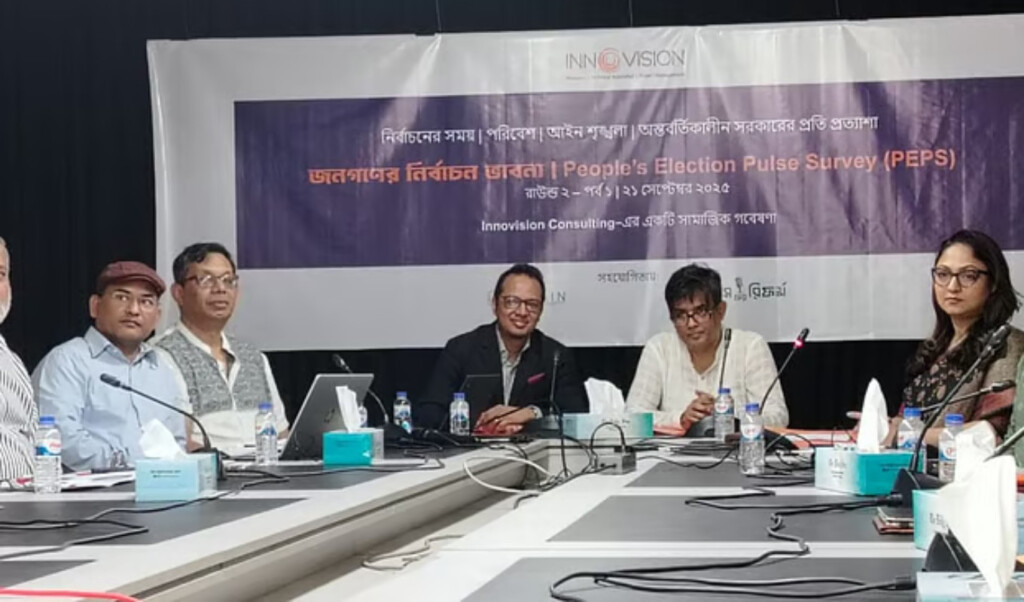
A recent survey has found that while 94.3% of respondents expressed interest in voting if the 13th National Parliamentary Election were held next year, 56% of voters admitted to having no understanding of the proportional representation (PR) system used in the upper house of parliament.
Survey Overview
- The results were presented on Sunday morning at the Daily Star building in Dhaka, during an event organised by Innovation Consulting under the theme ‘Public Perception of Elections’.
- Shafiqul Alam, Press Secretary to the Chief Adviser, attended the programme.
- Rubaiyat Sarwar, Managing Director of Innovation Consulting, highlighted the survey findings.
- The survey was conducted from 2 to 15 September 2025, with 10,413 eligible voters participating.
Key Findings
| Aspect | Finding |
| Voter interest | 94.3% would vote if elections were held next year |
| Support for February elections | 86.5% favour holding the election in February |
| Confidence in interim government | 69.9% believe the interim government can conduct a fair election |
| Confidence in safe voting | 77.5% feel they can vote safely |
| Concerns over law & order | 56% worry about law and order; note increase in extortion over past six months |
| Awareness of PR system | 56% unaware; younger generation more aware and positive than older generation |
| Evaluation of interim government | 78.7% rate their actions positively; satisfaction lower among highly educated respondents |
| University students | Less interested in voting than general respondents; more divided on election timing; also notice increased extortion |
| Minority religious communities | Show less confidence in interim government’s ability to conduct neutral elections |
Generational Differences
- The survey revealed that younger voters are more aware of the PR system and hold more positive attitudes towards it than older generations.
- However, Gen Z exhibits less confidence in the neutrality of police and administrative authorities during elections compared with senior respondents.
Education and Awareness
- Highly educated respondents displayed lower satisfaction with the interim government’s performance.
- They were more aware of the PR system, more supportive of it, and also more vocal about the rise in extortion.
- University students expressed less enthusiasm to vote, were more uncertain about election timing, and similarly noted a rise in extortion.
Minority Community Perceptions
- Members of religious minority communities showed comparatively less positive views regarding the interim government’s capacity to organise neutral elections.
The survey highlights a high level of voter interest alongside significant gaps in awareness of the PR system, law and order concerns, and differences in perception across generations, education levels, and minority groups.