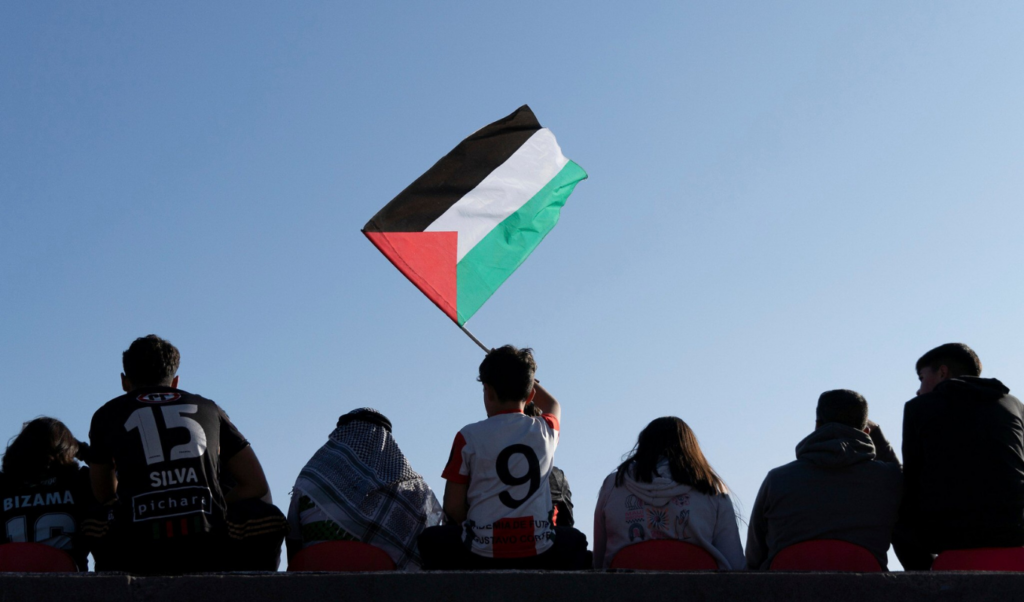
On Sunday, Britain, Australia, Canada, and Portugal formally recognised a Palestinian state after nearly two years of war in Gaza, with France, Belgium, and other nations expected to follow during the upcoming United Nations General Assembly (UNGA).
The State of Palestine was unilaterally proclaimed in 1988 by the Palestinian leadership in exile. Today, Israel continues to occupy the West Bank, while the Gaza Strip remains largely in ruins following repeated military conflicts.
According to an AFP tally, at least 145 out of 193 UN member states currently recognise the State of Palestine. Some recent confirmations from three African countries are still pending.
| Recognition Status | Countries / Regions |
| Recently Recognised | Britain, Canada (first G7 countries), Australia, Portugal |
| Expected to Recognise | France, Belgium, Luxembourg, Malta |
| Longstanding Recognisers | Russia, all Arab countries, almost all African and Latin American countries, most Asian countries including India and China |
| First Recogniser | Algeria (15 November 1988, minutes after PLO leader Yasser Arafat proclaimed the state) |
Additional waves of recognition occurred in late 2010 and early 2011, and the 2023–2025 Gaza conflict prompted another 13 countries to recognise Palestine.
Answer: At least 45 countries, including Israel, the United States, and their allies.
- Israel: Complete rejection of a Palestinian state under Prime Minister Benjamin Netanyahu.
- Asia: Japan, South Korea, Singapore
- Africa: Cameroon
- Latin America: Panama
- Oceania: Most countries
- Europe: Deeply divided, roughly 50-50 over recognition.
Historically, recognition was limited to Turkey and former Soviet bloc countries. Some former Eastern-bloc nations, such as Hungary and the Czech Republic, do not recognise Palestine bilaterally.
- Western and Northern Europe largely maintained non-recognition until Sweden recognised Palestine in 2014.
- Following the Gaza conflict, Norway, Spain, Ireland, and Slovenia recognised Palestine in 2024, followed by the UK and Portugal in 2025.
- Italy and Germany do not plan to recognise a Palestinian state.
Recognition of Palestinian statehood is a complex issue in international law, balancing political and juridical considerations.
Romain Le Boeuf, professor of international law at the University of Aix-Marseille, explained:
“States are free to choose the timing and form of recognition, with variations that are either explicit or implicit. There is no office to register recognitions. The Palestinian Authority maintains its own list of recognitions, but it is largely subjective. Other states may claim recognition without needing to justify themselves.”
Key points from international law include:
- Recognition does not create a state, nor does lack of recognition prevent its existence.
- While largely symbolic and political, three-quarters of UN member states affirm that Palestine meets the necessary criteria for statehood.
“I know for many people this seems only symbolic, but actually in terms of symbolism, it is sort of a game changer,” wrote Philippe Sands, Franco-British law professor, in the New York Times in August 2025.
“Because once you recognise Palestinian statehood… you essentially put Palestine and Israel on level footing in terms of their treatment under international law.”
Recognition Status Overview Table
| Category | Examples / Details | Notes |
| Recently Recognised | UK, Canada, Australia, Portugal | First G7 countries to recognise |
| Expected to Recognise | France, Belgium, Luxembourg, Malta | During UNGA summit on two-state solution |
| Longstanding Recognisers | Russia, Arab countries, most African/Latin American/Asian countries | Includes India, China |
| Non-Recognisers | Israel, USA, Japan, South Korea, Singapore, Italy, Germany | Europe split ~50-50 |
| Historical First | Algeria, 15 Nov 1988 | Minutes after Arafat’s proclamation |