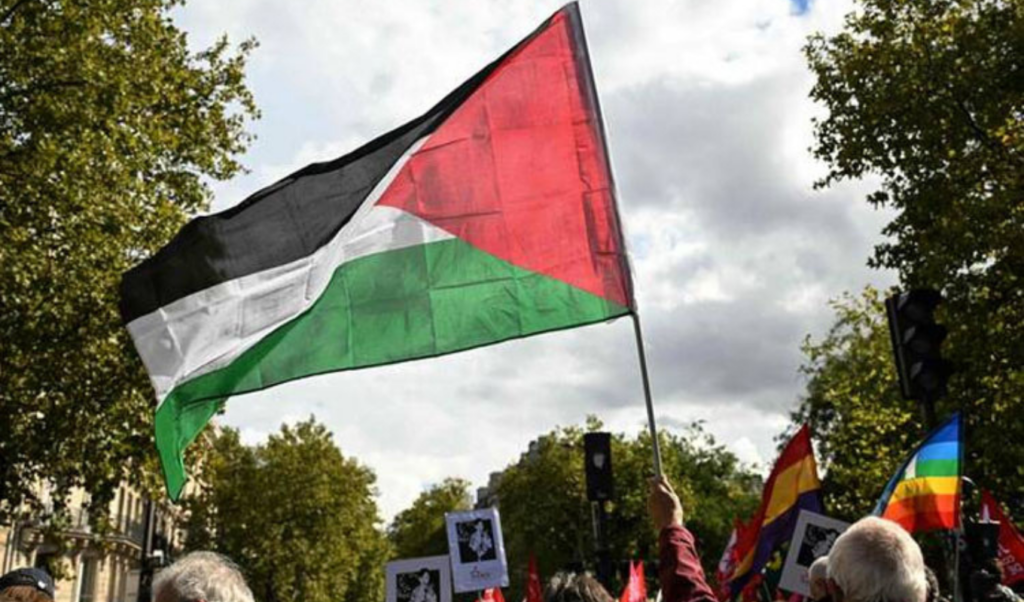
A majority of European countries now officially recognise the State of Palestine, following declarations in New York on Monday by France, Belgium, Luxembourg, Malta and others, after nearly two years of war in Gaza.
This article provides an overview of diplomatic recognition of Palestine, which was unilaterally proclaimed by the Palestinian leadership in exile in 1988. Currently, Israel occupies the West Bank, while the Gaza Strip remains largely in ruins.
Answer: Nearly 80 percent of UN members.
- According to an AFP tally, at least 151 countries out of 193 UN members now recognise the State of Palestine.
- Confirmation is pending from three African nations.
- Six European nations—France, Belgium, Luxembourg, Malta, Andorra, and Monaco—added their names at the UN on Monday.
- The day before, the United Kingdom and Canada became the first G7 countries to recognise Palestine, followed by Australia and Portugal.
Other recognisers include:
- Russia, all Arab countries, almost all African and Latin American states, and most Asian nations, including India and China.
- Algeria was the first to officially recognise Palestine on 15 November 1988, immediately following the declaration by late PLO leader Yasser Arafat.
- Subsequent waves of recognition occurred in the months after 1988 and again in late 2010 and early 2011.
- The 2023 Israeli offensive in Gaza, triggered by a Hamas attack on Israel on 7 October, has prompted 19 additional countries to recognise Palestine.
Answer: At least 39 countries, including Israel, the United States, and their allies.
- Israel: Prime Minister Benjamin Netanyahu’s government completely rejects the notion of a Palestinian state.
- Asia: Japan, South Korea, Singapore.
- Africa: Cameroon.
- Latin America: Panama.
- Oceania: Most countries in the region.
Europe’s historical stance:
- Until recently, Europe was divided, with only Turkey and some former Soviet bloccountries recognising Palestine before the mid-2010s.
- Some Eastern bloc countries, like Hungary and the Czech Republic, still do not recognise Palestine bilaterally.
- Western and Northern Europe were mostly united in non-recognition, except for Sweden, which recognised Palestine in 2014.
- Following the 2023 Gaza war, Norway, Spain, Ireland, and Slovenia recognised Palestine in 2024, along with the most recent additions.
- Italy and Germany do not plan to recognise a Palestinian state.
Legal perspective:
- Romain Le Boeuf, professor of international law at the University of Aix-Marseille, describes recognition as “one of the most complicated questions”, lying between the political and legal spheres.
- States have discretion in the timing and form of recognition, with no formal registry.
- Recognition is largely symbolic, and international law makes it clear: “Recognition does not mean that a state has been created, no more than the lack of recognition prevents the state from existing.”
Political impact:
- Around three-quarters of countries believe Palestine meets the necessary conditions to be a state.
- Philippe Sands, Franco-British law professor, told the New York Times: “Once you recognise Palestinian statehood… you essentially put Palestine and Israel on level footing in terms of their treatment under international law.”
Summary Table: Recognition Status
| Recognition Status | Examples of Countries |
| Recognises Palestine | France, Belgium, Luxembourg, Malta, UK, Canada, Russia, Arab states, India, China |
| Does Not Recognise | Israel, USA, Japan, South Korea, Singapore, Cameroon, Panama, Italy, Germany |
Recognition of Palestine may seem symbolic, but it has real implications in diplomacy and international law, particularly regarding parity with Israel and potential future negotiations.