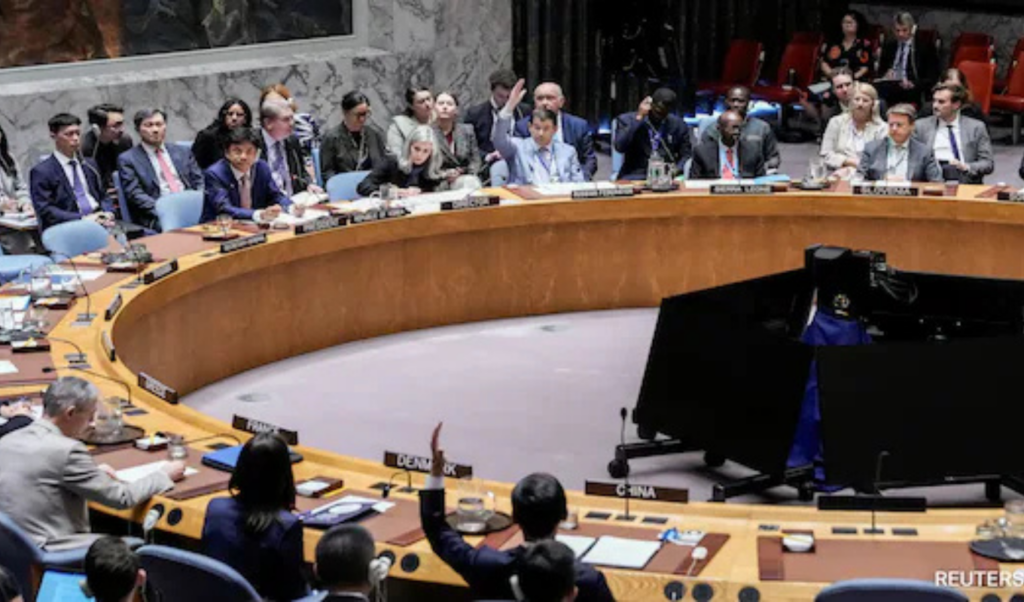
A series of UN sanctions on Iran, initially lifted under the landmark 2015 nuclear deal, were reinstated late on Saturday.
The reimposition followed action by the “E3” European group – Britain, France, and Germany – which triggered a mechanism in the deal, alleging that Tehran had failed to meet its obligations.
Here is a detailed overview of the so-called “snapback” process and its implications:
The sanctions are aimed at companies, organisations, and individuals that contribute directly or indirectly to Iran’s nuclear programme or the development of its ballistic missiles.
Grounds for sanctions include:
- Supplying necessary equipment or technology.
- Providing expertise or technical support.
- Offering financial assistance.
The sanctions cover a broad spectrum of Iran’s economy, including:
| Sector | Measures |
|---|---|
| Conventional Weapons | Embargo prohibiting any sale or transfer of arms to Iran. |
| Nuclear & Ballistic Technology | Ban on imports, exports, or transfers of parts and technologies related to nuclear and ballistic programmes. |
| Financial Assets | Freeze on assets abroad of entities and individuals linked to Iran’s nuclear programme. |
| Travel | Ban on travel to UN member states for individuals engaged in prohibited nuclear activities. |
| Banking & Finance | UN member states required to restrict access to financial facilities supporting Iran’s nuclear or ballistic activities. |
| Global Compliance | Violators may face asset freezes worldwide. |
In addition to UN sanctions, the European Union may reimpose its own measures. These are designed not only to hinder nuclear development but also to inflict fiscal pressure, compelling Tehran to comply.
Western nations fear that Iran may pursue nuclear weapons, though Tehran maintains it is developing nuclear technology solely for civilian purposes.
Meanwhile, the United States already enforces its own sanctions, including restrictions preventing other countries from buying Iranian oil, following President Donald Trump’s withdrawal from the nuclear deal in his first term.
The “snapback” process reactivates UN resolutions, but its practical implementation requires member states to update their domestic laws to ensure compliance.
- EU and Britain are responsible for passing legislation to enforce the sanctions, though no specific details have been released.
While UN Security Council resolutions are legally binding, they are frequently violated.
- Countries such as China and Russia, which have denounced the snapback as illegal, may refuse to comply.
- Some nations, including China, have continued trading with Iran despite US sanctions.
European powers anticipate that Russia will not comply, while uncertainty remains regarding China, which imports significant volumes of Iranian oil.
“There is a cost to circumventing sanctions, a political cost, but also a financial and economic cost because financial transactions become more expensive,” said Clement Therme, associate researcher at the International Institute for Iranian Studies, linked to Sorbonne University.
Shipping companies and international traders are among the businesses most likely to feel the financial strain.
“In the case of UN sanctions, we probably won’t see a full blockade, but rising costs instead,” Therme added.
Key Takeaways
| Topic | Details |
| Trigger | E3 (UK, France, Germany) alleges Iran is not meeting nuclear obligations. |
| Target | Companies, organisations, individuals linked to nuclear/ballistic programmes. |
| Sanctions | Arms embargo, technology bans, asset freezes, travel restrictions, banking limits. |
| EU Role | May impose additional measures to pressure Iran economically. |
| Enforcement Risk | Compliance uncertain, especially with China and Russia. |
| Economic Impact | Higher transaction costs; shipping and trade sectors affected. |
Sources: UN statements, AFP, International Institute for Iranian Studies (IFRI), Reuters