Abdul Hannan Masud, senior joint co‑ordinator of the National Citizens’ Party (NCP), has come under heavy criticism after describing the alleged gang‑rape of a Marma student in Khagrachhari as a “fake rape”. Following widespread backlash, he has publicly expressed regret and issued an apology.
Below is a reorganised, full‑length account of events, statements and reactions, presented in British English.
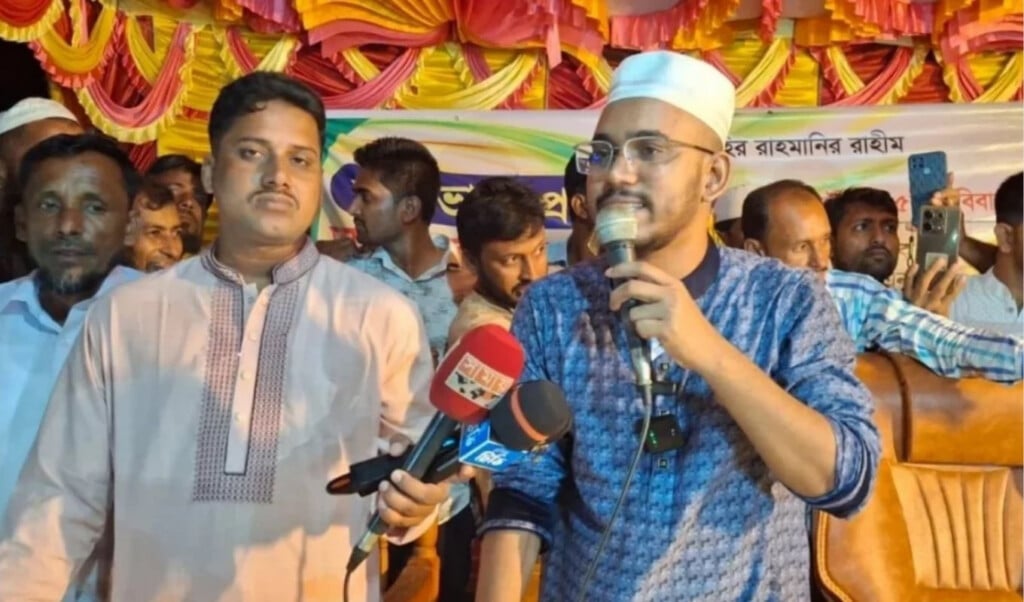
At a public gathering in Hathia (a sub‑district of Noakhali), Hannan Masud reportedly claimed the Khagrachhari incident was being used to foment unrest in the hill districts and suggested external interference. His comments included assertions that the incident was a contrived provocation intended to set hill peoples against plains communities.
After the remarks provoked strong criticism on social media and elsewhere, Masud posted on Facebook that his use of the phrase “fake rape” was unintentional and that he was “embarrassed and sorry” for the wording. He emphasised that he did not, in any way, deny or condone the “abhorrent crime” of rape and insisted perpetrators should receive the harshest punishments.
His apology post (full essence preserved) read, in effect: “Yesterday I inadvertently used the phrase ‘fake rape’ at a meeting in Hathia. That was not my intention. One cannot deny the heinous crime of rape. The rapist must be punished severely. I am embarrassed and regret using that unintended expression and hope supporters and critics alike will view it as a momentary slip.”
Despite the apology, the controversy continued to escalate.
On Monday morning (29 September), Alik Mru, the NCP’s central joint organising secretary for the northern region and the party’s sole tribal representative on the central committee, resigned from his post. In his resignation letter he called Hannan Masud’s remarks “falsehood” and protested the party’s silence over the matter.
Masud subsequently deleted an earlier Facebook post that had been more strident in tone — in that post he charged that the Khagrachhari incident was being exploited to destabilise the hills and that outside forces (he named India implicitly) were playing a role. He declared that he would “fight even with his life” against those threatening the country’s sovereignty. He then removed that post and replaced it with the apology (quoted above).
Key actors and positions
| Person | Position | Reaction / Role |
| Abdul Hannan Masud | Senior Joint Co‑ordinator, NCP | Made the contentious “fake rape” remark, later apologised and deleted harsher post |
| Alik Mru | Central Joint Organising Secretary (North), NCP; only tribal representative on central committee | Resigned in protest, labelled Masud’s comment “misinformation” |
| NCP (party) | National Citizens’ Party | Faced accusations of silence after the Khagrachhari violence; internal dissent evident |
In the remarks that ignited the row, Masud argued (as reported) that there was a conspiracy targeting Bangladesh’s hill districts, alleging external actors sought to destabilise the region. Paraphrasing his claims:
- He suggested the Khagrachhari incident had been used to provoke division between plains (Bengali) and hill communities.
- He warned that “India” was attempting to seize control of hill territories and had played a final “Trump card” by fomenting instability.
- He maintained that creating confrontation between Bengali and hill communities via one alleged rape incident was part of that strategy, and urged the government to respond.
These stronger assertions were among the passages Masud later removed and for which he expressed regret over the language used.
In his apology and follow‑up messages, Masud also appealed to citizens of both the hills and the plains to remain united and to reject the machinations of “defeated and fascistic forces”. He urged law‑enforcement and the government to listen to both sides and to act to restore calm through dialogue.
He wrote that all citizens — from the hill districts and the lowlands alike — should stand together, dismiss conspiracies and resolve the situation through conversation and proper law‑enforcement action.
The Khagrachhari case — an allegation of gang rape of a Marma student — has already sparked local protests and violence in the hill district, with three people reportedly shot dead during unrest that followed. The episode has become highly sensitive nationally, triggering accusations, counter‑accusations and demands for impartial investigation.
Masud’s initial comments were therefore widely seen as inflammatory because they appeared to question the veracity of an alleged sexual‑violence incident and to frame it as an instrument of geopolitical interference. That perception prompted not only social outrage but also internal party protest and at least one high‑level resignation.