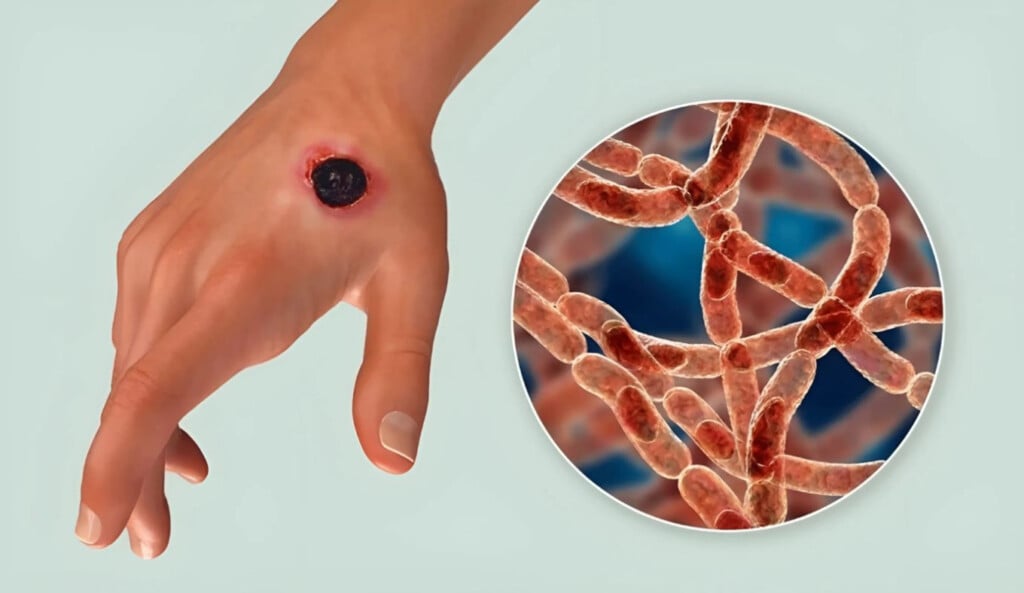
In Rangpur, anthrax has been newly identified in two residents of Kaunia and one in Mithapukur Upazila. The confirmation came on Wednesday night (1 October) from Dr Shaheen Sultana, Civil Surgeon of Rangpur District.
Earlier, eight cases were detected in Pirgacha Upazila. With these new infections, the total number of confirmed anthrax patients in the district has risen to 11.
According to the Civil Surgeon’s Office, the outbreak appears to be linked to the slaughter of an infected cow:
| Date/Period | Location | Incident | Outcome |
| 15 September | Amaypur village, Imadpur Union, Mithapukur Upazila | A cow owned by farmer Ibrahim Mia became ill and was slaughtered. Locals handled and cut the meat. | Several people later developed skin infections. |
| 17 September (approx.) | Mithapukur & Kaunia | Residents including Sohrab Hossain, Abdur Razzak, Monir Hossain and Mojibur Rahman showed skin lesions. | Samples collected and sent to IEDCR. One tested positive for anthrax. |
| August (early) | Pirgacha Upazila | Sudden deaths of multiple cattle raised alarm. | Health and livestock departments began surveillance. |
| 13–14 September | Pirgacha | IEDCR collected samples from 12 individuals. | 8 tested positive for anthrax. |
| Late September | District-wide | Further 8 samples collected and sent to IEDCR. | Awaiting/under analysis. |
Current Case Numbers in Rangpur District
| Upazila | Confirmed Cases |
| Pirgacha | 8 |
| Kaunia | 2 |
| Mithapukur | 1 |
| Total | 11 |
Doctors explained that anthrax is primarily transmitted from infected livestock to humans through direct contact with:
- Mucus
- Saliva
- Blood
- Meat
- Bones
- Internal organs
They emphasised that anthrax does not spread from person to person.
The primary symptom in humans is the appearance of ulcer-like sores on the skin. These develop after contact with contaminated animal products.
Medical professionals have urged the Department of Livestock Services to intensify its vaccination programme for cattle and goats in order to curb the outbreak and prevent further human infections.