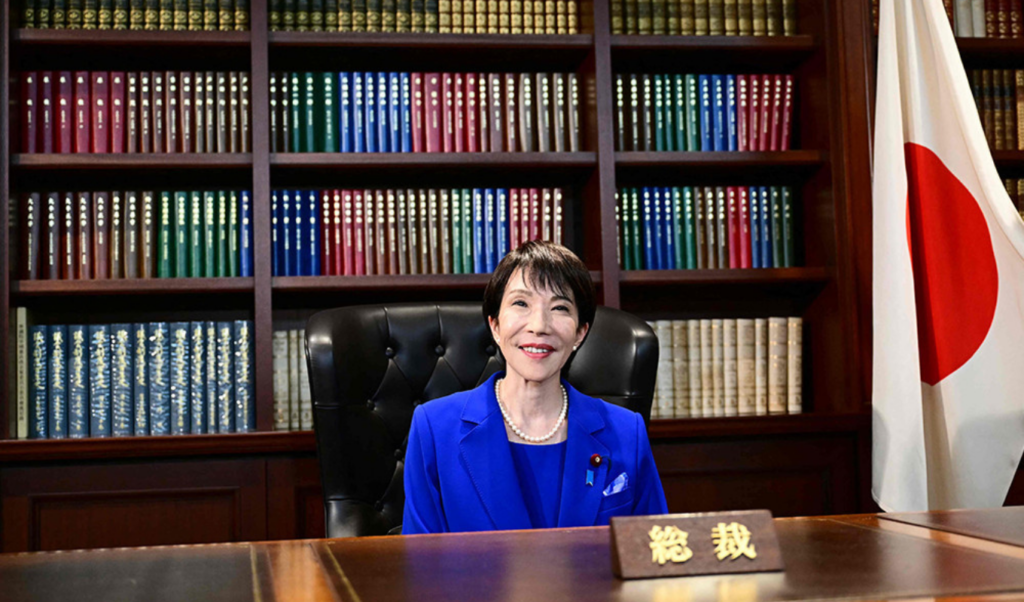
Sanae Takaichi is poised to become Japan’s first female prime minister, yet many of her positions remain socially conservative in a country still widely regarded as patriarchal.
Takaichi, 64, whose political hero is Margaret Thatcher, became head of the ruling Liberal Democratic Party (LDP) on Saturday and is expected to take office later this month.
She has pledged to appoint a cabinet with “Nordic” levels of female representation, an increase from just two women under outgoing premier Shigeru Ishiba.
Takaichi has also spoken about women’s health, sharing candidly her own experiences with menopause, and said she “hopes to raise awareness” about related issues.
Despite these gestures, Takaichi’s stance on gender issues places her on the right wing of an already conservative LDP:
| Issue | Takaichi’s Position |
| Surname Law | Opposes revising the 19th-century law requiring married couples to share the same surname, meaning women usually take their husbands’ names |
| Imperial Succession | Wants male-only succession to continue in Japan’s imperial family |
| Same-Sex Marriage | Fundamentally opposed |
| Gender Equality Policies | Shows little interest, according to experts |
Yuki Tsuji, a professor of politics and gender at Tokai University, said: “Takaichi has no interest in women’s rights or gender equality policies. It is unlikely that any change will occur in this area compared to previous LDP administrations.”
Tsuji added that the symbolic significance of having a woman as prime minister is “quite substantial”, but warned that pressure to achieve results is high. Failure could foster negative perceptions of female leaders.
Some citizens welcomed the historic appointment. Yuka, a Tokyo office worker in her 50s, said: “We can proudly tell the world Japan will likely have a woman leader.”
However, she remained sceptical about substantive progress on gender issues.
- In the corporate world, women hold only 13.2 percent of management positions (2021), the lowest among OECD countries.
- Japan ranked 118 out of 148 in the World Economic Forum’s 2025 Global Gender Gap Report.
Yuka added: “Many women are forced to give up at the height of their careers because they have to take care of their children or ageing parents.”
Women remain underrepresented in politics, making up roughly 15 percent of lawmakers in the lower house of parliament.
- Notable exception: Tokyo governor Yuriko Koike, a three-term politician who has implemented women-friendly policies including free day care for preschool children.
Female MPs face challenges balancing political duties and household responsibilities, alongside routine sexist remarks.
- Example: Former deputy prime minister Taro Aso in 2024 described then-foreign minister Yoko Kamikawa as “an aunty” and “not that beautiful”.
The #MeToo movement has struggled to gain traction in Japan, with few sexual assault victims coming forward. Those who have, such as former soldier Rina Gonoi and journalist Shiori Ito, received both praise and a wave of online harassment.
Ryuki Tatsumi, 23, a caregiver for disabled people, reflected on the historical significance:
“In the past, there were female emperors but there was no woman prime minister. So I think this can be an opportunity for Japan to make progress.”
Key Facts:
| Item | Detail |
| New Prime Minister | Sanae Takaichi (64) |
| Party | Liberal Democratic Party (LDP) |
| Gender Policies | Conservative, opposed to same-sex marriage and male-only surname law |
| Cabinet Goal | Nordic-level female representation (up from 2 women) |
| Women in Management | 13.2% in 2021, lowest among OECD members |
| Political Representation | 15% in lower house |
| Global Gender Gap Ranking | 118/148 (2025) |