Thursday, 20th August 2026

Khabor Wala Desk
Published: 13th October 2025, 8:09 AM
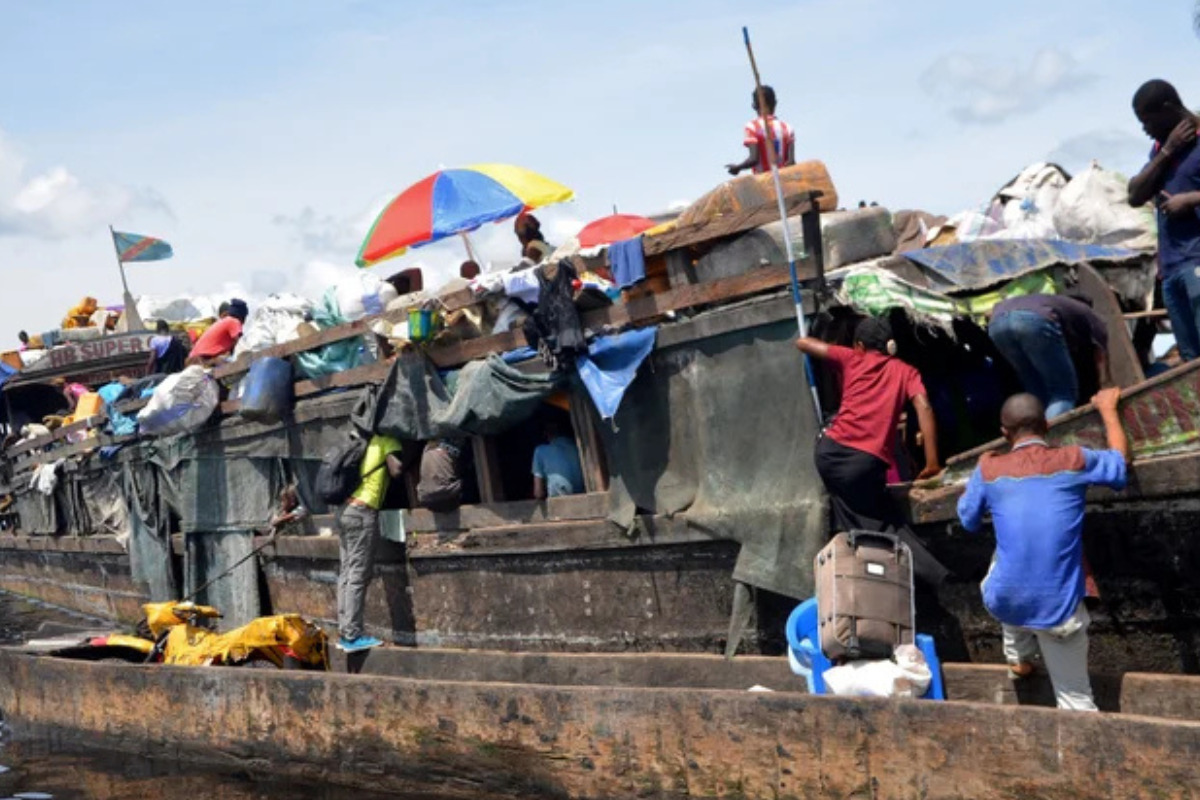
In Mbandaka, a river port city in northwestern Democratic Republic of Congo (DRC), the cemetery bears silent testimony to the human cost of the country’s chronic river boat accidents. Despite the evident dangers, many residents feel they have no choice but to travel by boat, given the lack of alternative transport in the vast, landlocked nation, which spans the size of Western Europe.
“I know it’s too risky but I have no other choice. There aren’t any other means of transport,” said Nestor Mokwanguba, a teacher, before boarding the King’s Sword, a motorised dugout canoe bound for Bolomba, 250 kilometres (155 miles) away.
Mbandaka, the capital of Equateur province, lies in the dense Congo Basin rainforest, where rain falls almost year-round. Existing land routes are largely dirt tracks, often impassable during wet conditions.
| Metric | Data |
| Total roads in DRC | 58,000 km (36,040 miles) |
| Tarmacked roads | 2,700 km (<5%) |
| Size of country | 2.3 million km² (900,000 sq miles) |
As a result, locals rely on poorly maintained “river buses”. These so-called whaleboats operate day and night along the Congo River, Africa’s second-longest and the world’s deepest river. They are overloaded with passengers and cargo, and safety standards are often ignored.
The King’s Sword emitted thick black smoke as it left the dock, carrying passengers who paid around $5 (15,000 Congolese francs) for the precarious journey.
“They’re travelling in inhuman conditions,” said the mayor of Mbandaka, who came to the riverbank to check that the boat was not overloaded and that passengers would receive life jackets.
Since July 2024, at least 148 people have died in Congo River boat accidents, with several dozen still missing, according to AFP. These figures are likely underestimated, as passenger lists are rarely maintained.
Among the victims is Jean-Florent Munzanza, aged 28, who drowned when his boat capsized last year. His friend, Ephesien Mpambi, also 28, survived the accident.
“There were no storms or waves, but the boat was overloaded,” Mpambi recalled.
The vessel continued to take on more passengers after each stop, despite protests.
“If we don’t load the boats enough, we won’t break even,” said Clovis Engombe, vice-president of the local shipowners’ association.
“We are traders first and foremost, and there are no roads, so everyone wants to get on the boats.”
The capsizing occurred 25 kilometres from Mbandaka, leaving Mpambi struggling to cling to debris in the water while his friend perished.
“Now I’m afraid of the river,” he admitted.
The DRC government has repeatedly reminded boat owners that night travel, overloading, and lack of life jackets are illegal.
President Felix Tshisekedi, at the start of his first term in 2019, announced an ambitious infrastructure plan to renovate and construct roads connecting the north-south and east-west axes of the country. However, funding shortages and logistical difficulties have slowed progress.
In Mbandaka cemetery, Munzanza’s mother, Florence, wept by her son’s grave:
“Our son is dead, people are dead, and the government has done nothing. The government doesn’t care, and the whaleboat owners are never punished.”
The reliance on river transport in the DRC remains a dangerous necessity, highlighting the urgent need for infrastructure development and enforcement of safety regulations to prevent further loss of life.


Comments