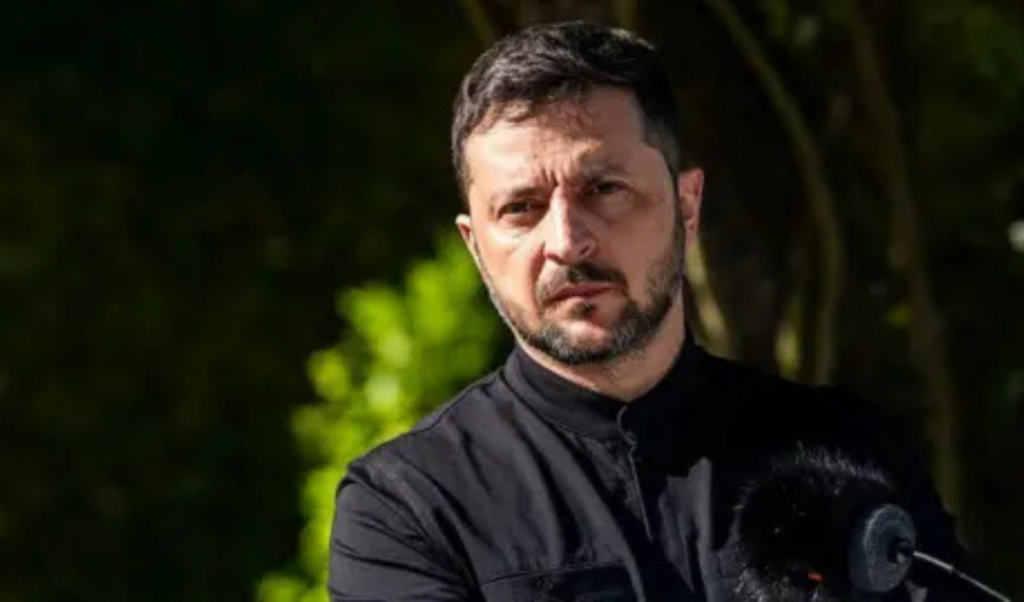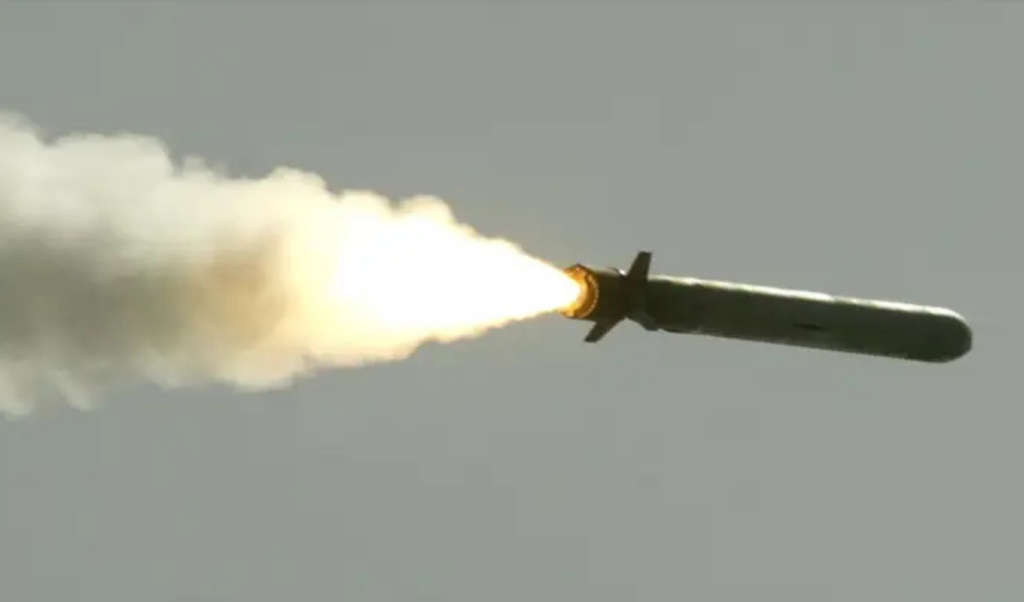
The Tomahawk cruise missile — a long-serving pillar of the United States’ military power — is once again in global focus as discussions intensify between former President Donald Trump and Ukrainian President Volodymyr Zelensky. For over four decades, this precision missile has symbolised American military might, having been deployed successfully across multiple theatres of war.
Now, more than three years into Russia’s full-scale invasion of Ukraine (launched in February 2022), Kyiv seeks to acquire Tomahawks to strengthen its deep-strike capabilities — potentially shifting the strategic landscape. Yet, analysts remain divided on whether these missiles could truly alter the course of the war.
Their delivery, however, would carry immense symbolic and political weight — signalling renewed American commitment to Ukraine following the tense Oval Office meeting between Trump and Zelensky earlier this year, and sending a clear warning to Russian President Vladimir Putin.
Trump, a day before his meeting with Zelensky, revealed that he had spoken with Putin and planned to meet him “soon” in Budapest, further intensifying the geopolitical intrigue.
Below are five key insights into the Tomahawk missile — its capabilities, history, and implications for the ongoing war.
The BGM-109 Tomahawk is a subsonic, long-range cruise missile that has served the US military for over 42 years, playing a central role in nearly every major American intervention.
| Specification | Details |
| Range | Up to 1,600 km (approx. 1,000 miles) |
| Speed | 880 km/h (approx. 550 mph) |
| Flight Path | Extremely low altitude — just dozens of metres above the ground |
| Launch Platforms | Submarines and surface ships |
| Total Produced | 8,959 units since inception |
| Fired in Operations | Over 2,350 missiles |
| Nuclear Version | Decommissioned in 2013 |
Developed by Raytheon, the Tomahawk’s low-flying trajectory and pinpoint accuracy have made it indispensable in long-distance strikes with minimal exposure to enemy radar systems.
The missile’s combat debut occurred in 1991 during Operation Desert Storm against Saddam Hussein’s Iraq. Since then, it has seen continuous use across major American military operations.
Recent Deployments Include:
| Year | Target / Operation | Number of Missiles Fired |
| 1991 | Operation Desert Storm (Iraq) | Dozens |
| 2024 (Jan) | Against Huthi rebels in Yemen | ~80 |
| 2024 (Jun) | Strike on Isfahan nuclear site, Iran | ~30 |
Apart from the US, the Royal Navy also operates Tomahawks. Other nations, such as Japan (400 units ordered), Australia, and the Netherlands, have expressed interest or are in the process of acquisition.
Equipped with a 450-kg high-explosive warhead, the Tomahawk can neutralise:
- Air defence systems
- Command centres
- Airfields
- Strategic infrastructure deep inside enemy territory
According to the Institute for the Study of War (ISW), Ukraine could potentially target 1,655 strategic locations within Russia — including 67 air bases, some located well beyond Moscow.
However, logistical and production hurdles complicate immediate supply:
| Factor | Detail |
| Potential Supply to Ukraine (Estimate) | 20–50 units (per CNAS researcher Stacie Pettyjohn) |
| New US Orders for 2026 | 57 missiles |
| Manufacturer’s Limitation | Raytheon cannot rapidly ramp up production |
| Launch Platforms | Limited — US Army has only two batteries (four launchers each), Marine Corps has four launchers |
This means that any immediate delivery to Kyiv would have to come directly from existing US stockpiles rather than new production.
Despite its reputation, experts caution against viewing the Tomahawk as a decisive game-changer.
“It’s not a ‘wonder weapon’ that will win the war,” noted Stacie Pettyjohn (CNAS), though she acknowledged its “notable strategic and operational effect.”
French Army Chief General Pierre Schill echoed this sentiment, saying: “No single weapon system can radically change the situation in Ukraine.”
He also observed that Ukraine has already developed its own ‘Flamingo’ cruise missile, granting it independent deep-strike capability — a testament to its growing domestic innovation in warfare technology.
Beyond its battlefield potential, the symbolism of delivering Tomahawks to Ukraine may carry even greater weight.
According to General Schill, such a move would represent “a political and strategic message from Mr Trump to Mr Putin — essentially saying, ‘I am prepared to support Ukraine if you continue to stall peace.’”
In response, Vladimir Putin has issued a stern warning, declaring that supplying Tomahawks to Kyiv would mark “a whole new level of escalation” in Russia–US relations.
Trump, for his part, has described the missile as an “incredible, highly offensive weapon.” “Do they want to have Tomahawks coming their way? I don’t think so,” he remarked pointedly.
The unfolding discussions over Tomahawks encapsulate the volatile intersection of diplomacy, deterrence, and symbolism in modern warfare — where a single missile type can carry both strategic firepower and profound geopolitical implications.