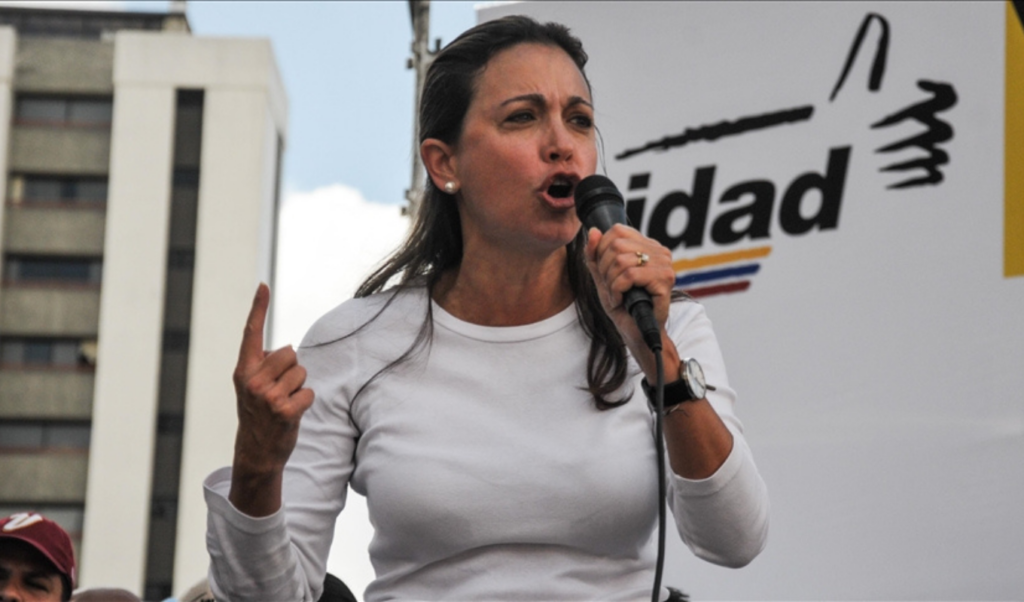
Venezuelan opposition leader and Nobel Peace Prize laureate María Corina Machado held a phone call on Friday with Israeli Prime Minister Benjamin Netanyahu, praising the struggle against “totalitarian forces”—a statement that Israeli officials portrayed as support for Israel’s military campaign in Gaza.
Details of the Call
| Date | Friday |
| Participants | María Corina Machado (Venezuelan opposition leader, Nobel laureate) Benjamin Netanyahu (Prime Minister of Israel) |
| Platform of Communication | Telephone call |
| Primary Topics | Democracy, resistance against totalitarian regimes, hostage release agreement, Middle Eastern peace efforts |
According to a post from Netanyahu’s office on the social media platform X (formerly Twitter), Machado expressed her “great appreciation” for Netanyahu’s “decisions and resolute actions during the war”, and commended the agreement that led to the release of hostages in Gaza.
However, Machado’s own statement on X took a markedly different tone, avoiding any direct reference to Israel or Gaza. Instead, she delivered a more diplomatic and universal message about peace, courage, and moral integrity.
In her post, Machado said: “Venezuelans understand that achieving peace requires immense courage, strength, and moral clarity to stand against the totalitarian forces that oppose us. Just as we fight for freedom and democracy in Venezuela, all nations in the Middle East deserve a future built on dignity, justice, and hope — not fear.”
While she refrained from commenting on the Israeli-Palestinian conflict directly, Machado singled out Iran as a destabilising actor in the region.
She denounced: “The Iranian regime, a key supporter of the Maduro regime, also backs terrorist organisations like Hamas, Hezbollah, and the Houthis.”
This statement aligns with her long-standing position linking Iran’s influence to authoritarianism and extremism both in Venezuela and the Middle East.
Machado, who won the Nobel Peace Prize for her leadership in opposing Venezuela’s authoritarian President Nicolás Maduro, has maintained strong ties with Western democracies and pro-democracy movements worldwide.
Her call with Netanyahu, however, triggered renewed controversy in Latin America — particularly in Colombia, where left-wing President Gustavo Petro, an outspoken critic of Israel’s Gaza campaign, questioned the Nobel Committee’s decision to honour Machado.
Petro accused Machado of political opportunism, suggesting her contacts with Netanyahu were an attempt to secure foreign backing for her efforts to remove Maduro from power.
Venezuela–Israel Diplomatic Freeze
| Country | Diplomatic Status with Israel | Reason for Severance | Year |
| Venezuela | No formal diplomatic relations | Protest over Israel’s military operations in Gaza | 2009 |
Venezuela has not maintained diplomatic relations with Israel since 2009, when then-President Hugo Chávez—Maduro’s socialist predecessor—cut ties during Israel’s offensive in Gaza in 2008–2009.
Since then, the Venezuelan government has positioned itself as a strong ally of Palestine, frequently condemning Israel’s actions in the occupied territories and strengthening its political and economic ties with Iran.
Machado’s dialogue with Netanyahu therefore stands in sharp contrast to the official position of Caracas, highlighting the deep ideological and diplomatic divide between the Venezuelan opposition and the ruling socialist government.
Machado’s engagement with Netanyahu underscores her strategic alignment with Western and pro-democracy allies and her intent to build international legitimacy as a future leader of a post-Maduro Venezuela.
At the same time, Israel’s portrayal of the call as tacit support for its Gaza operations may risk complicating her global image as a neutral advocate of peace, particularly amid heightened international criticism of Israel’s military campaign.
The episode reflects the complex intersections of Latin American politics, global diplomacy, and the Middle East conflict, where statements of solidarity can be interpreted through multiple—and often conflicting—political lenses.