Thursday, 20th August 2026

Khabor Wala Desk
Published: 18th October 2025, 9:45 AM
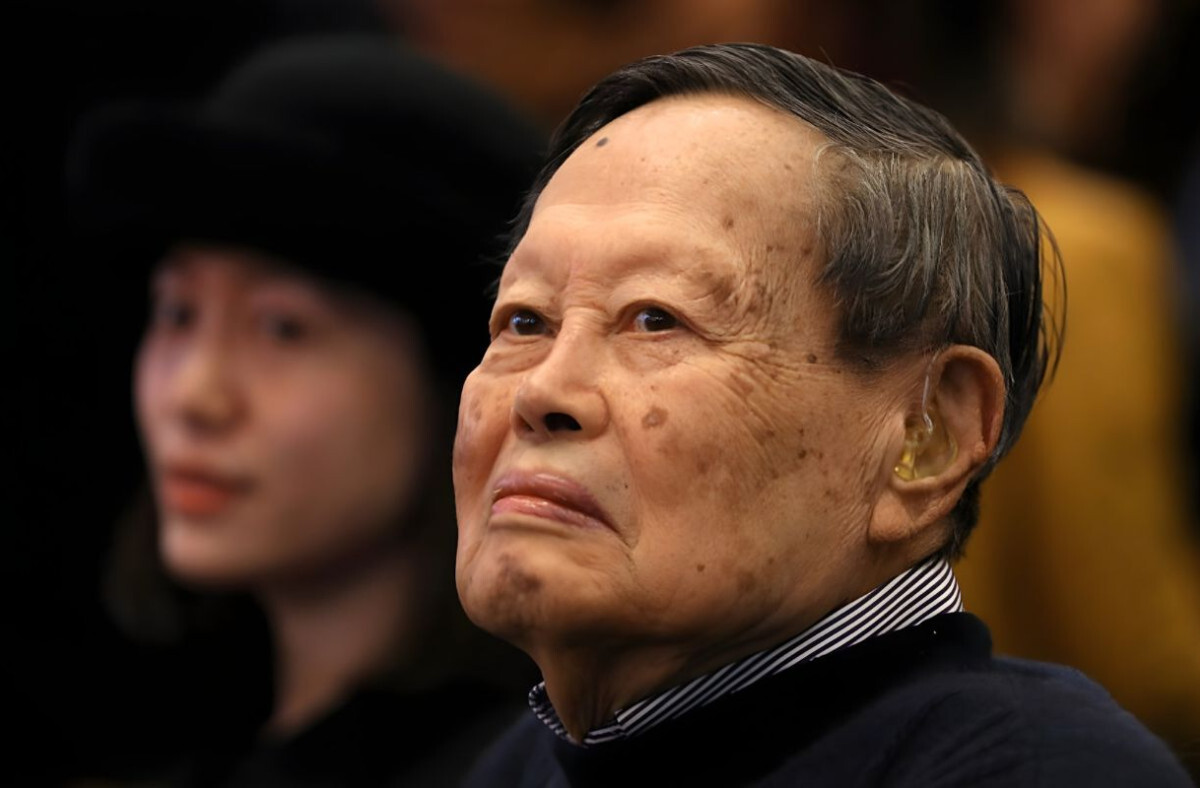
Renowned Chinese-American physicist and Nobel Prize winner Chen-Ning Yang has passed away at the age of 103. His death occurred on Saturday, 18 October, in Beijing, according to China’s state news agency Xinhua.
Born in 1922 in Hefei, Anhui Province, eastern China, Chen-Ning Yang grew up to become one of the most distinguished physicists of the 20th century. His groundbreaking work reshaped modern physics, particularly through his studies in statistical mechanics and the symmetry principles of particle physics.
Yang travelled to the United States in the 1940s to pursue higher education and later held several prestigious academic positions. His innovative research led him to develop, alongside Robert Mills, the Yang–Mills Gauge Theory—considered one of the most significant achievements in 20th-century physics.
| Key Details | Information |
| Full Name | Chen-Ning Yang (杨振宁) |
| Birth Year | 1922 |
| Place of Birth | Hefei, Anhui Province, China |
| Nationality | Chinese-American |
| Field of Work | Theoretical Physics |
| Notable Contributions | Statistical Mechanics, Symmetry in Particle Physics, Yang–Mills Gauge Theory |
| Nobel Prize | 1957 – Physics (shared with Tsung-Dao Lee) |
| Place of Death | Beijing, China |
| Age at Death | 103 |
The Yang–Mills Theory, introduced by Yang and Robert Mills, became a cornerstone of modern particle physics, laying the foundation for much of today’s Standard Model.
After returning to China, Professor Yang dedicated more than two decades of his life to teaching and research at Tsinghua University, where he played an instrumental role in nurturing young scientific talent, promoting faculty recruitment, and enhancing international academic collaboration.
His work not only transformed theoretical physics but also strengthened China’s academic influence in global scientific circles.
In 1957, Chen-Ning Yang and Tsung-Dao Lee jointly received the Nobel Prize in Physics for their pioneering work on the law of parity violation in weak interactions—a discovery that revolutionised modern understanding of subatomic processes.
Yang’s profound intellect, humility, and lifelong devotion to science left an indelible mark on humanity’s pursuit of knowledge.
Source: Reuters / Xinhua




Comments