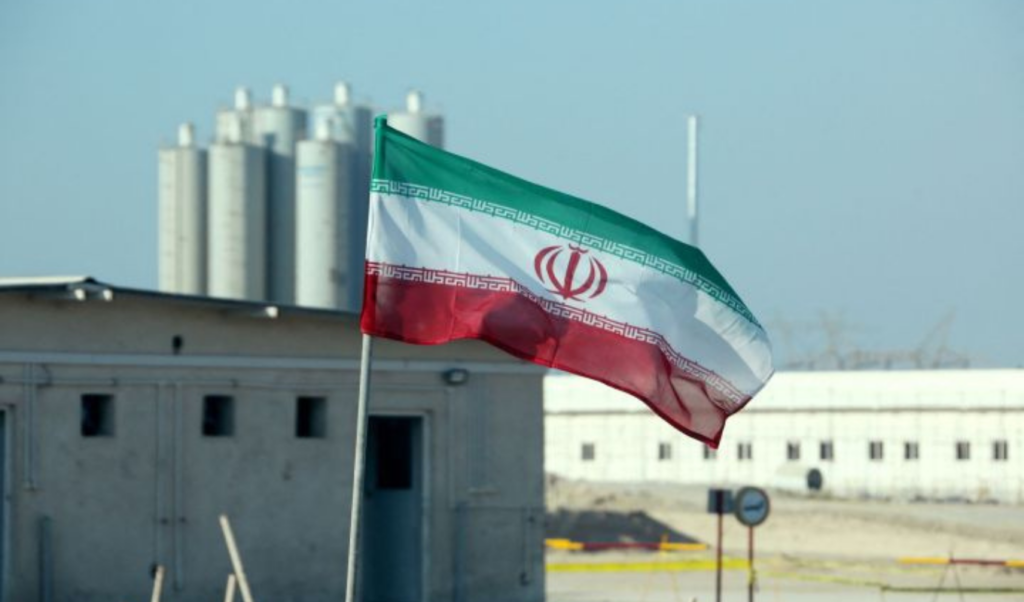
Iran announced on Saturday that it is no longer bound by the restrictions imposed on its nuclear programme following the expiration of the landmark 2015 nuclear accord with world powers. Despite this declaration, Tehran reaffirmed its “commitment to diplomacy” and insisted that its nuclear activities remain peaceful.
The Joint Comprehensive Plan of Action (JCPOA) — signed in Vienna in 2015 by Iran, China, Britain, France, Germany, Russia, and the United States — was designed to limit Iran’s nuclear capabilities in exchange for the lifting of international sanctions.
The deal placed strict restrictions on Iran’s uranium enrichment, capped at 3.67%, and established comprehensive inspections by the International Atomic Energy Agency (IAEA). In return, Iran received significant relief from economic sanctions that had crippled its economy.
| Key Provisions of the 2015 JCPOA | Details |
| Uranium Enrichment Cap | 3.67% maximum enrichment level |
| IAEA Oversight | Continuous monitoring and verification |
| Sanctions Relief | Lifting of UN, US, and EU sanctions |
| Duration | 10 years (until 18 October 2025) |
| UN Resolution | Enshrined in Resolution 2231 |
However, the accord began to unravel in 2018 when then-US President Donald Trump unilaterally withdrew from the agreement and reimposed sweeping sanctions on Tehran. In response, Iran gradually rolled back its compliance with the deal’s commitments.
On the official termination day, 18 October 2025, Iran’s foreign ministry announced that:“All of the provisions of the deal, including the restrictions on the Iranian nuclear programme and the related mechanisms, are considered terminated.”
The ministry reiterated:“Iran firmly expresses its commitment to diplomacy.”
Tehran emphasised that, although the restrictions had expired, it remained open to dialogue and negotiation.
The statement followed the reimposition of UN sanctions in September, driven by Britain, France, and Germany, who accused Iran of failing to cooperate with the IAEA and of escalating its enrichment levels.
Western powers have long accused Iran of seeking nuclear weapons, a claim the country repeatedly denies, insisting that its programme is purely civilian, focused on energy production and medical research.
The IAEA reports that Iran is now the only nation without a declared nuclear weapons programme to enrich uranium up to 60%, approaching the 90% weapons-grade threshold.
| IAEA Observation | Details |
| Current enrichment level | 60% uranium enrichment |
| Weapons-grade threshold | 90% enrichment |
| Purpose claimed by Iran | Civilian use — energy and research |
| IAEA concern | Potential for rapid escalation toward weapons capability |
Tensions heightened in July 2025 when Iran suspended cooperation with the IAEA amid its war with Israel. Tehran accused the agency of failing to condemn Israeli and US airstrikes on Iranian nuclear facilities.
The 12-day conflict — which saw Israeli air raids and retaliatory Iranian missile strikes — halted ongoing nuclear negotiations between Tehran and Washington.
Following the conflict, France, Britain, and Germany spearheaded efforts to reinstate UN sanctions against Iran in late September, marking the first such move in a decade.
Iranian Foreign Minister Abbas Araghchi wrote to the United Nations on Saturday, asserting that the expiration of the 2015 agreement renders the renewed sanctions “null and void.”
However, the European trio (Britain, France, and Germany) countered that Iran’s non-cooperation with the IAEA and elevated uranium enrichment levels necessitated renewed diplomatic pressure.
Iran’s foreign ministry, in turn, accused the three European powers of “irresponsible actions” that had sabotaged efforts to rebuild trust and restore dialogue.
“Iran’s efforts to revive the exchanges with the IAEA that led to the agreement in Cairo were also sabotaged by the irresponsible actions of the three European countries,” the statement read.
As the decade-long nuclear deal formally expires, Iran’s declaration marks a significant shift in the regional power balance. While Tehran continues to call for diplomacy, its rapid nuclear advancement and deteriorating relations with Western powers suggest that a new phase of strategic tension may be unfolding in the Middle East.