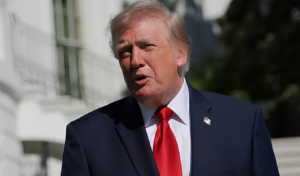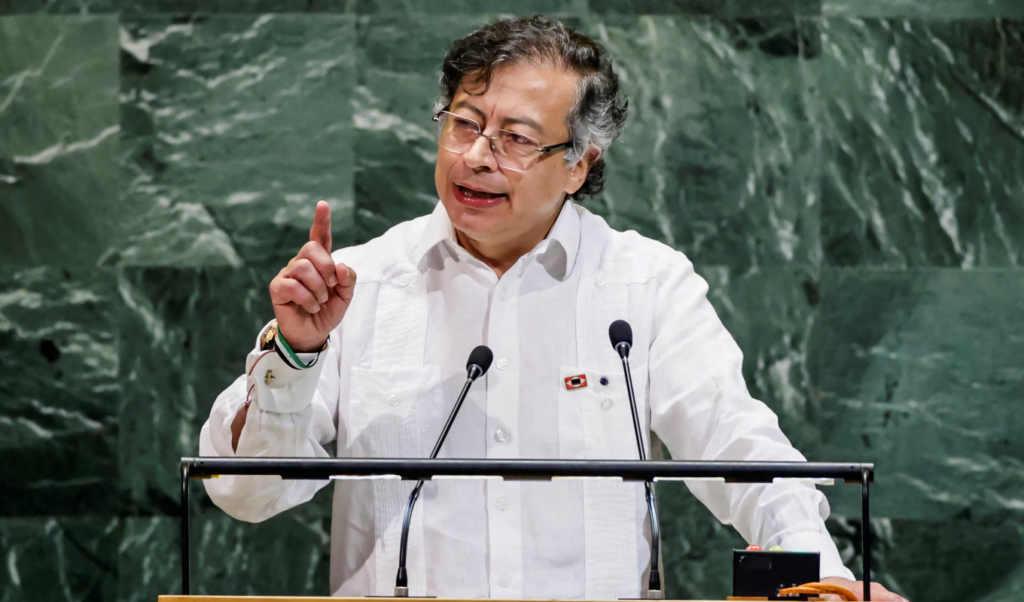
The United States has announced a new military strike targeting what it described as a drug-smuggling vessel linked to Colombian leftist rebels, signalling an apparent expansion of its South American maritime operations. The move coincided with President Donald Trump’s declaration that Washington will end financial aid to Colombia and impose tariffs against the country starting Monday.
The Pentagon confirmed the attack through Defence Secretary Pete Hegseth, who said the strike, carried out on Friday, resulted in the deaths of three crew members aboard a vessel allegedly affiliated with Colombia’s National Liberation Army (ELN) — a guerrilla group long involved in the country’s internal conflict and illicit trafficking routes.
“The vessel was intercepted in international waters under the jurisdiction of the U.S. Southern Command,” Hegseth told reporters, without specifying the exact location.
The United States has maintained naval deployments in the Caribbean since August, claiming to intercept drug-running boats bound for U.S. shores. According to Pentagon figures, at least six vessels have been destroyed, leaving 27 people dead.
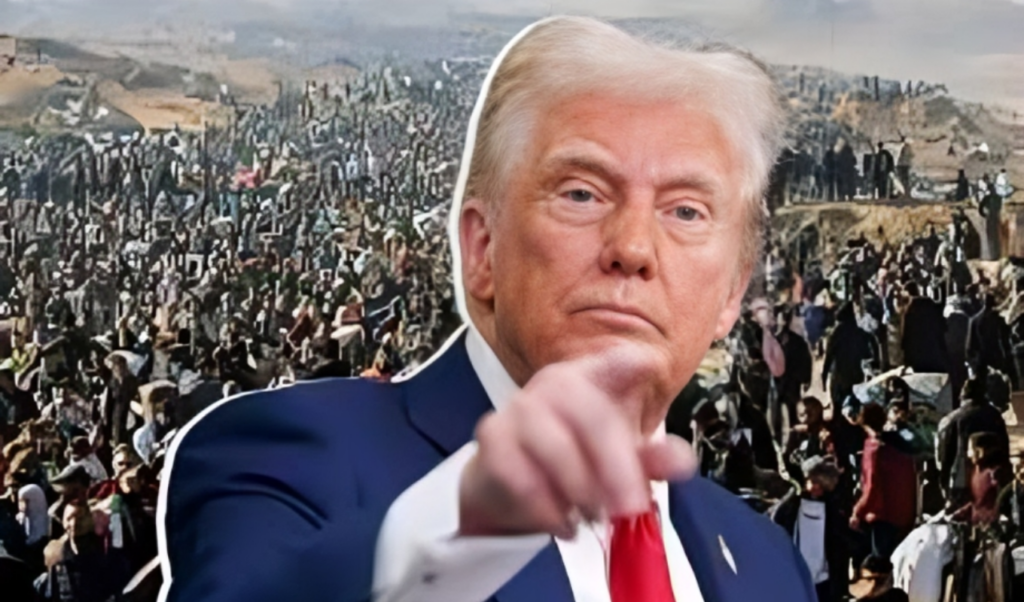
Tensions between Washington and Bogotá have escalated sharply. Trump confirmed on Sunday via his Truth Social platform that the United States is terminating all forms of financial support to Colombia — a country that has historically been one of the largest recipients of U.S. aid in South America.
| Category | Details |
| Total U.S. Aid to Colombia (2023) | USD 740 million |
| Aid Directed to Anti-Drug Operations | ~50% |
| Tariff Announcement Date | Monday (following the strike) |
| Primary Target of U.S. Strike | Colombian ELN vessel |
| Crew Fatalities | 3 confirmed dead |
| Previous Operations Since August | 6 vessels destroyed, 27 killed |
Trump’s announcement followed a post by Senator Lindsey Graham, who wrote: “He (Trump) informed me that he is going to be hitting Colombia, not only their drug dealers and traders, but also where it hurts — in the wallet.”
In his social media posts, Trump misspelled “Colombia” as “Columbia” multiple times, calling President Gustavo Petro “an illegal drug leader strongly encouraging the massive production of drugs.”
Trump further accused Petro of failing to curb cocaine cultivation, despite years of U.S. financial assistance.
“As of today, these payments or any other subsidies will no longer be made,” Trump wrote, claiming Petro was “strongly encouraging the massive production of drugs.”
The confrontation follows a recent military strike in the Caribbean against a so-called “drug-smuggling submarine”, which killed two suspects. Two others — citizens of Ecuador and Colombia — were captured and repatriated to their respective countries instead of being tried in the United States.
When asked about this decision, Vice President J.D. Vance commented: “What happens to them? I don’t really care, so long as they’re not bringing poison into our country.”
Colombian President Gustavo Petro confirmed the repatriation and accused the United States of murder over a previous incident in September, where a Colombian fisherman was killed during another U.S. military operation.
In a strong rebuttal on X (formerly Twitter), Petro stated: “Colombia has never been rude to the United States. To the contrary, it has loved its culture very much. But you are rude and ignorant about Colombia.”
The verbal clash marks a dramatic deterioration in bilateral relations between the two historic allies. In September, Washington formally decertified Colombia as a partner in the war on drugs, prompting Bogotá to suspend all arms purchases from the United States — its largest military supplier.
Since assuming office in 2022, Petro has pushed for a new approach to drug policy, focusing on social and economic reforms rather than forced coca eradication. However, under his leadership, coca cultivation — the base crop for cocaine — has reportedly risen by nearly 70%, according to Colombian government and UN data.
| Policy Comparison | United States | Colombia (under Petro) |
| Drug War Strategy | Militarised eradication and interception | Socioeconomic reform focus |
| U.S. Aid Contribution (2023) | USD 740 million | Received for counter-narcotics |
| Coca Crop Trend (2022–2024) | N/A | Increased by ~70% |
| Military Cooperation Status | Decertified alliance | Halted arms imports from U.S. |
The unfolding diplomatic crisis reflects deep divisions over how to confront Latin America’s narcotics trade — with Washington opting for military enforcement and Bogotá insisting on root-cause reform. As U.S. strikes intensify across the Caribbean and Pacific, and with tariffs looming, relations between the two nations are now at their lowest ebb in decades.