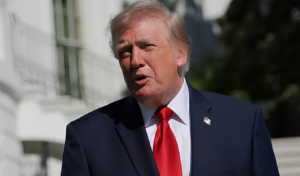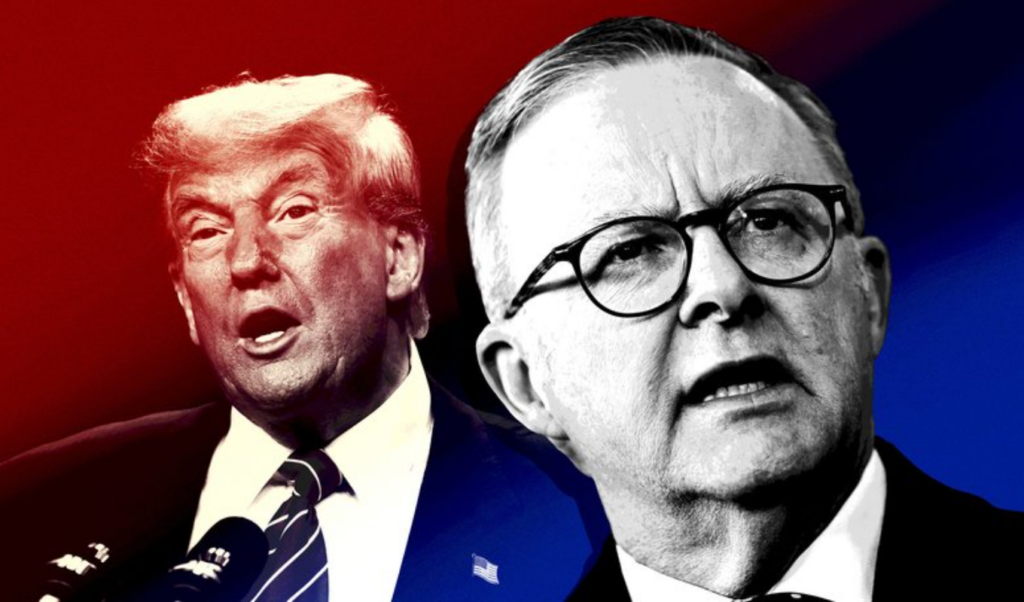
Australian Prime Minister Anthony Albanese met with U.S. President Donald Trump in Washington on Monday, highlighting Australia’s abundant reserves of critical minerals as a strategic tool to help the West reduce dependence on China for vital industrial resources.
The visit comes as Albanese also seeks Trump’s endorsement of the 2021 AUKUS defence pact, which aims to equip Australia with nuclear-powered attack submarines in partnership with the United States and the United Kingdom.
Despite largely unfavourable public opinion of the Trump administration among Australians, Canberra continues to rely heavily on its security alliance with Washington to balance China’s expanding military and economic influence across the Indo-Pacific region.
In the lead-up to the White House talks, the Albanese government positioned Australia as a reliable alternative source of key materials such as lithium, cobalt, manganese, and rare earth elements, which are crucial for producing semiconductors, renewable energy systems, electric vehicles, and defence technologies.
| Key Resources in Australia’s Critical Minerals Portfolio | Industrial and Strategic Uses |
| Lithium | Electric vehicle batteries, energy storage |
| Cobalt | Aerospace alloys, rechargeable batteries |
| Manganese | Steel production, battery components |
| Rare Earth Elements | Semiconductors, wind turbines, defence hardware |
China currently dominates global production of these materials, controlling the majority of the world’s supply chains. In April, Albanese announced a plan to establish a strategic reserve of critical minerals to supply trusted partners such as the United States, aiming to dilute Beijing’s market dominance.
“This reserve will strengthen our partnerships and provide a reliable supply of minerals critical to modern technologies,” Albanese said, calling the meeting with Trump “positive and constructive.”
President Trump has recently renewed pressure on Beijing, threatening to impose 100-percent tariffs on Chinese exports in response to new rare earth export restrictions. Though he later tempered his tone on social media, the move underscored the escalating trade friction between the world’s two largest economies.
Meanwhile, Australian Treasurer Jim Chalmers, speaking in Washington ahead of the talks, reiterated Australia’s readiness to serve as a dependable global supplier of these strategic minerals.
“We have a lot to offer the world,” Chalmers said. “We will engage with our partners to ensure Australia remains a reliable source for meeting the critical minerals needs of the United States and other markets globally.”
Chalmers, however, cautioned that protectionist measures, including U.S. tariffs on Australian goods—currently standing at 10 percent—could harm global trade and reduce the effectiveness of allied economic coordination.
| Trade and Policy Context | Details |
| U.S. Tariffs on Australian Goods | Approximately 10% |
| Trump’s Threatened Tariffs on China | Up to 100% on key exports |
| Main Australian Concern | Negative impact on global trade flow |
| Strategic Aim | Diversify supply chains away from China |
On defence, Australia seeks Trump’s continued backing for the AUKUS agreement, a landmark trilateral security deal signed in 2021 that would supply Australia with at least three U.S. Virginia-class submarines within 15 years, while also transferring technology to help Canberra build its own nuclear-powered vessels in the future.
The initiative, valued at up to US$235 billion over 30 years, forms a cornerstone of Australia’s plan to strengthen its long-range deterrence capabilities amid growing maritime competition in the Pacific.
However, Trump’s administration announced in June that AUKUS was under policy review to ensure compatibility with the “America First” agenda, raising concerns about U.S. shipbuilding capacity and production delays.
Despite these concerns, Australian officials say they have received no indication of U.S. withdrawal from the pact. Canberra expects the issue to feature prominently in the White House discussions.
“AUKUS should be given the green light and once again confirmed as the foundation of Australia’s security,” said Justin Bassi, Executive Director of the Australian Strategic Policy Institute (ASPI). “It’s also vital to the United States’ interests in competing with a Beijing-led authoritarian bloc.”
While official statements are expected to avoid direct references to China, diplomatic observers say Beijing remains the “unspoken focal point” of the Trump–Albanese talks.
| Key Topics in Washington Talks | Underlying Strategic Focus |
| AUKUS Submarine Deal | Countering China’s naval expansion |
| Critical Minerals Partnership | Reducing China’s global supply dominance |
| Cyber and Technology Cooperation | Protecting supply chains and digital infrastructure |
| Trade and Tariff Policy | Managing U.S.-China economic tensions |
The meeting underscores the deepening strategic partnership between Washington and Canberra — centred on economic resilience, defence cooperation, and a shared objective of countering Chinese influence across the Indo-Pacific region.
As global competition for technological supremacy and resource security intensifies, both leaders are expected to frame their cooperation as a mutual commitment to a secure and self-reliant Pacific order.