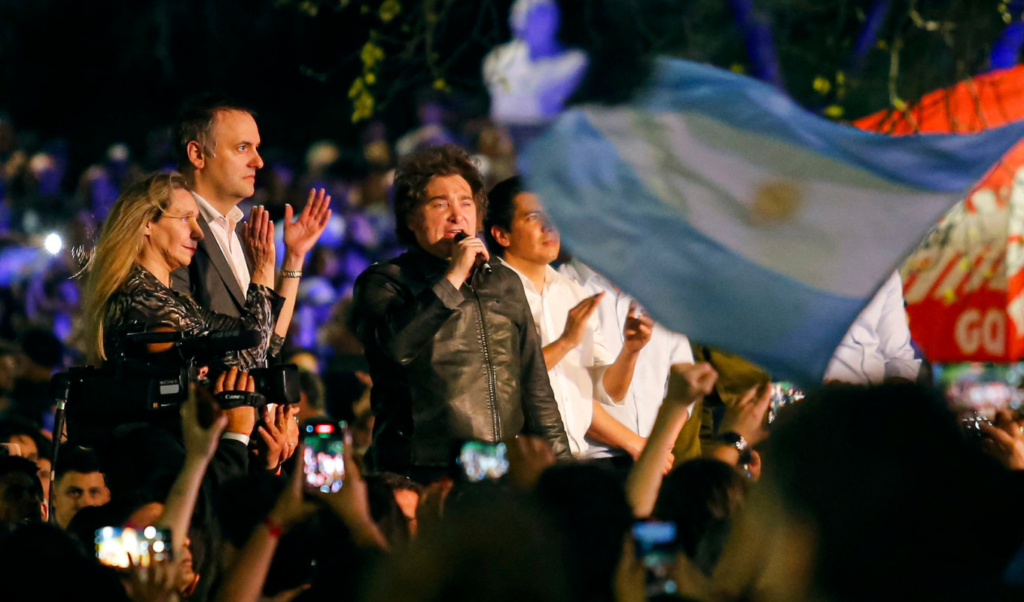
Buenos Aires, Monday — Argentina and the United States have finalised a $20 billion financial rescue deal aimed at stabilising Argentina’s teetering economy and bolstering President Javier Milei ahead of pivotal legislative elections on 26 October.
The agreement, personally backed by US President Donald Trump, is designed to prevent a full-blown economic collapse and to shore up investor confidence in Buenos Aires as the peso continues its downward spiral.
Trump’s administration has gone all-in to support his ideological ally, Milei, whose radical free-market reforms have stalled amid mounting public anger and political gridlock.
“If he loses, we are not going to be generous with Argentina,”
Trump warned earlier this month while hosting Milei at the White House.
The US leader has also pledged an additional $20 billion in public and private assistance, contingent upon Milei’s success in the upcoming polls.
Milei described the deal in an interview with Channel 8 on Monday, noting that the bailout would “only be activated if needed.”
Once hailed internationally as a bold libertarian reformer, Javier Milei is now under immense pressure:
| Key Challenge | Description |
| Reform Paralysis | Labour, tax and pension reforms have stalled in Congress. |
| Currency Pressure | The Argentine peso is overvalued, forcing costly interventions. |
| Falling Popularity | Public discontent has risen sharply amid soaring prices. |
| Foreign Reserves | Buenos Aires is burning through limited reserves to prop up the peso. |
Despite his promises of fiscal discipline, Milei’s government is battling to prevent a pre-election devaluation that would likely trigger a new wave of inflation and public unrest.
While the United States sees Argentina as a secondary economic partner, Trump’s backing of Milei is as much political as it is financial.
| US–Argentina Trade Snapshot |
| US Exports to Argentina: $9 billion annually |
| US Exports to Colombia (for comparison): $28 billion annually |
Trump’s involvement has sparked controversy in Washington, where critics accuse him of using American resources to prop up a like-minded populist rather than acting in line with US strategic interests.
“They’re fighting for their life. Do you understand what that means? They have no money. They have no anything,”
Trump said sharply to reporters on Sunday, defending his intervention.
The US Treasury’s recent attempt to buy up pesos failed to stop the currency’s slide. On Monday, the US dollar surged past the 1,495-peso mark, breaking through the official exchange rate ceiling.
Since Milei’s allies lost the Buenos Aires provincial elections in September, the peso has already fallen by seven per cent against the dollar, intensifying fears of a post-election devaluation.
Argentina’s opposition figures have condemned the growing US role in domestic policy.
“The economy is being run by remote control from the United States,”
said former president Cristina Fernández de Kirchner from her Buenos Aires apartment, where she remains under house arrest for corruption charges.
Economists believe that despite the bailout, Argentina’s long-term stability remains precarious. Most analysts expect a currency devaluation soon after the election, regardless of Milei’s performance.
| Current Economic Indicators (October 2025) |
| Exchange Rate (USD/ARS): 1 USD = 1,495 pesos |
| Peso Decline (since September): –7 % |
| US Financial Package: $20 billion (plus potential $20 billion add-on) |
| Election Date: 26 October 2025 |
The Milei–Trump alliance has become one of the defining features of Argentina’s current crisis — a partnership that blends economic pragmatism with political opportunism. Whether it stabilises the peso or merely postpones a reckoning, the coming weeks may determine the survival of Milei’s libertarian experiment — and the fate of Argentina’s fragile economy.