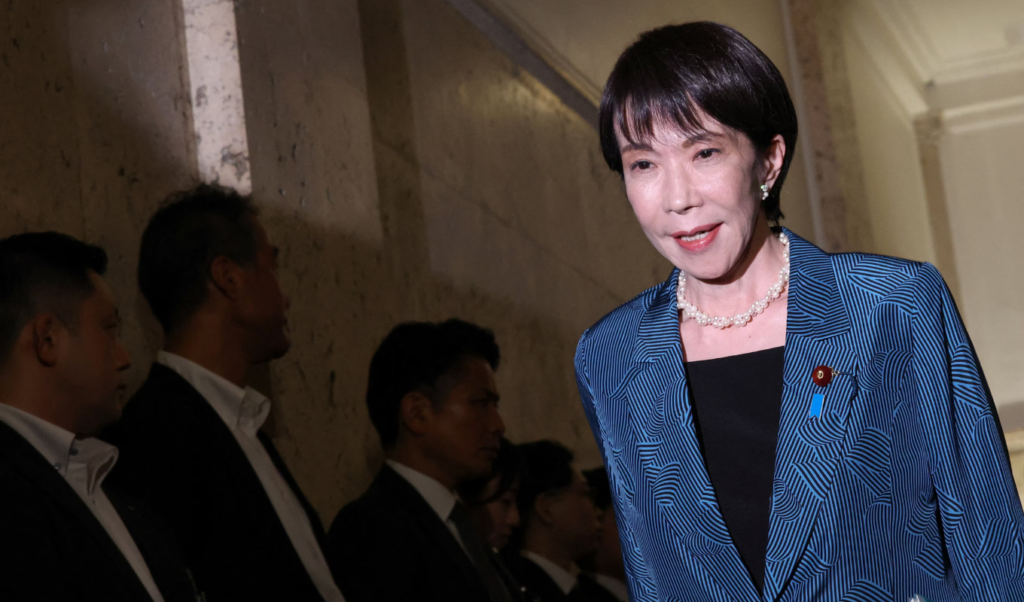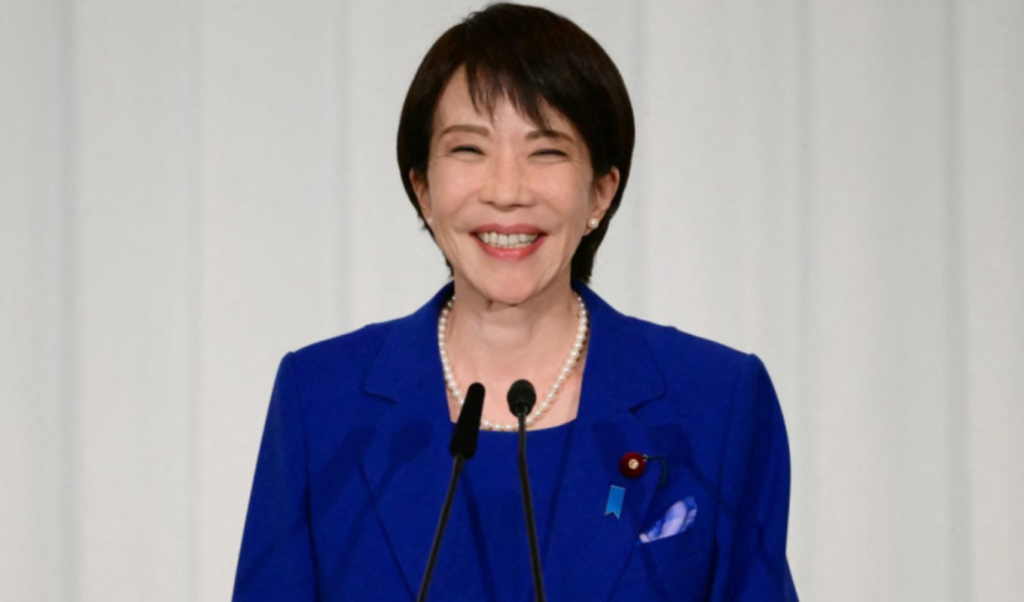
Sanae Takaichi, a staunch conservative who admires Margaret Thatcher, became Japan’s first female prime minister on Tuesday. Analysts caution, however, that her rise does not necessarily represent a feminist milestone.
The 64-year-old, who won the ruling Liberal Democratic Party (LDP) leadership earlier this month, has positioned herself as a hardliner focused on defence and economic security.
After forging a last-minute coalition deal, Takaichi was appointed by parliament as Japan’s first woman head of government and the country’s fifth prime minister in as many years.
Voters have been abandoning the long-dominant LDP amid rising inflation and a recent slush fund scandal, while the anti-immigration Sanseito party has been gaining support. In response, Takaichi has taken a tough stance on immigration and foreign tourism — key issues in the LDP leadership race.
Political Background
| Aspect | Details |
| Age | 64 |
| Party | Liberal Democratic Party (LDP) |
| Previous Roles | Economic Security Minister |
| Political Mentor | Margaret Thatcher |
| Ideology | Conservative, right-wing; hardline on defence and economic security |
| Foreign Policy | Critical of China’s military expansion; supportive of Taiwan |
| Cultural Positions | Regular visitor to Yasukuni Shrine; recently moderated rhetoric on China |
Takaichi has previously criticised China’s military build-up in the Asia-Pacific and voiced support for Taiwan, stating in April that strengthening security cooperation between Taipei and Tokyo is “crucial”. She has also been a regular visitor to the Yasukuni Shrine, which honours 2.5 million war dead, including convicted war criminals, and is viewed by many Asian nations as a symbol of Japan’s militarist past. Last week, however, she refrained from attending a festival at the shrine.
Once a drummer in a college heavy metal band, Takaichi cites the late British prime minister Margaret Thatcher as her political inspiration.
“Her election represents a step forward for women’s participation in politics,” said Sadafumi Kawato, professor emeritus at the University of Tokyo. “But she has shown little inclination to challenge patriarchal norms.”
Takaichi’s gender policies place her on the right of an already conservative LDP. She opposes revising a 19th-century law that requires married couples to share the same surname, a rule which overwhelmingly results in women taking their husband’s name. Notably, Takaichi has been married twice to the same man — taking his name in the first marriage and retaining her own in the second.
“The issue probably won’t be resolved during her term,” Kawato told AFP.
Nevertheless, Takaichi pledged in her campaign speech to improve gender balance in her cabinet to “Nordic” levels. Japan ranked 118 out of 148 countries in the 2025 World Economic Forum Gender Gap Report, largely due to women’s underrepresentation in government, while Iceland, Finland, and Norway occupied the top three spots.
Takaichi enjoys passionate support in the conservative wing of the LDP and among followers of the assassinated ex-prime minister Shinzo Abe. She supports aggressive monetary easing and significant fiscal spending, echoing “Abenomics” policies, which analysts warn could impact markets if implemented again.
She has also expressed concerns over crime and the economic influence of foreigners in Japan, calling for stricter regulations — a move analysts interpret as an attempt to win back voters who had shifted to the nationalist Sanseito party with anti-immigration messaging.
Regarding international trade, she stated this month that she will not hesitate to seek renegotiations with the United States if agreements are implemented in a manner deemed harmful or unfair to Japan.