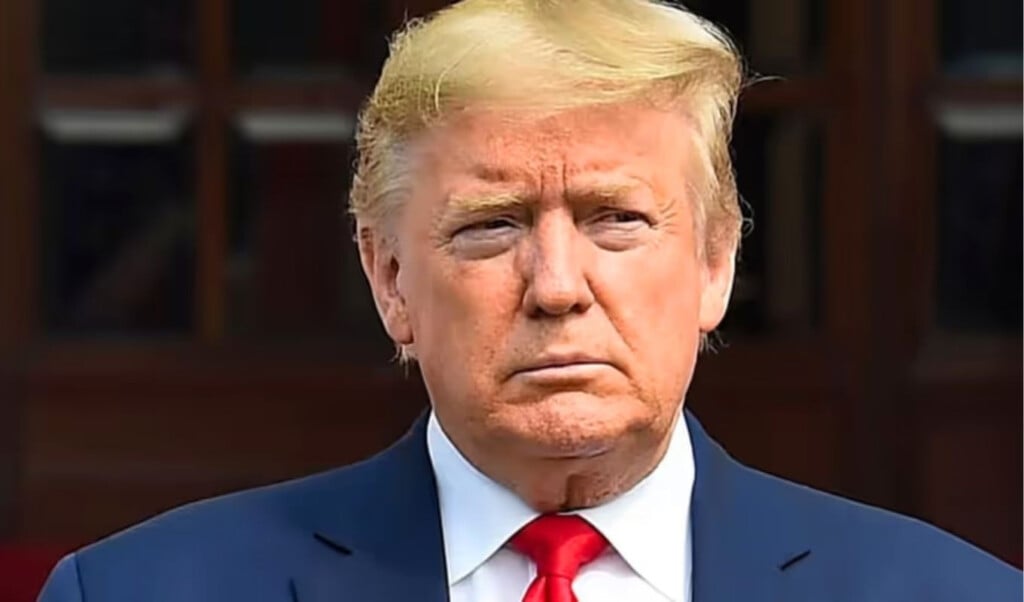
US President Donald Trump will host the leaders of all five Central Asian states in Washington on Thursday for the first time, several months after they held separate summits with Russia’s Vladimir Putin and China’s Xi Jinping.
The West has intensified its focus on this resource-rich region, where Moscow’s long-standing influence has been questioned since Russia invaded Ukraine, and where China has emerged as a key player.
Race for Influence
Since the outbreak of the Ukraine war, the leaders of Kazakhstan, Kyrgyzstan, Tajikistan, Turkmenistan, and Uzbekistan have increased diplomatic engagement through the “C5+1” format.
The United States and European Union have expanded their diplomacy with these landlocked nations, which gained independence from the Soviet Union in 1991. The first US-Central Asia summit was held in 2023. Russia, China, the West, and Turkey have all competed for influence in the region.
This year alone, EU Chief Ursula von der Leyen, Russian President Vladimir Putin, and Chinese President Xi Jinping have visited Central Asia for summits with the five leaders.
Ending most regional conflicts has allowed the countries to present a united front in diplomacy. China, which borders Kazakhstan, Kyrgyzstan, and Tajikistan, has positioned itself as a major commercial partner, investing in extensive infrastructure projects.
Although Moscow remains a strategic partner for the former Soviet republics, Russia’s invasion of Ukraine has raised concerns. Turkey has capitalised on cultural ties and Russia’s distraction to expand military and trade relations. Meanwhile, the West established initial ties in the early 2000s, when troops used bases in Central Asia during operations in Afghanistan.
Resource-Rich Region
The United States and EU are drawn to Central Asia’s vast, largely untapped natural resources as they seek to diversify rare earth supplies and reduce dependence on Beijing.
Kazakhstan is the world’s largest uranium producer, Uzbekistan holds significant gold reserves, and Turkmenistan is rich in gas. Kyrgyzstan and Tajikistan are also opening new mineral deposits. Russia continues to dominate the region’s energy sector, supplying hydrocarbons through Soviet-era infrastructure and constructing nuclear power plants.
However, Central Asia is among the world’s most polluted regions and is heavily affected by climate change. All five countries struggle with water scarcity.
Complicated Logistics
Exploiting these resources remains challenging due to the region’s harsh and remote terrain. Central Asia, nearly as large as the EU but home to just 75 million people, is landlocked and bordered by states with strained ties to the West: Russia to the north, China to the east, and Iran and Afghanistan to the south.
Historically a key point on the Silk Road, the region is now seeking to revive its role as a trading hub. The five nations have formed partnerships to reduce reliance on Moscow. Both Beijing and Brussels support a transport route across the Caspian Sea that connects Central Asia to Europe via the Caucasus, bypassing Russia. Between 2021, shortly before Russia invaded Ukraine, and 2024, goods transported via this route increased by 660 percent, according to official statistics.
Muffled Human Rights
For Trump, who has expressed admiration for authoritarian regimes, economic cooperation with Central Asia has taken precedence over promoting democracy. While the region has opened to tourism and investment, rights groups warn that civil freedoms are deteriorating.
Human Rights Watch urged the United States to “ensure human rights are a key part of the agenda” for the summit. It noted, “The summit is taking place while all participating governments have increased efforts to stifle dissent, silence the media, and retaliate against critics at home and abroad.”
Central Asian states rank low on the Reporters Without Borders press freedom index. Turkmenistan, one of the world’s most secretive countries, is 174th out of 180 nations. Kazakhstan and Kyrgyzstan supported Trump’s order to dismantle Radio Free Europe, one of the few remaining alternative media outlets in the region.