Friday, 21st August 2026

Khabor Wala Desk
Published: 25th November 2025, 9:39 PM
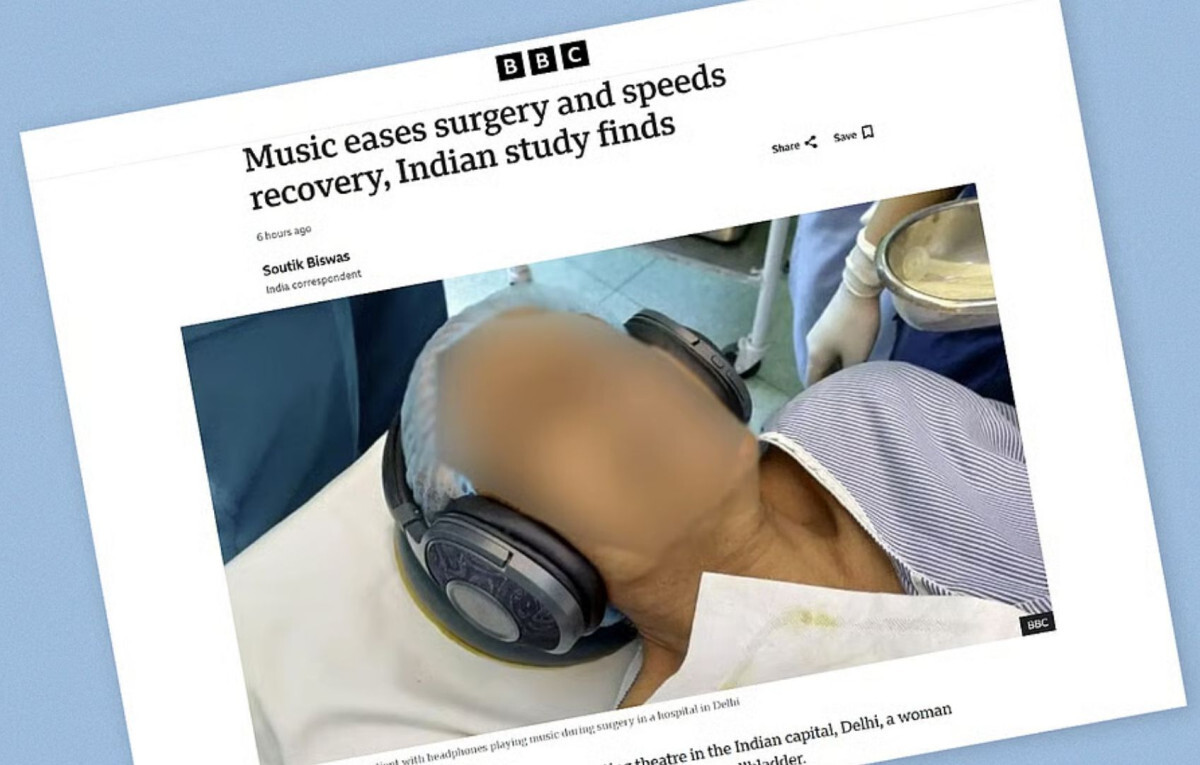
A recent investigation at Maulana Azad Medical College in New Delhi provides compelling evidence that music played during surgery can lower anaesthetic dosages and promote faster post-operative recovery. The study, published in Music and Medicine, focused on patients undergoing laparoscopic cholecystectomy, a minimally invasive procedure for gallbladder removal.
During surgery, patients were administered a standard anaesthetic cocktail including propofol, fentanyl, sedatives, anti-nausea drugs, and muscle relaxants. All participants wore noise-cancelling headphones, but only one group listened to carefully selected music. Even under general anaesthesia, portions of the brain retain partial auditory processing, allowing music to influence physiological responses.
Researchers observed that patients exposed to music required significantly lower doses of propofol and fentanyl, experienced more stable blood pressure, and exhibited reduced levels of cortisol, a stress hormone. Recovery of consciousness was faster, and post-operative physiological stability was improved.
Dr Farah Hussain, the study’s music therapist and anaesthetist, explained: “Even when unconscious, the brain’s response to sound can influence the body’s stress reactions. By controlling these responses, music contributes to smoother surgical recovery.”
The study also highlights that surgical stress begins even before incisions, such as during intubation, when patients’ heart rates and stress hormones rise. Integrating music into the operating theatre may offer a non-pharmacological strategy to mitigate these effects.
While preliminary, these findings could mark a significant shift in surgical practice, reducing reliance on anaesthetic drugs and making operations safer and more humane. Music therapy, long used in mental health and rehabilitation, may now find a new role in the operating theatre.




Comments