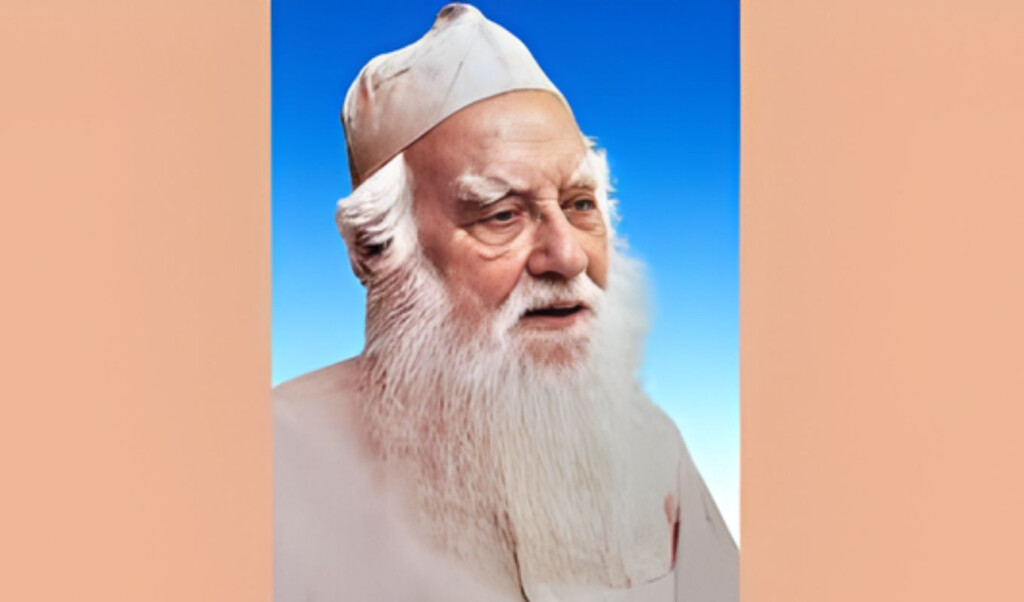
Maulana Abdur Rashid Tarkabagish, the embodiment of a struggling leader and a fearless son of Bengal, remains immortal in the pages of history. He was born on 27 November 1900 in the respected pir lineage of Tarutia village in Salanga, Sirajganj. Growing up under the care of his father, Shah Syed Abu Ishaq, and mother, Azizunnesa, this great person was, from an early age, naturally firm in favour of truth and against oppression.
Tarkabagish was not only a religious scholar
He was a man of awakened consciousness—a consciousness that has inspired the nation across generations. Under his farsighted leadership, on 27 January 1922, during the boycott of foreign goods at the Salanga market, the British police carried out a brutal massacre. This incident is known in the history of Bengal as the ‘Salanga Massacre’, in which it is believed that nearly four and a half thousand people were killed. Even after being injured, he did not stop—rather he moved forward with even greater resolve.
His role in the Bengali Language Movement is also immortal
He was one of the key inspirers of the Language Movement of 1952. And an even greater example—on 12 August 1955, he was the first person to have the courage to speak in Bengali in the Constituent Assembly of Pakistan. At that moment, he did not merely express the demand for language, but he presented the Bengali identity before the world.
From 1956 to 1967 he served as President of the Bangladesh Awami League for a full decade
The Khilafat Movement, the peasants’ movement, the Tebhaga Movement—at every critical moment of the country and the nation he stood at the forefront, fearless, uncompromising. Tarkabagish was, in one sense, an inseparable part of the history of the struggle for liberation.
After a long life of struggle
On the last hours of the night of 20 August 1986, at the then PG Hospital, he departed for the hereafter. But he left behind a unique example of struggle, an immortal stream of courage, another name for Bengal—the symbol of indestructible resistance.
To this great traveller of freedom—
endless respect, deep gratitude—
a tribute.
Khoborwala / TSN