Friday, 21st August 2026

Khabor Wala Desk
Published: 1st December 2025, 1:44 AM
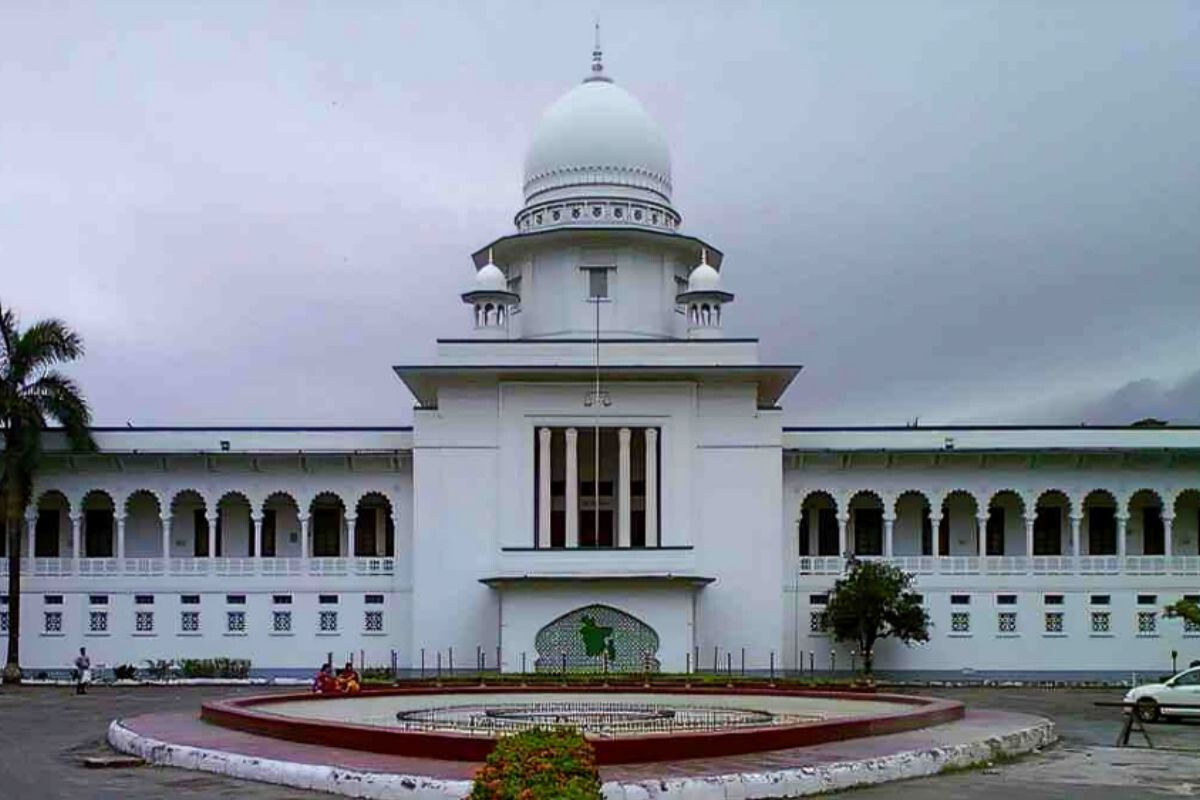
The Chief Justice will be able to approve any development, technical or non-development project involving subordinate courts if the estimated cost remains within 50 crore taka. Projects exceeding this amount must be sent to the Planning Minister for placement at the Executive Committee of the National Economic Council. The government may adjust this limit in consultation with the Supreme Court considering inflation or any other necessity. The Supreme Court Secretariat Ordinance 2025 has been issued to implement these provisions.
On Sunday, the Ministry of Law, Justice and Parliamentary Affairs issued the ordinance under the President’s order. Earlier, on 20 November, the Advisory Council of the interim government approved the draft of establishing a separate Supreme Court Secretariat.
According to the ordinance, an eight-member Planning and Development Committee will review and recommend development projects related to subordinate courts, administrative tribunals, the Supreme Court Registry and the Supreme Court Secretariat. The committee will be headed by a judge of the Appellate Division nominated by the Chief Justice. A separate scrutiny committee led by the Secretary of the Supreme Court Secretariat will conduct preliminary examinations following the government’s 2022 project guidelines.
Projects recommended by the committee with an estimated cost within 50 crore taka will be approved by the Chief Justice, and those exceeding the limit will be forwarded to the Planning Minister for submission to ECNEC. The same financial limit applies to non-development schemes. The Chief Justice will also approve extensions, revisions and cost adjustments of these projects.
Regarding budget management, the Supreme Court Secretariat must prepare income and expenditure statements at least three months before the start of each fiscal year and send them to the Finance Minister to be placed before Parliament with the government’s financial statement. The statements will include salary allocations, judicial administrative expenses, development costs, research, training and other budgetary components. The Chief Justice will have full authority over budget reallocation.
The ordinance establishes the Supreme Court Secretariat as an autonomous body under the full control of the Chief Justice, with the Secretary serving as the administrative head. The Secretariat will oversee recruitment, transfers, discipline, leave, training, post creation, administrative management and supervision of subordinate courts, administrative tribunals and relevant offices.
It further states that the Secretariat will perform all duties relating to control and discipline of judicial service members on behalf of the President. Transfers and postings will be carried out in consultation with the Supreme Court under the relevant constitutional provisions.
The ordinance aims to strengthen judicial independence, ensure effective supervision of subordinate courts and establish a separate Secretariat to support judicial administration. As urgent circumstances existed while Parliament was dissolved, the President issued the ordinance under Article 93(1) of the Constitution.
Khaborwala/TSN




Comments