Friday, 21st August 2026

Khabor Wala Desk
Published: 2nd December 2025, 5:44 AM
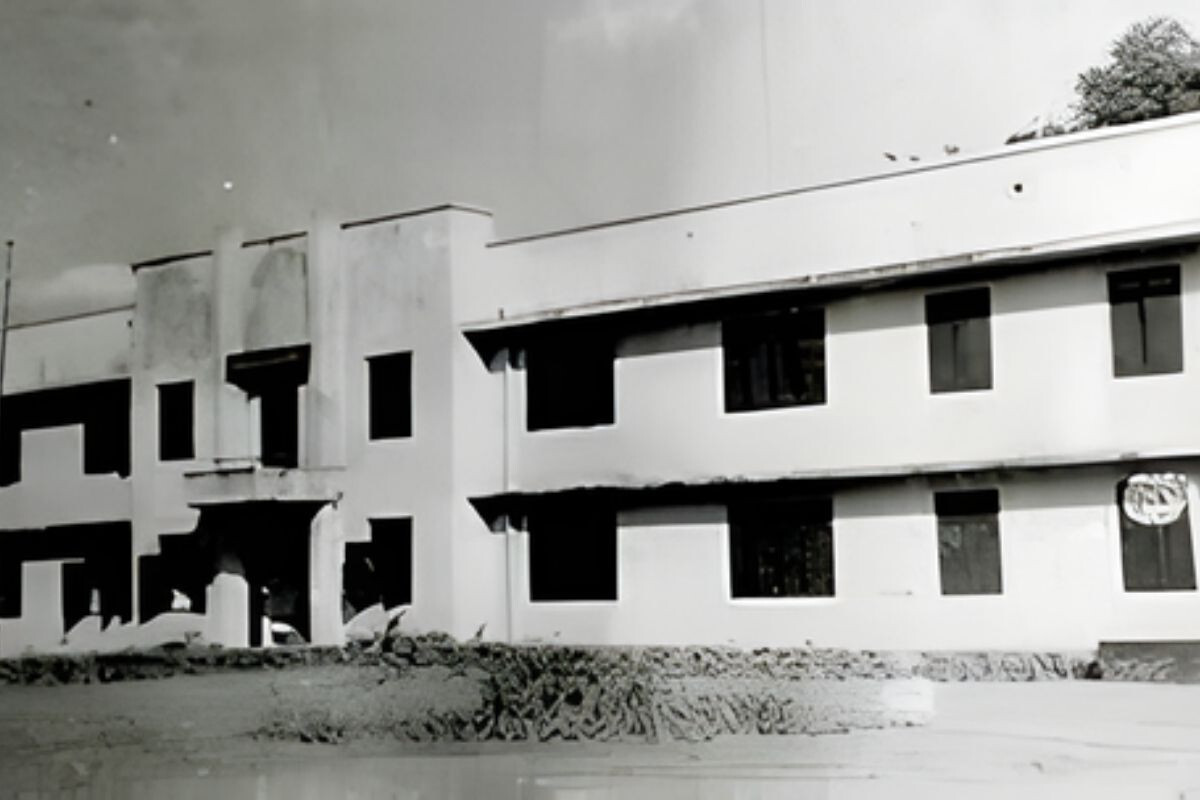
The liberation of the Bangladeshi people in 1971 can be summarised through three pivotal phases: the declaration of independence, the ensuing people’s war, and ultimate victory. However, the struggle for freedom began long before the nine-month war. Much like a farmer prepares the fields, sows seeds, nurtures the crops, and finally harvests them, the people of Bangladesh engaged in decades of political struggle, which ultimately culminated in the formal proclamation of independence, a bloody war, and national triumph.
With the declaration of independence, the people of Bangladesh formally severed ties with West Pakistan, sparking a nationwide resistance that escalated into a full-scale war. When the British left the Indian subcontinent, they created Pakistan as a geographically bifurcated state, disregarding historical, linguistic, and cultural differences. Historian Mehedul Hasan in Mooldhara ’71 describes this as a ‘novel plan’ despite its inherent challenges.
Tensions between East and West Pakistan were evident from the outset. The imposition of Urdu as the state language in 1948 led to the Language Movement of 1952, which cost several young lives. The political trajectory continued with the United Front’s electoral victory in 1954, the imposition of martial law in 1958, the anti-Ayub movement of 1962, the Six-Point Programme, the mass uprising of 1969, and the Awami League’s decisive win in the 1970 elections, which West Pakistan refused to honour. These events created the essential backdrop for the independence movement.
On 7 March 1971, Sheikh Mujibur Rahman, addressing the historic gathering at Racecourse Ground, declared, “The struggle this time is for our emancipation; this struggle is for our freedom.” Though powerful, this was not an official declaration of independence. Following Pakistan’s Operation Searchlight on 25 March, which targeted unarmed civilians, the formal declaration of independence came on 26 March.
In Chittagong, the 8 East Bengal Regiment (EBR) and EPR units took armed resistance, briefly seizing control of the radio station. Major Ziaur Rahman, after proclaiming himself “Head of State” on 27 March, ultimately aligned with Sheikh Mujibur Rahman’s directives, signalling the start of coordinated armed resistance.
While debates about who formally declared independence first persist, the significance of this declaration in the history of the Liberation War is unquestionable—it marks the beginning of Bangladesh’s journey to sovereign statehood.
Khaborwala/SJ


Comments