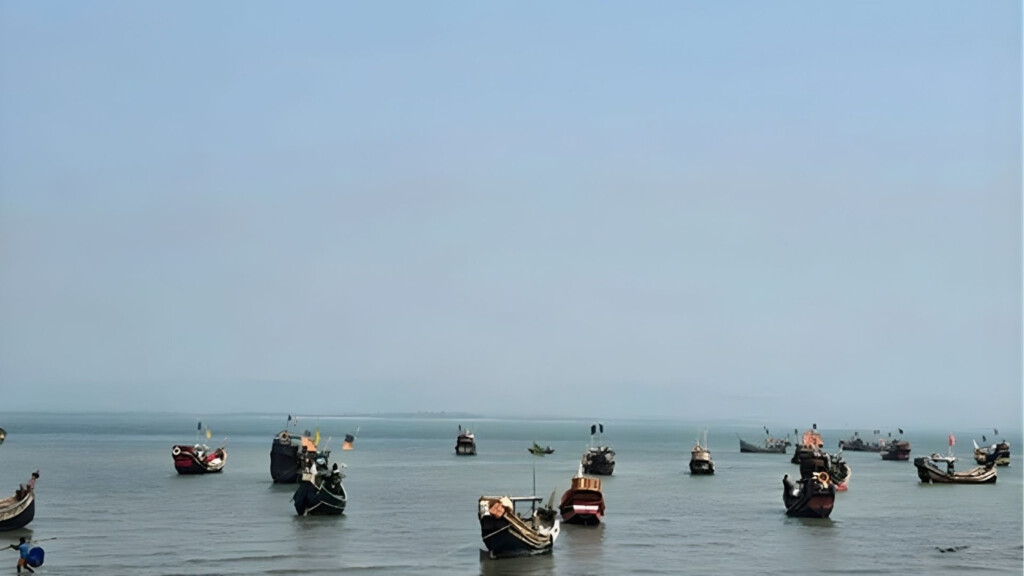
Tensions along the Bangladesh–Myanmar border have intensified once again following the reported abduction of six fishermen by the Arakan Army from the Naf River near Teknaf. The incident, which took place on Wednesday at the Jhimongkhali point, highlights the growing insecurity faced by fishing communities living along the frontier.
According to local accounts, two fishing boats operating close to the Myanmar side of the river were suddenly intercepted by armed members of the Arakan Army. Without warning, the assailants boarded the vessels, ordered the fishermen out at gunpoint and took them away. The incident was confirmed on Friday by Sirajul Mostafa Lalu, an elected member of the Whykong Union Parishad.
Local sources reported that the abducted individuals included two Bangladeshi fishermen and four Rohingya workers who had joined the crew for the fishing trip. Fishing on the Naf River often involves mixed groups of labourers, including Rohingya refugees, who rely on such work despite the risks posed by cross-border armed groups.
Eyewitnesses described the episode as “terrifying and swift”. The armed men reportedly approached in a motorised boat, boarded within seconds and forced the fishermen to surrender. One fisherman who witnessed the abduction from a nearby vessel said the attackers “looked trained and fully prepared”, leaving the victims with no choice but to comply.
The abduction has caused widespread fear among Teknaf’s fishing community. Many fishermen depend solely on the Naf River for their livelihood, yet they now fear venturing into the waters, particularly near contested border points. Village leaders report that several fishermen have already suspended their work indefinitely.
Adding to the alarm, Myanmar-based Arakan Global Network News has claimed that the Arakan Coastal Security Force detained an additional six Bangladeshi nationals in unrelated operations. The group alleges that these individuals were arrested for entering Myanmar’s territorial waters without permission and for fishing illegally. They further stated that the detainees would face strict punishment under Myanmar’s maritime and national security laws.
Although these claims have not been independently confirmed, such reports contribute to a broader atmosphere of tension and uncertainty. The Nautical and border zones near Rakhine State have become increasingly militarised as the Arakan Army expands its presence and confronts Myanmar’s military forces. These dynamics frequently spill over into areas where Bangladeshi civilians operate, placing non-combatants at heightened risk.
When contacted, Teknaf Upazila Nirbahi Officer (UNO) Md Imam Ul Hafiz Nadim stated that no formal complaints had yet been submitted by affected families. However, he confirmed that the administration had begun gathering information and would take appropriate action once the details were verified. He also hinted that the issue might be raised through diplomatic channels if necessary.
Analysts say the Naf River has long been a hotspot for cross-border tension. Over the years, Bangladeshi fishermen have faced repeated detentions, harassment and violence from Myanmar’s armed groups, including both state and non-state actors. The latest incident underscores the persistent security vacuum in the region and the need for coordinated action between the two countries.
Fishermen’s associations in Teknaf have urged the Bangladesh government to strengthen patrols along the border and engage with Myanmar authorities to prevent such incidents. They argue that without effective intervention, the livelihoods of thousands of fishermen will remain vulnerable, and the cycle of abductions will continue.
The abduction of six fishermen—two Bangladeshi and four Rohingya—represents yet another reminder of the humanitarian and security challenges facing border communities. As tensions between Myanmar’s armed groups and government forces escalate, civilians on both sides of the border risk becoming collateral victims of the conflict.