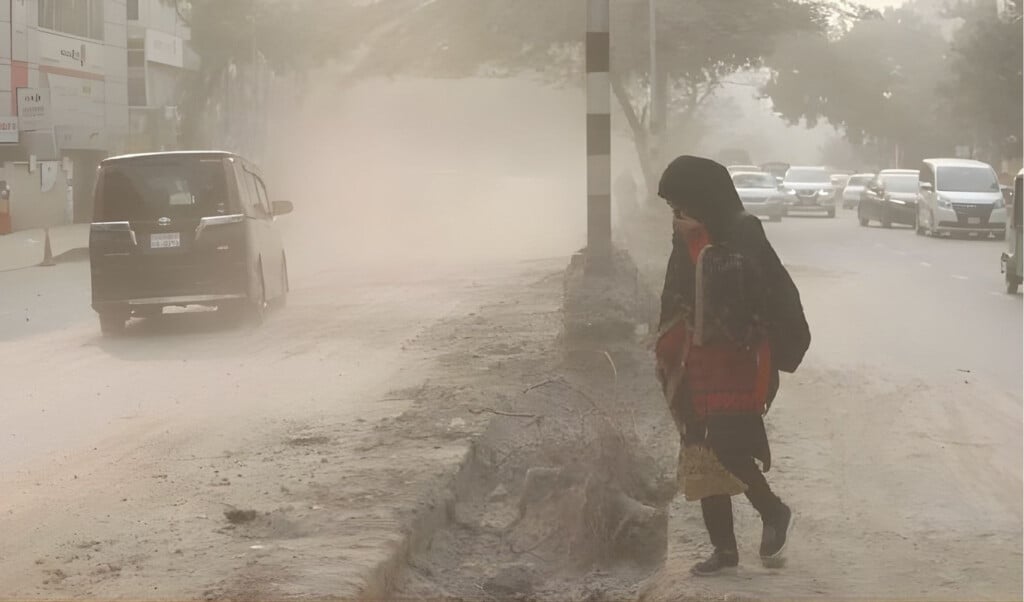
Dhaka, the bustling capital of Bangladesh, is facing a severe air pollution crisis. Since the beginning of December, the city’s air quality has deteriorated sharply, consistently falling into the “very unhealthy” category. As of Saturday morning, Dhaka ranked fourth among the world’s 125 most polluted cities, highlighting the growing environmental challenges the capital faces. Alarmingly, seven key districts have been identified as pollution hotspots, posing an immediate threat to public health.
At 10:30 am today, Dhaka’s air quality index (AQI) stood at 259. By comparison, Baghdad, the capital of Iraq, topped global pollution charts with an AQI of 266. This data was reported by IQAir, a Switzerland-based organisation that monitors air quality worldwide. Their real-time indices provide residents with vital information on the cleanliness or toxicity of the air, allowing for timely precautions.
Interestingly, Friday, the first day of the weekly holiday, saw Dhaka ranked as the second most polluted city in the world. Normally, weekends bring reduced vehicle traffic and limited industrial activity, both major contributors to the city’s smog. Despite these reductions, air quality remains dangerously low, illustrating that the problem is structural and ongoing rather than seasonal.
An AQI above 200 is classified as “very unhealthy,” while a reading above 300 is considered “hazardous.” Dhaka crossed this critical threshold on 28 November, a stark reminder of the city’s escalating environmental challenge. Various government initiatives and projects have been launched over the years to combat air pollution, but implementation remains inconsistent, and daily pollution levels continue to worsen.
Today, the most affected areas in Dhaka include Eastern Housing in Mirpur (AQI 272), Bay’s Edge Water (266), Kallyanpur (245), South Pallabi (236), Gorun (233), Grace International School (230), and Shanta Forum (221). Residents are advised to remain indoors, wear masks if venturing outside, and avoid physical exercise outdoors until air quality improves.
Experts warn that without decisive policy action, air pollution in Dhaka could worsen further, affecting millions of residents and placing the city in perpetual danger from toxic air.