On Thursday, 23 April 2026, the State Minister for Power, Energy, and Mineral Resources, Anindya Islam Amit, announced that the government has decided to implement experimental power cuts in the capital city, Dhaka. This measure is intended to facilitate irrigation in the agricultural sector and reduce the electricity disparity between urban and rural areas.
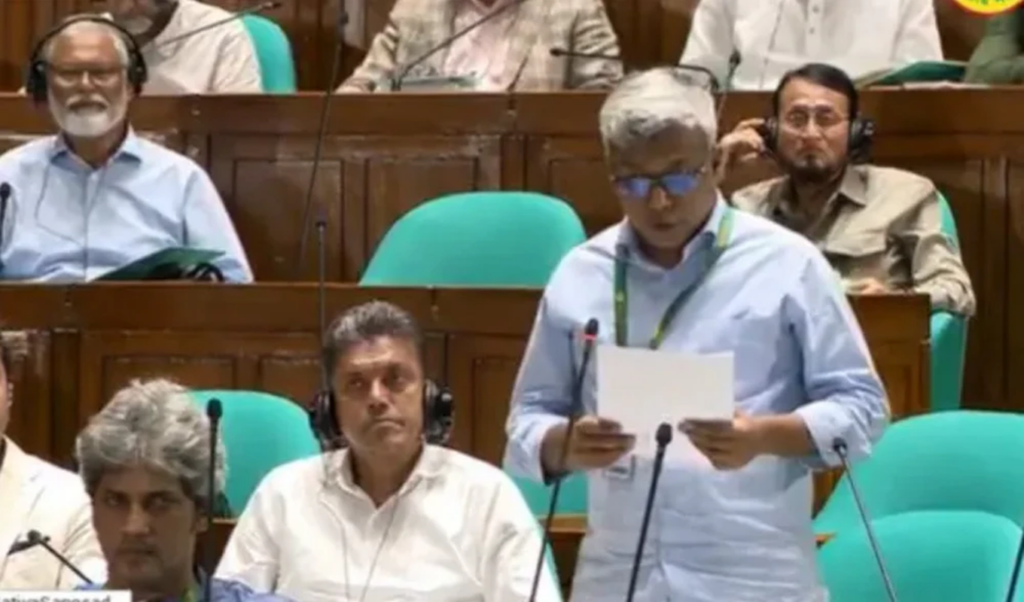
The State Minister delivered this statement under Rule 300 during a session of the Jatiya Sangsad, presided over by Speaker Hafiz Uddin Ahmed. He detailed the current energy crisis and the strategic steps being taken to mitigate its impact on the national economy, particularly concerning food security.
Addressing Urban-Rural Disparity
Minister Amit emphasised that the decision to introduce load shedding in the capital was made following consultations with the Prime Minister and the Leader of the Opposition. The primary objective is to bring the power situation to a tolerable level for all citizens. He remarked that it is unacceptable for urban residents to enjoy uninterrupted comfort while rural populations endure significant hardship.
This move aligns with the spirit of the “July Uprising,” which advocates for a non-discriminatory Bangladesh. To uphold this principle, the government has initially planned an experimental load shedding of 110 MW in Dhaka. This redistributed power will be diverted to support farmers during the critical harvest season, ensuring a steady supply of electricity and diesel for irrigation pumps as directed by the Prime Minister.
The Natural Gas Deficit
A significant portion of the Minister’s statement focused on the acute shortage of natural gas, which is the primary fuel for the country’s power plants. He provided a breakdown of the current gas supply statistics to illustrate the severity of the deficit.
| Gas Supply Metric | Volume (Million Cubic Feet per Day – MMCFD) |
| National Daily Demand | 3,800 |
| Current Supply (Production & Imports) | 2,636 |
| Daily Shortfall | 1,164 |
Despite having sufficient financial resources to purchase fuel, the Minister noted that the lack of necessary infrastructure prevents a rapid increase in gas imports. He attributed the current crisis to the accumulated mismanagement of the previous administration, stating that while “on-paper” production capacity appears high, the practical reality is hindered by a lack of fuel and technical limitations.
Infrastructure Development and Future Outlook
The State Minister assured the Parliament that the government is committed to transparency and maintaining the dignity of its oath. To resolve the energy bottlenecks, the development of energy infrastructure has been placed on the government’s 180-day priority list.
The Minister expressed confidence that the progress of these infrastructure projects would become visible within this timeframe. By improving the capacity to handle increased imports and domestic distribution, the government aims to stabilise the power grid and eventually eliminate the need for such experimental load shedding measures in the future. In the interim, the government remains focused on balancing the energy needs of the industrial, urban, and agricultural sectors.