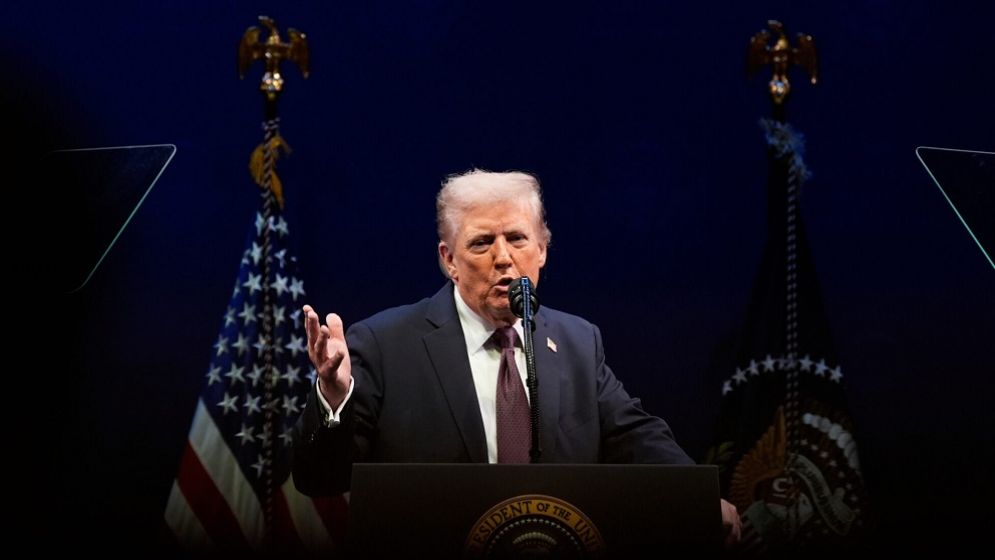
United States President Donald Trump has issued a formal directive to the U.S. Navy to engage and destroy any vessels found deploying naval mines within the Strait of Hormuz. The order, which authorises the use of lethal force, marks a significant escalation in the administration’s efforts to secure one of the world’s most critical maritime corridors against sabotage.
Presidential Directive via Truth Social
On Thursday, 23 April, President Trump utilised his Truth Social platform to communicate the shift in military engagement rules. He stated:
“I have instructed the United States Navy to shoot down and destroy any and all boats—even small boats—if they attempt to plant mines in the waters of Hormuz.”
The President emphasised that international waterways must remain free from sabotage, asserting that the placement of mines constitutes a direct threat to global energy transport and international security. His directive specifically targets any craft, regardless of size, involved in such activities.
Acceleration of Mine Clearance Operations
In addition to the engagement orders, President Trump announced an immediate intensification of existing mine-sweeping efforts. He confirmed that American mine-clearing vessels are currently operational within the Strait of Hormuz but demanded a drastic increase in their operational tempo.
“Our mine-clearing ships are currently cleaning the Strait of Hormuz,” the President noted. “I am ordering this activity to be carried out much more vigorously—at three times the previous speed!”
Strategic Significance of the Strait of Hormuz
The Strait of Hormuz is a narrow waterway between Oman and Iran that connects the Persian Gulf with the Gulf of Oman and the Arabian Sea. It is arguably the world’s most important oil chokepoint. The following table outlines the strategic impact of the region:
| Category | Details and Significance |
| Global Oil Flow | Approximately 20-21 million barrels of oil pass through daily (20% of global consumption). |
| Width | The shipping lane is only 2 miles (3.2 km) wide in each direction. |
| Economic Impact | Any blockage or threat typically leads to an immediate spike in global crude oil prices. |
| Security Presence | Monitored by the US Navy’s 5th Fleet, based in Bahrain. |
| LNG Transport | Crucial for the export of Liquefied Natural Gas (LNG), particularly from Qatar. |
International Implications and Tensions
The announcement has triggered a renewed wave of geopolitical tension. While the administration frames the move as a defensive measure to protect global commerce, international critics and maritime analysts have expressed concern that such a policy could lead to unintended military confrontations.
The directive comes amid long-standing friction in the region, where naval encounters between U.S. vessels and local paramilitary forces have occurred previously. By explicitly authorising the destruction of vessels and the use of lethal force, the administration is signaling a zero-tolerance policy regarding maritime sabotage. Experts suggest that the “three-fold” increase in mine-clearing speed will require a significant redeployment of naval assets to the Middle East to meet the President’s specified timeline.