When we ourselves become victims of a recurring social problem, that is often when we begin to examine its causes and consequences most closely. Gradually, this reflection expands from an individual “I” to a collective “we”.
Recent landmark political events in Bangladesh, the role of social media, and the processes of evaluation and devaluation of individuals, particularly women, have created a renewed need to examine our surroundings. This piece emerges from that necessity.
We are living through one of the fastest-moving and most outcome-defining periods in human history. Technology has permeated every aspect of our lives. This moment can be described as a kind of adolescence in humanity’s new journey. Alongside new possibilities and excitement, new forms of fear and suffering are also emerging. Here, the focus is on one such force: social media.
When the Arab Spring began in December 2010, leading to historic political changes from Tunisia and Egypt to Libya, social media—especially Facebook—played a central role. Never before had humanity found a platform that could place people from different parts of the world on the same footing in such a way as social media has done.
Facebook is a platform where people from all social classes come together, regardless of education, culture, or economic background. People of all professions and tastes occupy the same space.
Almost every major global event since 2010 has involved Facebook in some way. The most recent example was seen in Bangladesh, where, under the leadership of young people, a long-standing authoritarian system collapsed. People from all walks of life participated in that movement.
Social media, particularly Facebook, united people around a common goal, playing a significant role in the success of the movement. However, once the emotional surge of the movement subsided, many people’s lack of taste and restraint resurfaced.
From what I have learned through studying anthropology and Freudian psychoanalysis, as well as through personal experiences as a woman in public spaces, it is evident that a form of repressed desire exists within sections of our society. Women inevitably become its primary victims.
When any woman gains a degree of visibility, the manner in which she is targeted on social media is profoundly disturbing. In the current era, women are the principal victims of viral culture. Anthropologically, this phenomenon can be understood through the lens of tribalism.
At certain stages of human history, tribes were formed through shared professions, lifestyles and cultural elements. In the modern digital age, countless groups have formed online around shared tastes and habits via social media. Sociologists refer to this as digital tribalism.
Digital platforms have enabled people within a country, and even across the world, to unite around various causes. Groups are formed, sometimes around constructive goals, but also around repressed urges. At any opportunity, these groups descend upon individuals, indiscriminately spreading fragmented interviews, unguarded moments, or physical expressions without regard for ethics or reason, solely to make content go viral.
There is little concern for the psychological impact these injustices may have on an individual. Although some men active in media or politics also face such experiences, the scale of viral abuse directed at women is significantly greater. In this context, my own experience offers clarity.
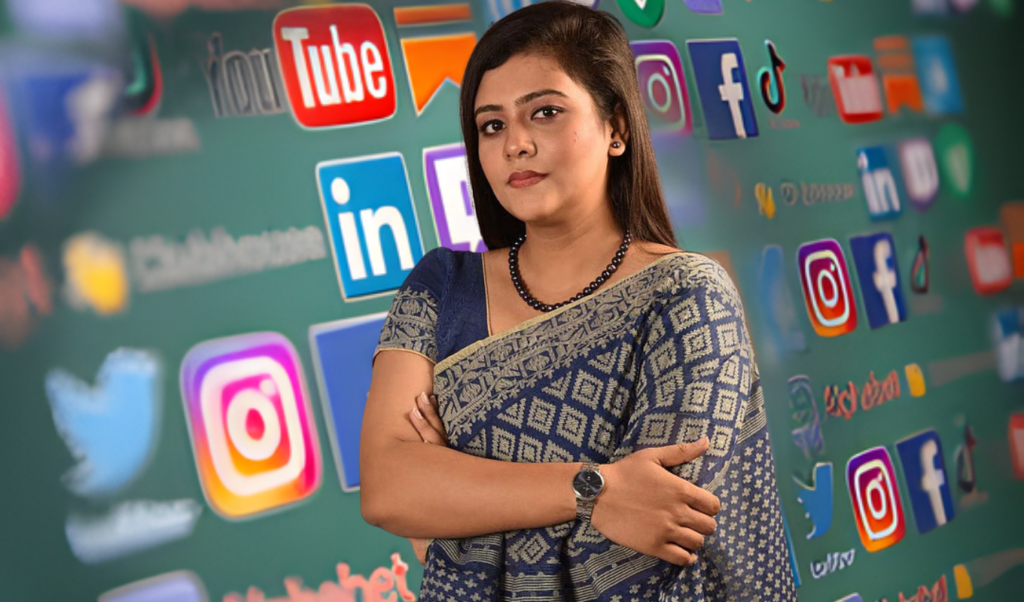
During the recent mass uprising, I too became part of the media narrative due to my professional role. Alongside my university studies, I work as a presenter at one of the country’s leading television channels. While discussing a key issue related to the movement on a talk show, I encountered unprofessional conduct from a guest.
Clips from that programme, along with my name, quickly spread across social media. I conducted myself strictly as a professional host and do not believe I acted unusually. Initially, there was praise, but once the movement ended, it gave way to unchecked public scrutiny.
At times I attempted to respond, but it soon became clear how ruthlessly I was being harassed simply for being a woman. Content from many years ago was suddenly placed under the scrutiny of millions. Old interviews from my adolescence were merged with recent videos to fuel unwarranted debates about my age, alongside fabricated reports in my name.
My life became an indiscriminate subject of digital tribalism, with no regard for my actual character or actions. Through this process, I once again observed how easily men in our society retain control over their lives, while women rarely do—whether within the family or at the state level.
Khaborwala/SS