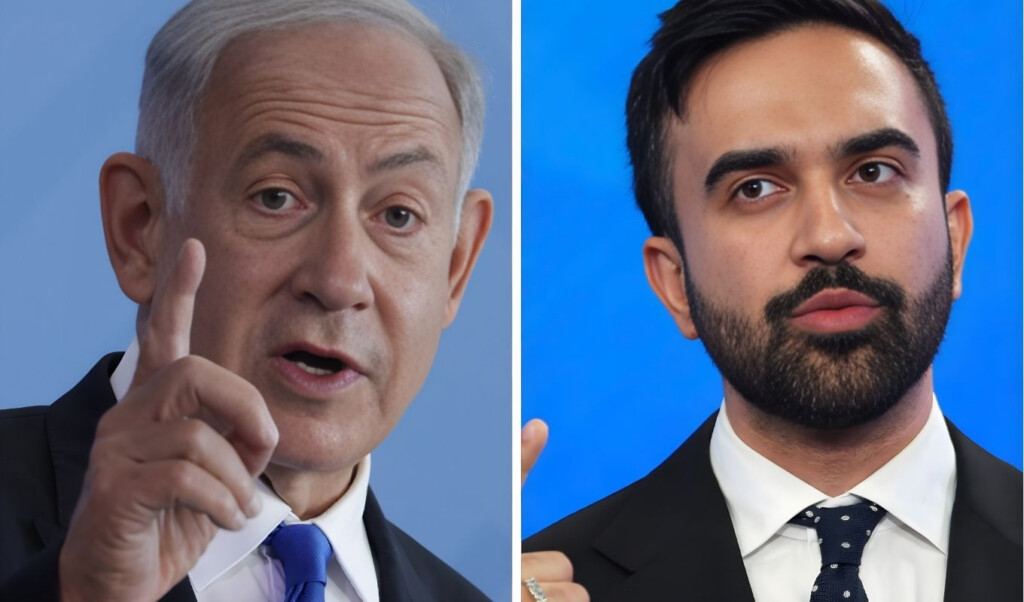
The recently elected Mayor of New York, Joharan Mamdani, has made headlines with a bold declaration: should Israel’s Prime Minister Benjamin Netanyahu enter New York City, he would be subject to arrest. The reason? An outstanding arrest warrant issued by the International Criminal Court (ICC) over alleged war crimes and crimes against humanity committed in Gaza.
Netanyahu, however, has dismissed the mayor’s remarks as inconsequential, announcing that he still plans to visit New York. This has prompted a broader debate: can a mayor of a U.S. city legally order the arrest of a foreign head of state?
To answer this question, one must consider the position of both the United States and Israel regarding the ICC. While the ICC was established under the Rome Statute, neither the United States nor Israel is a party to the treaty. The statute stipulates in Articles 12 to 15 that the court may exercise jurisdiction if the accused is a national of a member state, or if the alleged crimes occurred on the territory of a member state.
Member states may also refer cases to the court, and the United Nations Security Council can request judicial action. Non-member states may accept ICC jurisdiction through a special declaration, allowing the prosecutor to initiate investigations independently if deemed necessary.
Palestine joined the Rome Statute in 2015, and by 2021 the ICC confirmed that alleged crimes committed in Palestinian territories fall under its jurisdiction. In 2024, arrest warrants were issued against Netanyahu and former Defence Minister Yoav Gallant over alleged attacks on civilians and attempts to induce famine in Gaza. Yet, the ICC has no independent police force and relies on member states to enforce warrants. Meanwhile, U.S. sanctions against ICC officials have restricted their operational capacity.
This is where the principle of universal jurisdiction becomes relevant. Under international law, any state can arrest and prosecute individuals accused of serious international crimes, such as war crimes, genocide, or crimes against humanity, regardless of where the crimes occurred or the nationality of the accused. Countries including Switzerland, France, and Germany have applied this principle in recent decades. Examples include the trial of Gambia’s former Interior Minister Osman Sonko in Switzerland and the French arrest warrant against Syrian President Bashar al-Assad.
The most famous case is that of Adolf Eichmann. In 1960, the Israeli intelligence agency Mossad abducted Eichmann from Argentina and brought him to Jerusalem, where he was tried for crimes against Jews and executed. Israel justified this action based on the principle of universal jurisdiction, asserting that certain crimes are so egregious that they override sovereignty concerns. Today, the same principle could theoretically apply to Netanyahu.
Whether New York police could actually arrest Netanyahu remains highly contested. Some experts argue that the U.S. War Crimes Act would require federal approval, which is difficult to obtain. Others suggest that existing laws, such as the LEHI Act or Section 1091 of U.S. federal law, could provide a legal framework. Yet another school of thought holds that universal jurisdiction, recognised under customary international law, does not require prior authorisation.
Ultimately, the legal possibility of Netanyahu’s arrest lies within the framework of international law. Should the ICC fail to enforce its warrant, universal jurisdiction could fill the gap. Historical precedents, such as Eichmann and Sonko, demonstrate that neither political office nor diplomatic immunity exempts individuals from accountability. Mayor Mamdani’s statement, therefore, underscores a broader commitment to global justice and accountability.