Friday, 21st August 2026

Khabor Wala Desk
Published: 23rd December 2025, 2:41 PM
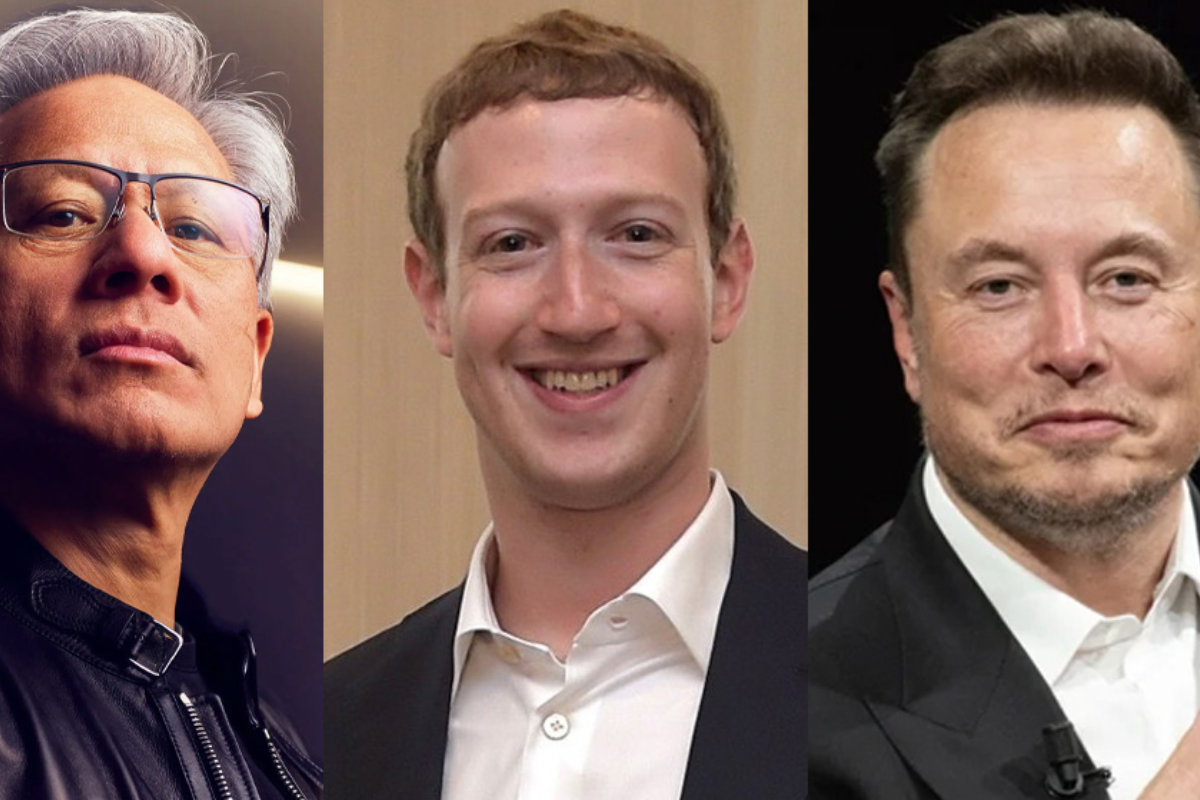
Time magazine has taken an unprecedented step in naming its 2025 Person of the Year. Rather than honouring a single political leader, celebrity or activist, the publication has bestowed its most influential accolade upon a collective force: the architects of artificial intelligence. In doing so, Time argues that 2025 will be remembered as the year AI ceased to be a promise of the future and became an irreversible feature of everyday human life.
This decision marks a rare departure from tradition. As Editor-in-Chief Sam Jacobs explains, artificial intelligence has fundamentally altered how people work, think, create and make decisions. According to Time, this transformation is no longer speculative or temporary; it is structural, permanent and global. The magazine therefore chose to recognise not one individual, but an entire ecosystem of leadership driving this technological revolution.
The term “AI architects” refers to the scientists, technologists and corporate leaders who have propelled artificial intelligence from academic laboratories into the hands of ordinary people. These figures span research institutions, technology giants and chip manufacturers, reflecting the vast infrastructure required to sustain modern AI.
| Name | Organisation | Role in AI Development |
| Sam Altman | OpenAI | Popularised large-scale generative AI for public use |
| Jensen Huang | NVIDIA | Enabled AI growth through high-performance GPUs |
| Demis Hassabis | Google DeepMind | Advanced AI research and scientific applications |
| Mark Zuckerberg | Meta | Integrated AI across social platforms and open models |
| Elon Musk | xAI | Pushed competitive AI development and public debate |
| Dario Amodei | Anthropic | Focused on AI safety and alignment |
| Fei-Fei Li | Stanford University | Pioneer of computer vision and human-centred AI |
| Lisa Su | AMD | Expanded AI computing through advanced processors |
Time credits these individuals with democratising AI—turning it into a tool used daily by students, doctors, journalists, programmers and artists alike.
Why AI Now Matters More Than Ever
According to Time’s reporting, artificial intelligence in 2025 is no longer merely software; it is a full-scale infrastructure. ChatGPT alone reportedly serves over 800 million users worldwide. AI systems now write code, assist in medical diagnostics, accelerate scientific research and influence education, journalism and the creative industries. In essence, AI has amplified both the speed and scope of human capability.
The rise of AI resembles a new industrial revolution. Vast data centres are being constructed, and the semiconductor industry has reached unprecedented strategic importance. Companies such as NVIDIA and AMD have become pillars of the global economy, while governments increasingly view AI leadership as a matter of national power.
Yet Time also highlights serious concerns. Data privacy risks have intensified, deepfakes and misinformation have proliferated, and fears of job displacement continue to grow. Mental health experts warn of over-dependence on automated systems, while ethicists argue that clear regulatory frameworks are urgently needed.
Ultimately, Time concludes that artificial intelligence has become the new language of power. In recognising its architects, the magazine is not merely celebrating innovation, but acknowledging a defining force that is reshaping civilisation itself.



Comments