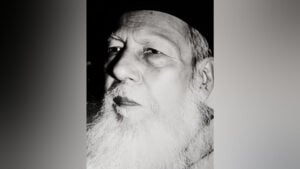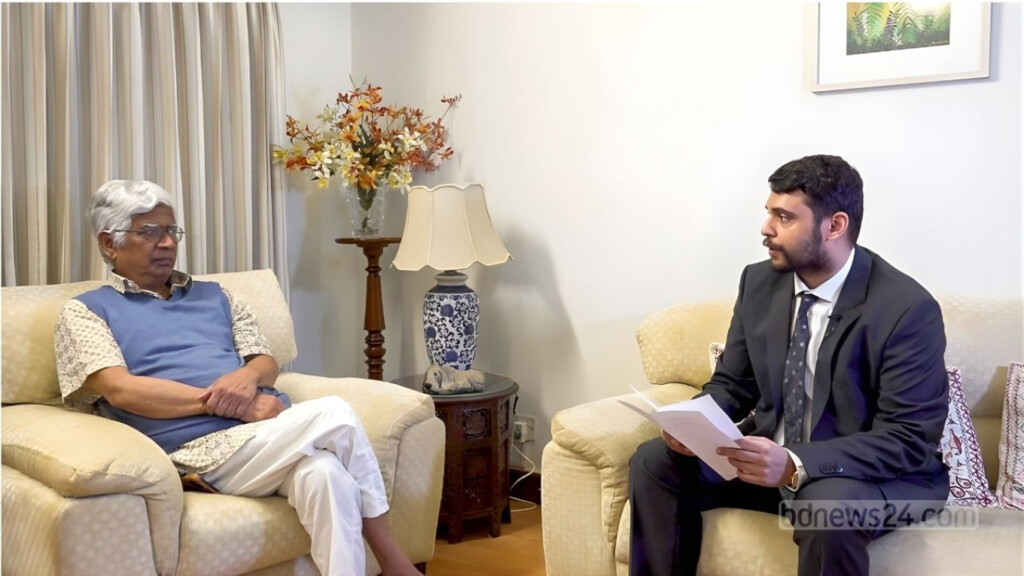
The persistent wave of “mob justice” and the targeted attacks on cultural and media institutions on 18 December could have been averted with timely police intervention, according to former Inspector General of Police (IGP) Mohammad Nurul Huda. Speaking on the Inside Out talk show by bdnews24.com, the veteran law enforcement official argued that the current security climate suffers from a palpable “laxity” within the police force. He dismissed the authorities’ primary justification—that intervening in mobs risks casualties—as a “poor excuse,” insisting that the mandate of the police is to maintain order regardless of such challenges.
Reflecting on the events of 18 December, which saw prominent media outlets such as Prothom Alo and The Daily Star, along with cultural organisations like Chhayanaut, come under siege following the death of Inqilab Mancha convenor Sharif Osman Hadi, Huda noted a distinct pattern. He suggested these were not merely spontaneous gatherings of an “irate crowd” but targeted strikes by groups whose ideologies are rooted in destruction. He emphasised that while the police force may still be reeling from the “trauma” of the 5 August uprising—where the previous regime treated the public as an enemy—nearly eighteen months have passed, and the period for using psychological fragility as an alibi for inaction has expired.
Comparative Analysis: Policing Tactics and Public Safety Strategies
| Issue | Police/DMP Position | Nurul Huda’s Assessment |
|---|---|---|
| Mob Intervention | Avoided to prevent potential casualties. | Termed a “bad excuse”; preventive action is vital. |
| Police Morale | Force is “traumatised” by post-uprising violence. | Only those who committed crimes should feel trauma. |
| Security for Targets | Deploying “gunmen” for 50 high-risk people. | A temporary, partial fix; licensing is better. |
| Electoral Feasibility | Concerns over widespread unrest. | Peaceful elections possible via nationwide dispersion. |
| Intelligence Failure | Delayed or inaccurate information flow. | Reliable intelligence is easy to get if prioritized. |
The former IGP, who led the force from June 2000 to November 2001, also addressed the rising tide of communal violence, such as the recent lynching in Mymensingh over allegations of blasphemy. He warned that “latent malice” remains embedded within sections of the populace, often exploited by groups to advance communal hatred. He pointed out that historical precedents in Ramu, Brahmanbaria, and Comilla demonstrate that such violence often transcends political lines, involving opportunists from across the spectrum.
Regarding the upcoming national elections, Huda remained optimistic, asserting that peaceful polls are achievable. He argued that once the campaign begins, the concentration of agitators in the capital will dissipate as people return to their respective constituencies. He suggested that if the authorities identify 500 to 1,000 potential troublemakers and detain them until the vote concludes—a measure supported by existing law—the risk of widespread chaos would be significantly mitigated. Ultimately, Huda called for “firm political decisions” and a zero-tolerance policy toward communal instigation, stressing that the restoration of the rule of law is a continuous process that requires a mentally resilient police force.