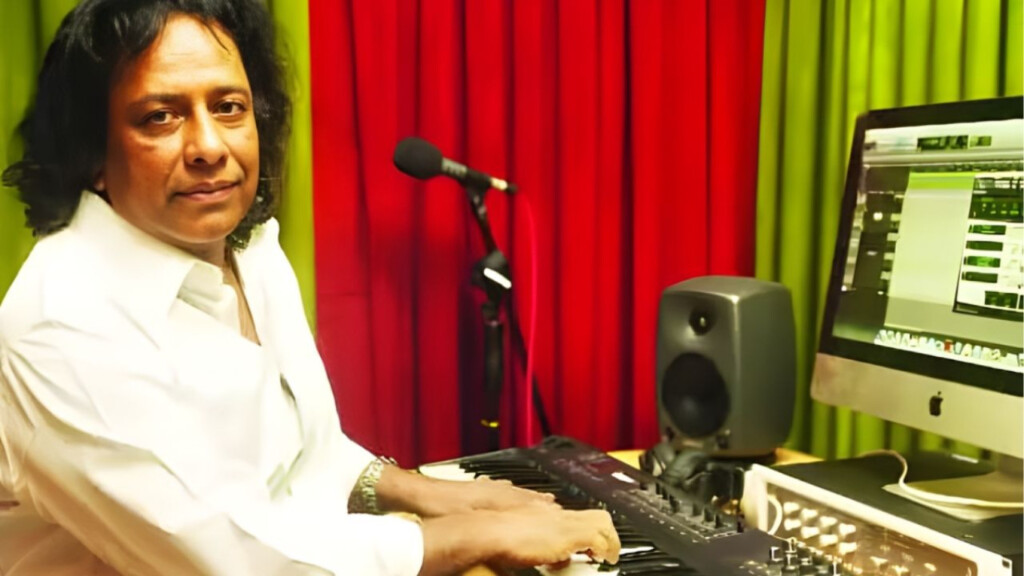
“Please do not forget me.” This poignant request, posted to Facebook by the legendary Ahmed Imtiaz Bulbul in early 2018, continues to resonate within the hearts of music lovers across Bangladesh. Sitting at the airport upon his return from Kolkata, the maestro shared a self-portrait with a caption that seemed to plead for a permanent place in the collective memory of his people. As the nation marked his 70th birth anniversary on 1st January 2026, the question remains: has the fear of being forgotten truly manifested, or does his legacy remain unshakeable?
While there were no grand state-sponsored galas this year, the digital landscape was awash with tributes. From the haunting patriotic melodies of ‘Sab Kota Janala Khule Dao Na’ to the cinematic brilliance of ‘Noyoner Alo’, his compositions were shared by thousands. Fellow artists, including the renowned Kanak Chapa and CloseUp One star Salma, took to social media to honour the man they considered a father figure and a “natural poet” of melody.
From Teenage Warrior to Musical Icon
Born in Dhaka on 1st January 1956, Bulbul’s life was defined by a profound sense of duty. At the tender age of fourteen and a half, he traded his textbooks for a rifle to join the 1971 Liberation War. This teenage sacrifice became the foundational bedrock of his art; his patriotic songs were not merely constructed tunes but raw, bleeding echoes of the battlefield. Following the war, he spent eight years dedicated almost exclusively to revolutionary and patriotic music, providing a traumatised nation with the courage to rebuild.
His transition to cinema in 1978 with ‘Megh Bijli Badol’ marked the beginning of an era. By the time ‘Noyoner Alo’ was released in 1984, Bulbul had become the definitive voice of Bengali emotion. His ability to blend folk roots with modern orchestration allowed him to collaborate with every titan of the industry, from Runa Laila and Sabina Yasmin to James and Ayub Bachchu.
A Legacy in Numbers and Notes
Bulbul was a multifaceted genius—a lyricist, composer, and multi-instrumentalist proficient in the guitar, violin, and keyboard. He scored over 300 films and won numerous National Film Awards. Yet, despite his monumental success, he remained a “Bohemian” soul, often tearing up lyrics in the middle of the night if they didn’t feel authentic, believing that truly great music could never be lost.
| Aspect | Details of a Legend |
|---|---|
| Birth Date | 1 January 1956 |
| War Service | Freedom Fighter (Joined at age 14.5) |
| Film Score Count | 300+ Films |
| Signature Anthem | Sab Kota Janala Khule Dao Na |
| Key Awards | National Film Award, Ekushey Padak |
| Passing | 22 January 2019 |
In his final years, Bulbul faced significant health challenges, revealing in 2018 that he had eight blocks in his heart. Even as his physical strength waned, his commitment to the next generation did not. As a judge on CloseUp One, he nurtured young talents with paternal affection, ensuring the flame of Bengali music would pass to capable hands. Though he may have feared oblivion, the enduring resonance of his “windows” ensures that Ahmed Imtiaz Bulbul will never truly be forgotten.