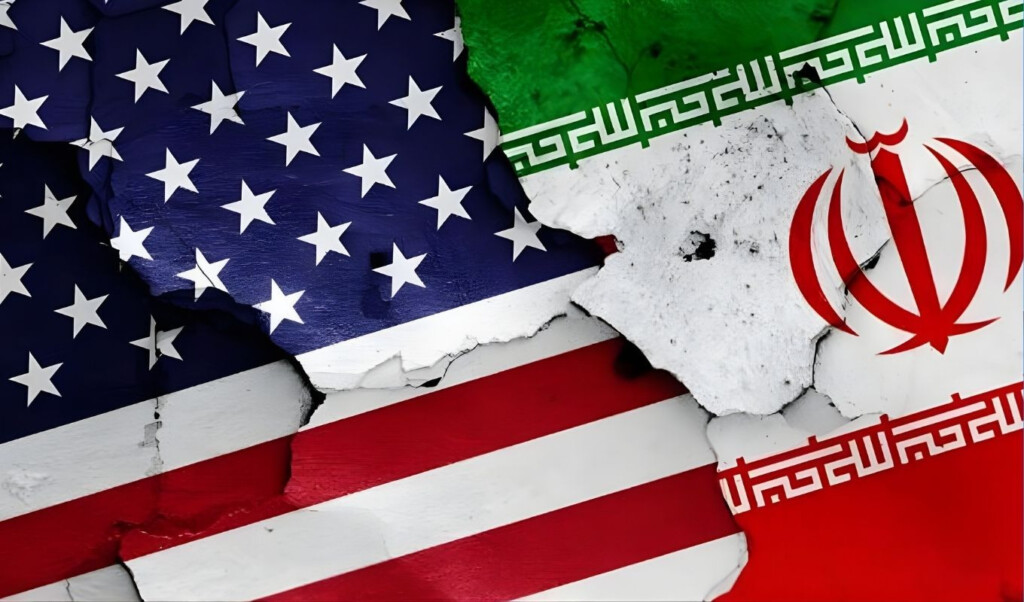
Iran is currently grappling with severe economic pressure that has made the domestic situation highly volatile. Protests against deteriorating living standards have increasingly escalated into unrest, prompting concerns over potential destabilisation. Multiple analysts argue that two international powers— the United States and Israel—are actively leveraging these grievances to advance strategic interests, while simultaneously preparing the ground for broader security operations.
Former US President Donald Trump has openly supported individuals and groups in Iran who seek to foment instability, and has issued direct threats to the Iranian government. While he portrays himself as a protector of the Iranian people, analysts note that during a brief 12-day conflict alongside Israel, more than a thousand Iranian citizens lost their lives.
In a detailed interview with global politics expert Mohammad Bayat, questions were raised about whether the US and Israel are exploiting Iran’s economic protests for their own political advantage and what their ultimate objectives might be.
According to Bayat, the failure of the 12-day conflict to achieve three principal objectives—destroying Iran’s nuclear programme, undermining its missile capabilities, and reshaping its political structure—has prompted rapid reconstruction of these strategic programmes over the past seven months. This has effectively closed the ‘window of opportunity’ that Israeli Prime Minister Benjamin Netanyahu and allied factions sought for potential strikes.
Reports from outlets such as The Wall Street Journal indicate that Netanyahu’s recent visit to Florida was not focused on Gaza or Lebanon, but rather on obtaining a “green light” for new actions targeting Iran’s power infrastructure. A joint press conference with Trump reinforced this focus.
The strategy being pursued involves exploiting economic, ethnic, and gender-based tensions within Iran to create conditions resembling a civil war—a tactic referred to by analysts as “Libyanisation.” The aim is to generate international support for potential strikes against Iran’s nuclear facilities, IRGC bases, and popular military units.
Western media coverage has framed Iran’s recent economic protests as a national uprising, largely citing the currency’s devaluation and soaring inflation of approximately 50%. However, experts emphasise that these protests are smaller and more contained than similar movements in 2019 and 2022, suggesting that external powers may be attempting to use the unrest as justification for military intervention.
Trump’s interventionist rhetoric, especially via Truth Social, signals US support for potential violent escalation, raising questions about violations of international law and the sovereignty of Iran. Analysts also note that this messaging serves a domestic political purpose: appealing to Republican voters while signalling that US policy in the Middle East remains influenced by pro-Israel lobbying.
Key Indicators of Iranian Economic Unrest:
| Indicator | Current Status | Historical Comparison | Implications |
|---|---|---|---|
| Inflation | ~50% | 2019: 35%, 2022: 45% | High cost of living fuels protests |
| Currency Devaluation | Significant | 2019 & 2022: Moderate | Reduces public purchasing power |
| Protest Size | Limited | 2019 & 2022: Larger | Suggests controlled unrest, not nationwide revolt |
| Casualties (12-day conflict) | 1,000+ | N/A | Humanitarian and political impact |
| International Involvement | US & Israel | N/A | Signals strategic exploitation of unrest |