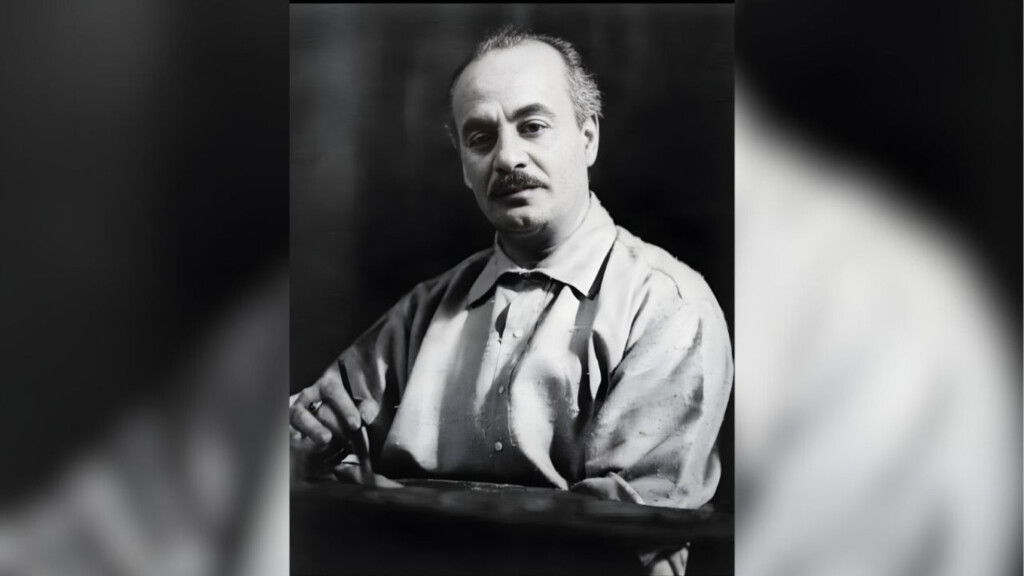
Poverty, exile, profound sorrow, and transcendental love: these four elements define the life of Kahlil Gibran. A titan of both Arabic and English letters, Gibran was far more than a writer; he was a polymath—a poet, novelist, philosopher, and visual artist who transformed grief into a language of hope and turned love into a universal philosophy.
Origins and the Breadth of Exile
Born on 6 January 1883, in the village of Bsharri, nestled within the sacred, mountain-rimmed Kadisha Valley of northern Lebanon, Gibran’s early years were marked by hardship. Born into a Maronite Christian family, he endured a childhood shadowed by poverty and a father whose financial irresponsibility left the burden of survival on his mother, Kamila.
In 1895, seeking a reprieve from destitution, the family emigrated to Boston, Massachusetts. This transition to the West was the catalyst for Gibran’s evolution. It allowed him to meld the mystical spirituality of the East with the rationalism of the West, creating a literary voice that transcended geographical and religious boundaries.
The Artist and the Mahjar Movement
Gibran’s education in Boston flourished alongside his developing artistic sensibilities. He eventually travelled to Paris to study painting, where his sketches and canvases began to reflect the same philosophical depth found in his prose.
Returning to the literary world, he became a leading figure of Al-Mahjar (The Emigrant Arabic Literature Movement). Alongside other diaspora writers, Gibran broke the rigid shackles of traditional Arabic poetic forms, introducing a new era of individualism, emotional liberty, and humanism.
Literary Legacy and Global Reach
The pinnacle of Gibran’s career came in 1923 with the publication of The Prophet. This was not merely a collection of poems but a codex of spiritual wisdom. Through the character of Almustafa, Gibran explored the human condition—addressing love, marriage, work, joy, and death with a simplicity that masked profound depth.
Today, Gibran holds a prestigious rank in the global literary canon:
After William Shakespeare and Laozi, Kahlil Gibran is regarded as the third best-selling poet in history.
Key Works of Kahlil Gibran:
| Title | Year of Publication | Language/Theme |
|---|---|---|
| The Madman | 1918 | His first English book; parabolic philosophy. |
| The Forerunner | 1920 | Exploration of human evolution and spirit. |
| The Prophet | 1923 | Masterpiece; translated into over 100 languages. |
| Sand and Foam | 1926 | A collection of aphorisms and maxims. |
| Jesus, the Son of Man | 1928 | A portrayal of Jesus through various perspectives. |
Philosophy and Death
At the heart of Gibran’s philosophy was the “Universal Man”—a being that exists beyond the constraints of state, creed, or time. He viewed love as the ultimate path to liberation and saw suffering as the forge in which the soul is purified. For Gibran, the Divine was not a distant, fearful entity, but the very essence of love residing within the human heart.
Gibran passed away in a New York hospital on 10 April 1931, at the young age of 48. In accordance with his final wishes, his body was returned to Lebanon with state honours and interred in a secluded mountain monastery in Bsharri. Even in death, Gibran remains more than a poet; he is a global institution and a timeless voice that continues to offer light to those wandering in the shadows of their own sorrow.