Friday, 21st August 2026

Khabor Wala Desk
Published: 9th January 2026, 12:59 PM
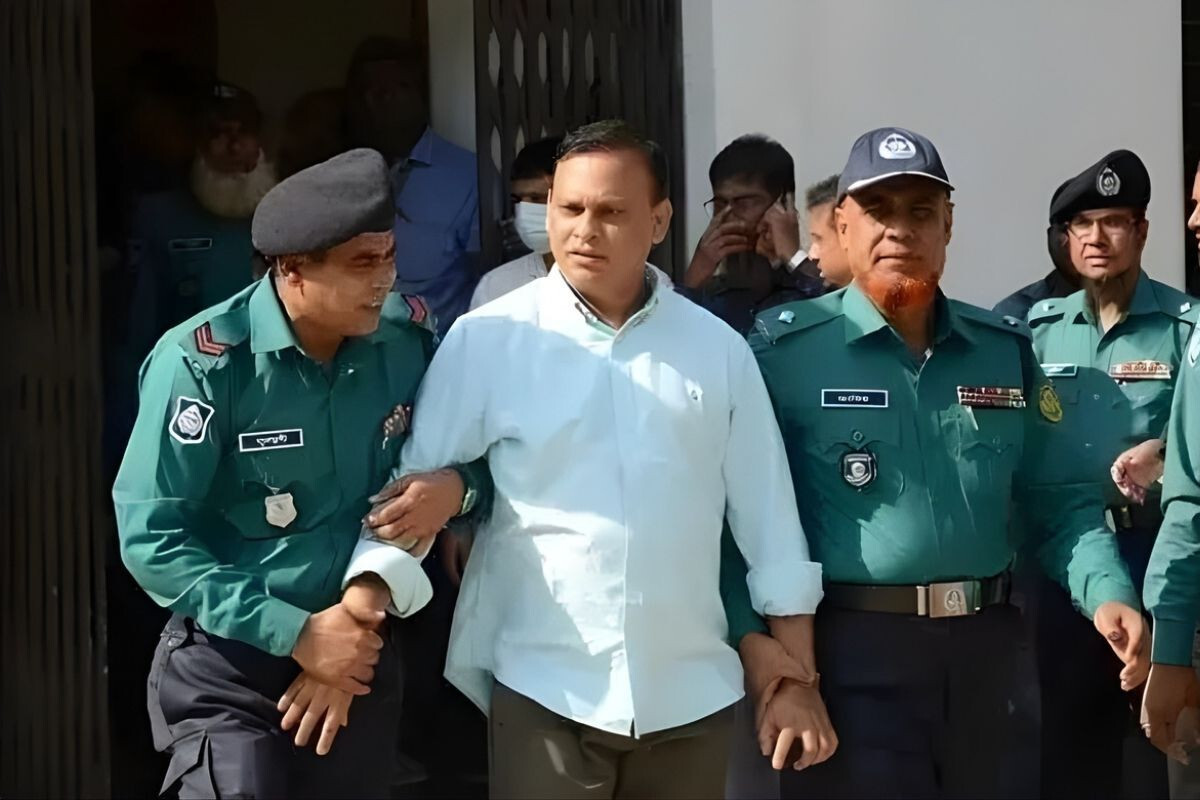
In a significant development, former Chief of Army Staff General (Retd.) Iqbal Karim Bhuiya has submitted a detailed statement to the investigative wing of the International Crimes Tribunal regarding enforced disappearances and extrajudicial killings during the previous Awami League government. His deposition contains specific allegations against former military officer Major General (Retd.) Ziaul Ahsan, revealing a pattern of extrajudicial actions and military misconduct spanning more than a decade.
General Bhuiya’s testimony highlights that upon assuming the role of Additional Director General (ADG) of the Rapid Action Battalion (RAB), Ziaul Ahsan’s behaviour became increasingly unrestrained. According to Bhuiya, Ahsan significantly escalated extrajudicial killings during his tenure, taking actions that went far beyond his official remit.
He further described that Ziaul maintained armed security personnel within his residential tower, installed weapons at home, and deployed CCTV cameras throughout his flat. Despite repeated instructions to remove guards, dismantle cameras, comply with military housing regulations, and abstain from stockpiling arms, Ahsan’s conduct reportedly worsened over time.
Brigadier General Fazal, a colleague, reportedly likened dealing with Ziaul to speaking with someone “whose mind is filled with stones or bricks, impervious to reason.” Bhuiya noted that the officer challenged commands and resisted authority, ultimately leading to his designation as ‘Persona Non Grata’ in the western cantonment housing, while being allowed to reside in the eastern residential area.
The former army chief also spoke of broader political manoeuvres during the 1996–2001 period, noting that former Prime Minister Sheikh Hasina took decisive measures to consolidate Awami League control. These included initiating war crimes trials, abolishing the caretaker government system, and introducing stricter punishments for constitutional violations. Bhuiya added that officers perceived as independent or highly competent were systematically removed and replaced with loyalists, many appointed based on past allegiance or familial ties.
He further revealed that Sheikh Hasina appointed Major General Tarek Ahmed Siddiqui as her security adviser, granting him unprecedented influence over military promotions, procurement, and operational decisions. Over time, Siddiqui reportedly extended his authority across multiple institutions, including the Directorate General of Forces Intelligence (DGFI), National Security Intelligence (NSI), Border Guard Bangladesh (BGB), Ansar, and RAB. Under his directive, certain units allegedly became involved in kidnappings, land grabs, extortion, torture, and extrajudicial killings.
The International Crimes Tribunal-1 has concluded hearings on charges against Major General (Retd.) Ziaul Ahsan relating to enforced disappearances and extrajudicial killings spanning the past fifteen years. The tribunal, led by Justice Md. Golam Mortuza Majumdar, has scheduled a verdict for 14 January, during which former Army Chief General (Retd.) Iqbal Karim Bhuiya is set to testify.
| Period / Role | Alleged Actions | Remarks / Outcome |
|---|---|---|
| ADG, RAB | Escalated extrajudicial killings; armed residence; CCTV monitoring | Repeated instructions to comply with regulations ignored |
| Military hierarchy | Challenged commands from superiors; resisted authority | Declared Persona Non Grata in western cantonment |
| Political-military interplay | Officers removed based on perceived disloyalty; loyalists promoted | Consolidation of power under Awami League |
| Security adviser influence | Major Gen. Tarek Siddiqui controlled promotions, procurement, intelligence agencies | Units allegedly involved in ghum, torture, land grabs, extrajudicial killings |
| Tribunal proceedings | Hearings on enforced disappearances and killings | Verdict scheduled for 14 January 2026 |
This statement provides a rare insight into the nexus between political authority, military influence, and human rights abuses, highlighting long-standing concerns over accountability and institutional integrity in Bangladesh.



Comments