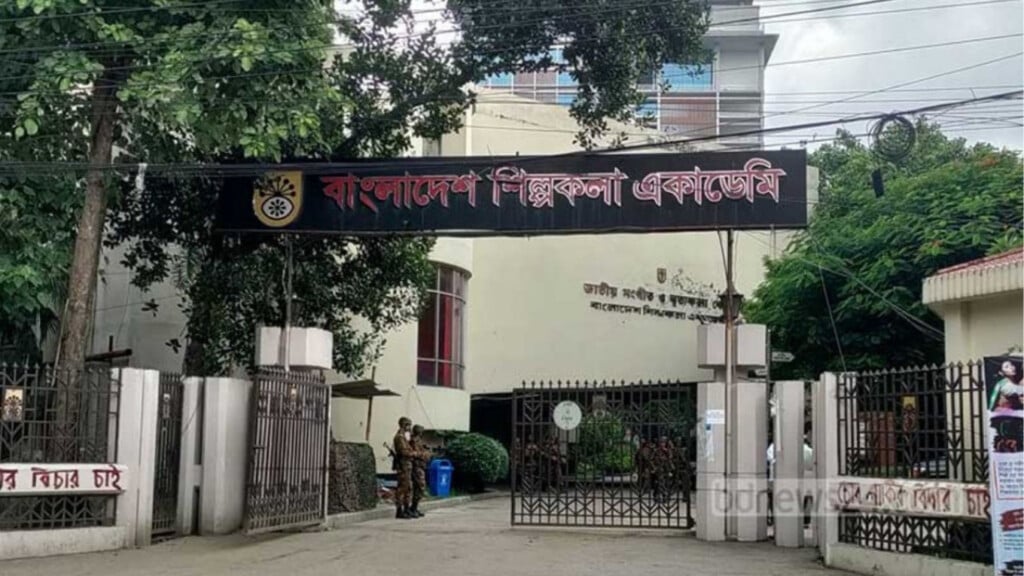
In a landmark move to modernise Bangladesh’s premier cultural institution, the Advisory Council has officially approved the “Bangladesh Shilpakala Academy (Revised) Ordinance 2025.” Presided over by Chief Adviser Professor Muhammad Yunus on Thursday, 8 January 2026, the session formalised a structural expansion designed to make the Academy more dynamic, inclusive, and attuned to contemporary artistic mediums.
Structural Expansion and Modernisation
The core of the reform lies in the expansion of the Academy’s divisional framework, which has grown from six to nine distinct departments. This restructuring addresses decades-long demands from the artistic community. Most notably, Film has finally been elevated to a standalone department, a move expected to provide the industry with much-needed institutional support. Furthermore, Photography has been introduced as a dedicated wing, alongside a forward-thinking department for New Media, Cultural Branding, and Festivals.
These changes reflect a strategic shift towards professionalising the arts and ensuring that digital-age mediums are given the same institutional weight as traditional performing arts.
Table: Revised Departmental Structure of Bangladesh Shilpakala Academy
| No. | Department Name | Key Focus Areas |
|---|---|---|
| 1 | Administration and Finance | Corporate governance, budgeting, and operations. |
| 2 | Music | Preservation of classical and folk music traditions. |
| 3 | Fine Arts | Painting, sculpture, and visual arts exhibitions. |
| 4 | Theatre | Drama, stagecraft, and theatrical productions. |
| 5 | Film | Cinema research, archiving, and development. |
| 6 | Dance & Performing Arts | Classical dance and diverse performing art forms. |
| 7 | Photography | Visual documentation and photographic exhibitions. |
| 8 | Cultural Branding & Festivals | National branding and major production management. |
| 9 | Research, Publishing & New Media | Academic inquiry, digital art, and publications. |
Reforms in Governance and Inclusivity
Beyond departmental changes, the 2025 Ordinance introduces fundamental shifts in the Academy’s Executive Council. In a departure from the previous system, which only allowed representation from three specific disciplines, the council will now include eight distinguished representatives from eight specialised branches of the arts.
To ensure geographical equity and prevent regional dominance, the ordinance stipulates that no more than one representative can be nominated from a single administrative division. In a historic first for the institution, the governing body must now also include:
One cultural figure from an ethnic minority group, ensuring indigenous voices are heard.
An editor of a national daily newspaper, to bridge the gap between cultural policy and public discourse.
A New Chapter for National Culture
The inclusion of Film and Photography as autonomous departments is seen as a victory for researchers and practitioners who have long argued for institutional permanence. By integrating New Media and Cultural Branding, the Academy aims to position Bangladeshi culture more effectively on the global stage. These reforms are expected to streamline funding, enhance research capabilities, and foster a more multifaceted cultural landscape that reflects the diversity of the nation.