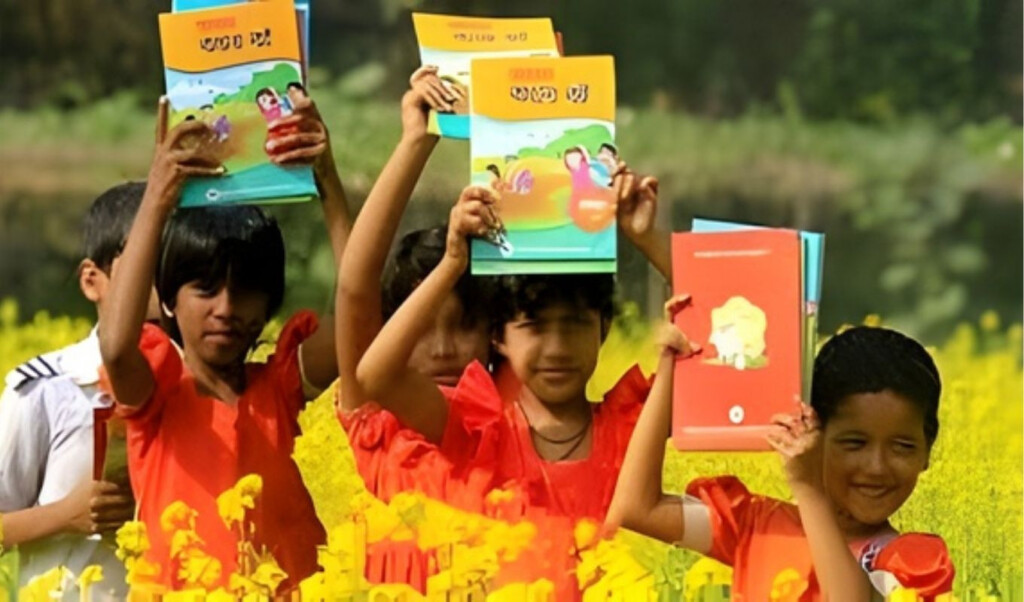
The start of a new year in Bangladesh is traditionally marked by the festive distribution of textbooks to students, a ritual that symbolises the beginning of learning and academic progress. Yet, once again, this familiar scene has been disrupted. Weeks into the new year, a significant number of students in secondary schools and ibtedayee (primary-level madrasa) institutions are still awaiting the delivery of their textbooks. The National Curriculum and Textbook Board (NCTB) has, once more, failed to ensure timely distribution.
While the delivery of textbooks for primary-level students has largely been completed, substantial delays have affected the printing and distribution of materials for secondary and ibtedayee students. According to the NCTB, the late commencement of the tendering process directly delayed printing schedules, which in turn impacted textbook delivery. Consequently, many students have been forced to attend classes without essential learning materials in the initial weeks of the academic year.
As of Sunday, 11 January, the NCTB reported that 29,218,609 textbooks had yet to reach students, representing 13.63% of the total required textbooks.
| Level of Education | Total Textbooks Required | Delivered Textbooks | Pending Textbooks | Completion (%) |
|---|---|---|---|---|
| Primary | 130,000,000 | 130,000,000 | 0 | 100 |
| Secondary & Ibtedayee | 214,585,274 | 185,095,665 | 29,489,609 | 86.37 |
| Total | 344,585,274 | 315,095,665 | 29,489,609 | 91.45 |
NCTB authorities have assured that distribution will be completed by 15 January. However, repeated past delays have already raised concerns among parents and teachers about the organisation’s ability to meet deadlines. Mohammad Matiur Rahman Khan, the NCTB Distribution Controller, confirmed that as of 10 January, 185,095,665 textbooks for secondary and ibtedayee levels had been delivered, with full distribution expected by 15 January.
Earlier, on 4 January 2026, the NCTB had reported that approximately 84.78% of textbooks across all levels had been distributed.
To mitigate learning disruptions, the NCTB has uploaded digital versions of all textbooks to its website since 28 December 2025, providing students with temporary access to curricular materials. However, access to these online resources is uneven due to limited internet connectivity in many regions, meaning that digital textbooks cannot fully substitute for physical copies.
As this recurring challenge persists year after year, questions remain about when the NCTB will finally resolve its long-standing issues with textbook distribution and ensure that every student begins the academic year adequately prepared.