Thursday, 20th August 2026

Khabor Wala Desk
Published: 12th January 2026, 2:48 PM
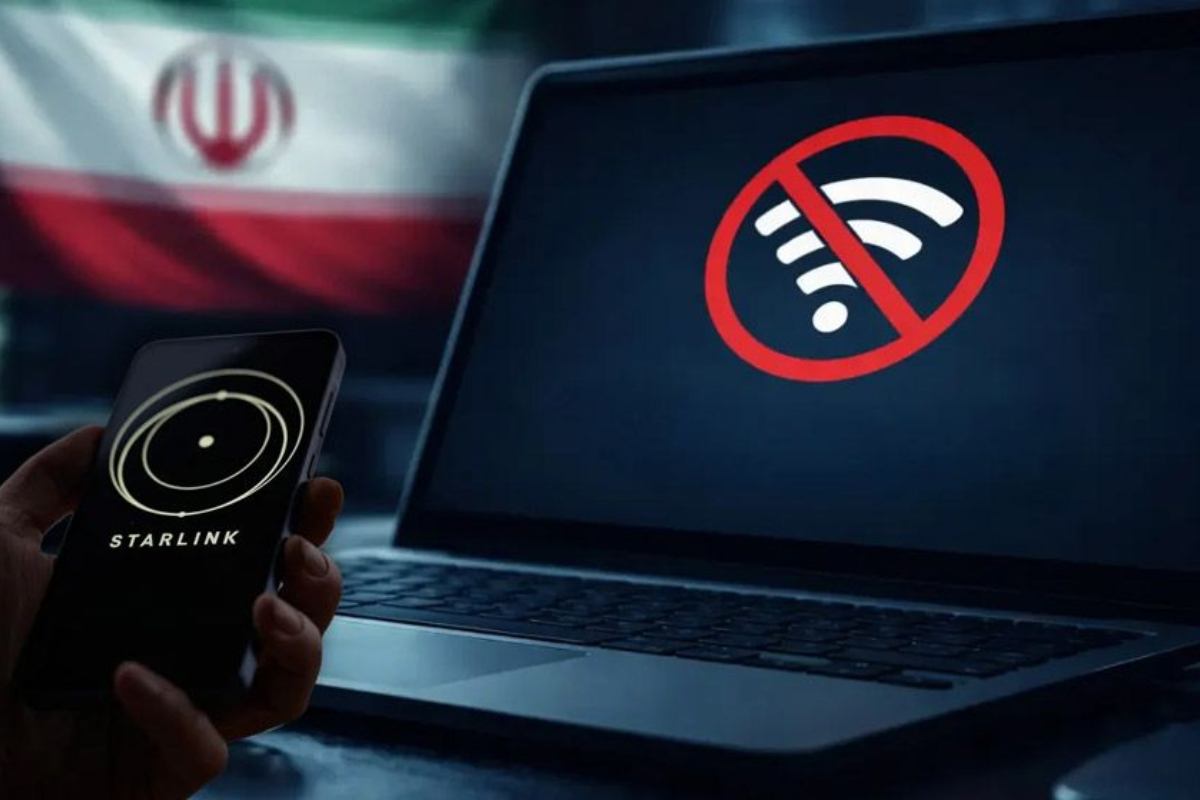
Iran has become the first country in the world to effectively disable the satellite internet service Starlink, owned by American billionaire Elon Musk, through extensive military-grade signal jamming. Analysts describe the move as unprecedented and highly significant, marking a new phase in state-led control over satellite-based digital communications.
According to reports by Iran Wire, although several thousand Starlink receiver units are believed to be present inside Iran, their ability to connect to satellites has been severely disrupted. In the initial phase of the operation, approximately 30 per cent of Starlink’s uplink and downlink traffic was affected. Within a matter of hours, however, the disruption intensified dramatically, with more than 80 per cent of traffic reportedly blocked, rendering the service virtually unusable across large parts of the country.
A separate report by The Times of Israel notes that the number of Starlink receivers in Iran is currently higher than at any previous point. Despite this growth, the Iranian government has never granted official permission for Starlink to operate within its borders. As a result, the service is deemed illegal under Iranian law, and users have relied on it largely as an alternative means of communication during periods of state-imposed internet restrictions.
Technically, Starlink receivers depend heavily on GPS signals to establish and maintain a connection with low-Earth orbit satellites. Security analysts suggest that Iran has deliberately targeted this vulnerability. According to The Times of Israel, Iran has been intermittently disrupting GPS signals since June last year, following a 12-day conflict with Israel. This sustained interference has now culminated in widespread satellite internet outages, with the impact varying by region—some areas experiencing partial connectivity, while others have faced near-total digital blackouts.
| Aspect | Details |
|---|---|
| Method used | Military-grade GPS and satellite jamming |
| Initial traffic disruption | Around 30 per cent |
| Peak disruption level | Over 80 per cent |
| Legal status of Starlink | Unauthorised and illegal in Iran |
| Regional impact | Partial access to total blackout |
Amid the growing instability, Iran’s Foreign Minister Abbas Araghchi has pledged that nationwide internet services, which have been largely suspended, will be restored in the near future. Speaking on Monday (12 January), he said the government was working closely with relevant security agencies to normalise digital connectivity. He also assured that communication links with foreign embassies and government ministries would soon be re-established.
It is worth noting that Iran has enforced a complete internet shutdown for the past four days in an effort to suppress ongoing anti-government protests. The demonstrations, which began on 28 December, were triggered by soaring prices of essential goods and severe inflation, and have since spread to multiple cities across the country.
By disabling Starlink, Iran has signalled its willingness to confront even space-based communication technologies in order to maintain information control, a development that could have far-reaching implications for global debates on digital freedom and satellite internet governance.




Comments