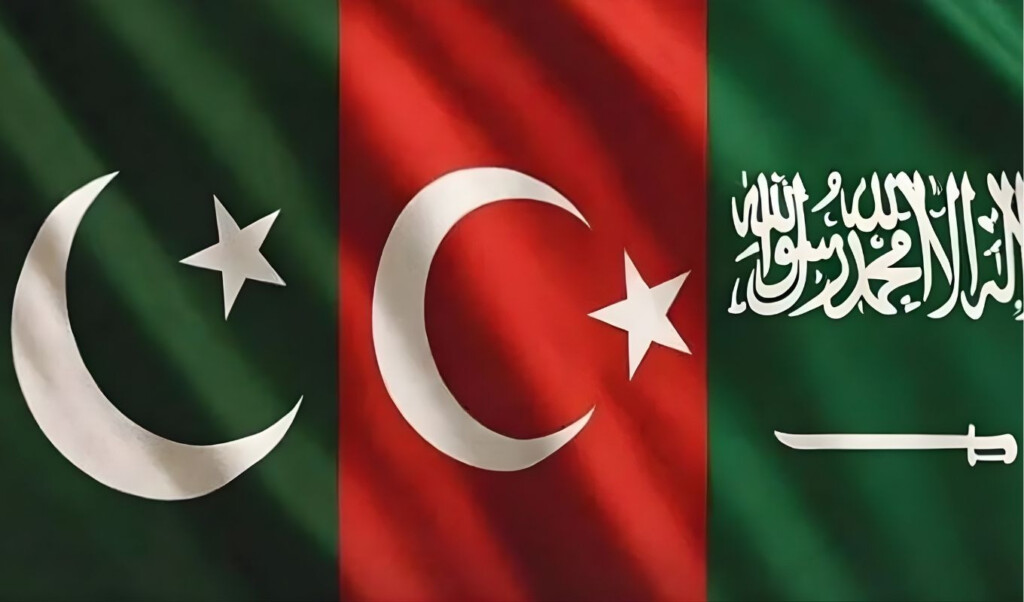
Speculation is mounting in international strategic circles over Bangladesh’s potential accession to a nascent military alliance comprising Pakistan, Turkey, and Saudi Arabia, particularly following the country’s forthcoming national elections. Analysts suggest that if Dhaka formally joins this alliance, it could significantly reshape the security architecture of South Asia.
Over recent months, high-level military dialogues between Dhaka and Islamabad have intensified, while Pakistan and Saudi Arabia’s existing Strategic Mutual Defence Agreement has provided further impetus to these discussions. Security experts view these developments as part of a broader regional geopolitical realignment that has accelerated since Bangladesh’s political transition in 2024.
The alliance’s foundation was laid in September 2025, when Pakistan and Saudi Arabia signed a defence pact stipulating that an attack on either party would be considered an attack on both, echoing NATO’s collective defence principle. In January 2026, Turkey reportedly entered advanced discussions to join, potentially completing a strategic triad combining Pakistan’s nuclear capability, Turkey’s NATO-backed second-largest army, and Saudi Arabia’s financial clout.
For Bangladesh, membership could open new avenues in military training, counter-terrorism collaboration, and joint production of defence equipment. The Bangladesh Armed Forces have already demonstrated keen interest in modelling a draft agreement on Pakistan’s Saudi-style defence pact. Over the past year, Pakistani military delegations have visited Dhaka with increasing frequency, signalling deepening bilateral cooperation.
During a January 2026 visit by the Chief of the Bangladesh Air Force to Pakistan, detailed discussions were held regarding the acquisition of JF-17 Thunder fighter jets, which could play a pivotal role in Bangladesh’s Forces Goal 2030 modernisation plan. Additionally, Pakistan has pledged rapid delivery of Super Mushshak training aircraft to Bangladesh. Analysts emphasise that this cooperation extends beyond procurement to include intelligence sharing and joint military exercises.
Nonetheless, Bangladesh’s participation ultimately hinges on the foreign policy stance of the government formed after the 12 February elections. While the interim administration has advanced draft agreements, formal approval will rest with the next elected parliament. Security experts see this alliance as an opportunity to modernise Bangladesh’s defence capabilities and maintain regional power balance, though domestic political sensitivities require cautious navigation.
If realised, Bangladesh’s entry into this quadrilateral alliance would mark an unprecedented security collaboration among some of the most influential Muslim-majority nations.
Proposed Military Alliance Overview
| Country | Key Strengths | Current Status | Notable Assets Discussed with Bangladesh |
|---|---|---|---|
| Pakistan | Nuclear capability, experienced military | Founding member | JF-17 Thunder jets, Super Mushshak trainers |
| Turkey | NATO’s second-largest army | Advanced talks for accession | Joint military exercises, strategic coordination |
| Saudi Arabia | Financial and logistical power | Founding member | Funding, joint defence initiatives |
| Bangladesh | Emerging military modernisation | Potential member | Training, procurement, counter-terrorism cooperation |