The rapid proliferation of battery-operated rickshaws in Dhaka has sparked intense debate over urban mobility, safety, and congestion. A recent comprehensive study titled “Urban Mobility Study: Rickshaw in Transition” reveals that a significant majority of commuters—56.6%—are now advocating for the strict regulation of these motorised three-wheelers to mitigate rising road hazards.
Public Sentiment and Safety Concerns
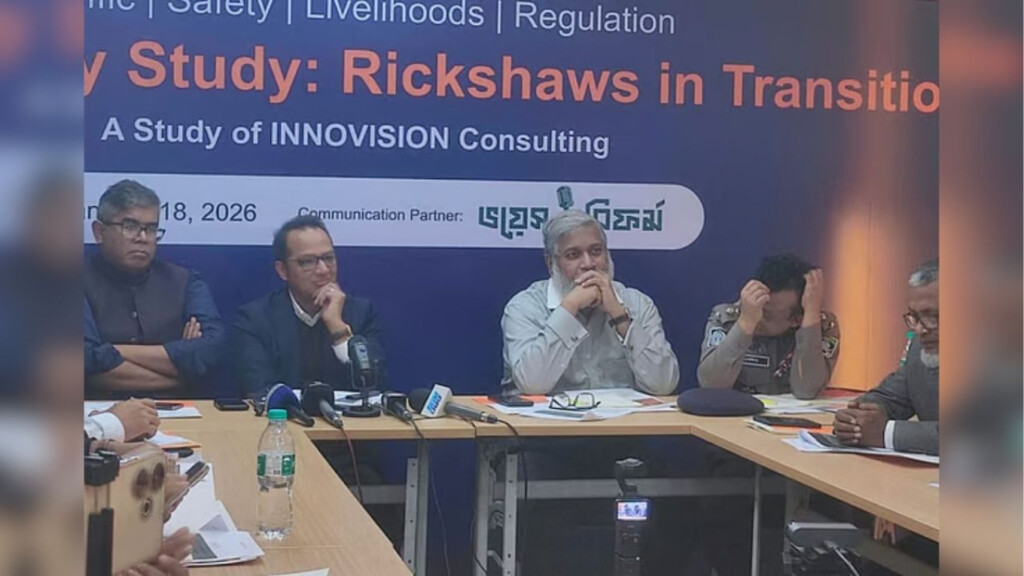
The research, conducted by the consultancy firm Innovision and presented on Sunday at the BDBL Building in Karwan Bazar, surveyed a diverse group including 392 passengers, 384 drivers, and 63 garage owners. While over half of the passengers seek stringent controls, the study found that 21.9% support a total ban on the vehicles. Conversely, 33.9% of respondents believe battery-powered rickshaws should be permitted to operate exclusively on narrow residential lanes (alleys) rather than main thoroughfares.
Safety remains a primary point of contention. Approximately 30% of passengers perceive battery-powered rickshaws as a high-risk mode of transport, compared to only 18% who feel the same about traditional pedal rickshaws. This perception is corroborated by the fact that 75% of battery-operated rickshaw drivers have no prior experience in the profession, with many being younger individuals who have recently joined the sector following shifting economic conditions.
Efficiency vs. Congestion
Despite the risks, the vehicles remain incredibly popular. The study highlights that 82% of passengers frequently choose battery-powered rickshaws because they are faster, more affordable, and more readily available than their manual counterparts. However, this convenience comes at a cost to the city’s overall traffic flow. 62% of respondents blame these motorised units for the worsening gridlock in the capital.
Key Findings: Rickshaws in Transition
| Category | Battery-Powered Rickshaw | Pedal Rickshaw |
|---|---|---|
| Lack of Official Registration | 97.4% | 85.9% |
| Driver Avg. Debt Amount | 79,927 BDT | 18,654 BDT |
| Driver Experience (Novices) | 75% | Lower |
| Risk of Accident (Passenger View) | 30% | 18% |
| Vehicle Ownership (Not Owned by Driver) | 79% | 65% |
Structural and Economic Challenges
Md. Rubaiyat Sarwar, Managing Director of Innovision, noted during the presentation that the sector suffers from a profound lack of oversight. Nearly all motorised rickshaws operate without any form of legal registration. Furthermore, the drivers are often trapped in significant debt cycles, with battery-powered rickshaw operators carrying nearly four times the debt of manual pedal-pullers.
Experts at the seminar, including Professor Md. Musleh Uddin Hasan of BUET, emphasised that the surge in these vehicles is partly a result of temporary unemployment following the 2024 political transition. To address the crisis, speakers suggested a multifaceted approach:
Licensing and Marking: Implementing specific marking lines for parking to prevent random stopping.
Alternative Employment: Creating job opportunities for those forced into the rickshaw sector by economic hardship.
Public Transit Investment: Improving the formal bus network to reduce the reliance on informal three-wheelers.
While traffic enforcement officers argue that illegal sidewalk shops are equally to blame for congestion, the consensus remains that without long-term planning, driver training, and a coordinated licensing system, Dhaka’s mobility crisis will continue to escalate.