The Bangladeshi government’s recent decision to withdraw bonded warehouse facilities for the import of 10–30 count cotton yarn, aimed at protecting the domestic spinning industry, has sparked serious concern among stakeholders in the country’s leading export sector: ready-made garments. Industry representatives warn that the move could precipitate a major crisis in production and export operations.
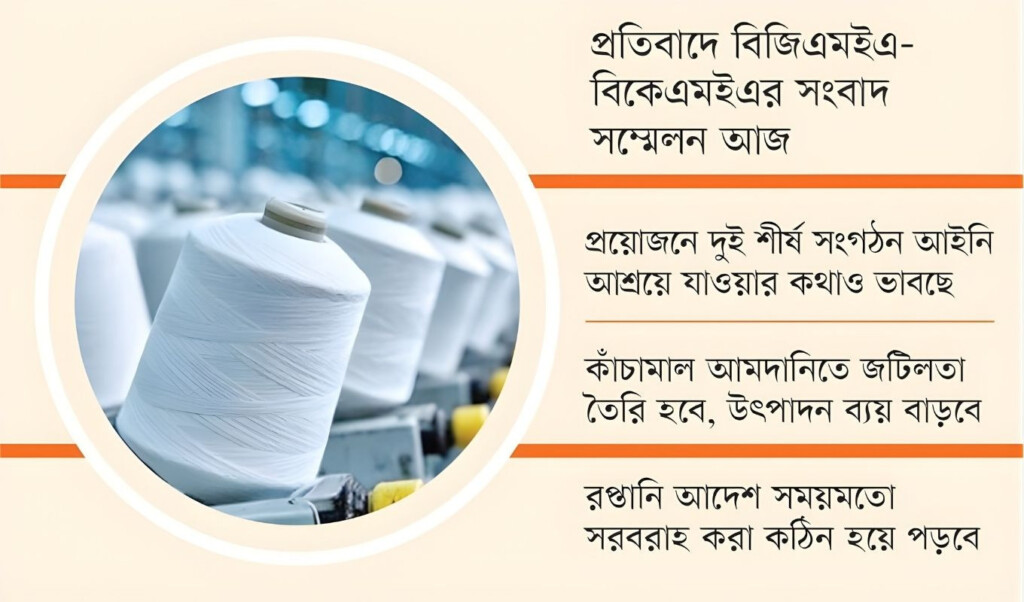
In response, the Bangladesh Garment Manufacturers and Exporters Association (BGMEA) and the Bangladesh Knitwear Manufacturers and Exporters Association (BKMEA) have jointly scheduled a press conference for Monday to voice their objections. Sources indicate that the associations are also prepared to pursue legal action if necessary.
Garment industry insiders argue that the sudden withdrawal of bonded benefits will complicate raw material imports, increase production costs, and make it difficult to meet export orders on time. Such disruptions could damage Bangladesh’s credibility with international buyers and jeopardise export earnings.
According to the Ministry of Commerce, the bonded facility had led to an unusually high volume of imports of lower-count yarn used in export-oriented garment production, resulting in locally produced yarn being sold at lower prices. Domestic spinning mills have struggled to compete under these conditions. The government’s decision follows recommendations from the Bangladesh Tariff Commission and the Bangladesh Textile Mills Association (BTMA), which highlighted the need to strengthen domestic production.
Statistics show a rising trend in yarn imports over recent years:
| Fiscal Year | Yarn Count | Import Volume (Metric Tons) | Import Value (Billion BDT) |
|---|---|---|---|
| 2022–23 | 10–30 | 36,000 | 148.0 |
| 2023–24 | 10–30 | 41,000 | 220.0 |
| 2024–25* | 10–30 | Ongoing increase | — |
*Current fiscal year trends continue upward
The Ministry of Commerce notes that domestic spinning mills are currently operating at only 60% capacity due to pressure from imported low-count yarn. Nearly 50 spinning mills have already closed, with many more incurring losses, putting both industrial investment and employment at risk.
Industry leaders warn that if the government’s decision is implemented, the country’s garment sector could face an immediate raw material shortage, particularly affecting both knitwear and woven garment production. During Monday’s press conference, the associations are expected to demand a government review of the policy and indicate a potential legal challenge if no policy coordination occurs.
The Ministry of Commerce emphasises that, following Bangladesh’s anticipated graduation from Least Developed Country (LDC) status in 2026, duty-free access to major markets such as the European Union, the United States, and Japan will be significantly reduced. Strengthening domestic spinning capacity is therefore considered essential to meet new compliance requirements, including 40–80% local value addition and double-stage transformation.
Fazle Ehsan Shamim, Executive President of BKMEA, told Kaler Kantho that the government’s decision has created conflict between the interests of the spinning and garment industries and could significantly hinder export revenue and increase lead times for shipping.