Friday, 21st August 2026

Khabor Wala Desk
Published: 20th January 2026, 3:18 PM
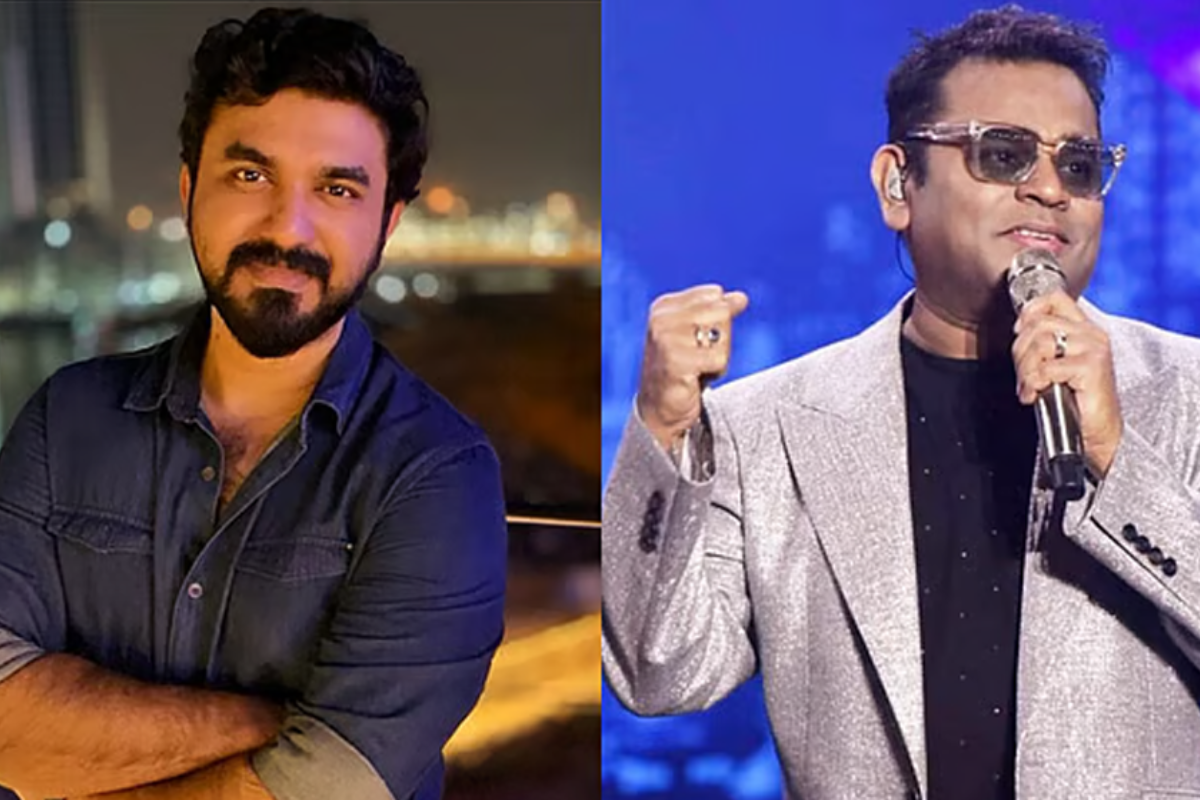
Oscar-winning Indian composer and musician A. R. Rahman has recently found himself at the centre of online debate following a comment he made, sparking significant discussion across India’s social and mainstream media. While opinions have been divided, Rahman appears largely unfazed and has taken the opportunity to clarify his statement.
Amid the ongoing discourse, Malayalam composer Kailas Menon publicly defended the internationally acclaimed musician. Sharing a post on Instagram, Menon emphasised that the critical responses directed at Rahman were not mere critique but bordered on hostile and disrespectful.
In a note titled “Disagree, but Do Not Disrespect”, Menon explained that those condemning Rahman for expressing his personal views were overlooking a fundamental principle: the right to freely share one’s feelings. Menon wrote, “Rahman has only expressed his emotions—this is his right. Others may disagree, but no one can take away his freedom to share his experiences.”
He further highlighted that the nature of the reactions to Rahman’s remarks had exceeded the bounds of normal debate, reaching levels of abuse and character assassination. Mocking his recent work, questioning his beliefs, or labelling his experiences as a “victim card” are not constructive critiques, but rather acts of hostility.
| Aspect | Details |
|---|---|
| Freedom of Expression | Rahman’s right to share his personal views is fundamental. |
| Public Reaction | Criticism escalated into abuse and character attacks. |
| Legacy & Contribution | Decades-long contributions to Tamil culture, Indian cinema, and global music. |
| Ethical Boundaries | Disagreement is valid, but public disrespect is unacceptable. |
Menon emphasised that Rahman is not an “untrained voice” but a musician whose contributions have shaped Indian cinema and global music for decades. Differences in opinion regarding any film or statement are natural, but attacking an artist’s integrity or personal beliefs in public is unjustifiable. Freedom of speech, he added, applies equally to both critics and Rahman himself.
Responding to the controversy, Rahman shared a video message on Instagram on Sunday, 18 January, clarifying his remarks. He stated that his intention was never to hurt anyone’s sentiments. “Music, to me, is always a medium to connect with, celebrate, and honour culture. India is my inspiration, my teacher, and my home. My purpose has always been to uplift, respect, and serve through music,” Rahman said, adding that his comments were never meant to cause pain.
The incident underscores the delicate balance between public critique and respect for artistic integrity, with experts noting that while debate is essential, the dignity of globally respected artists must remain sacrosanct.



Comments