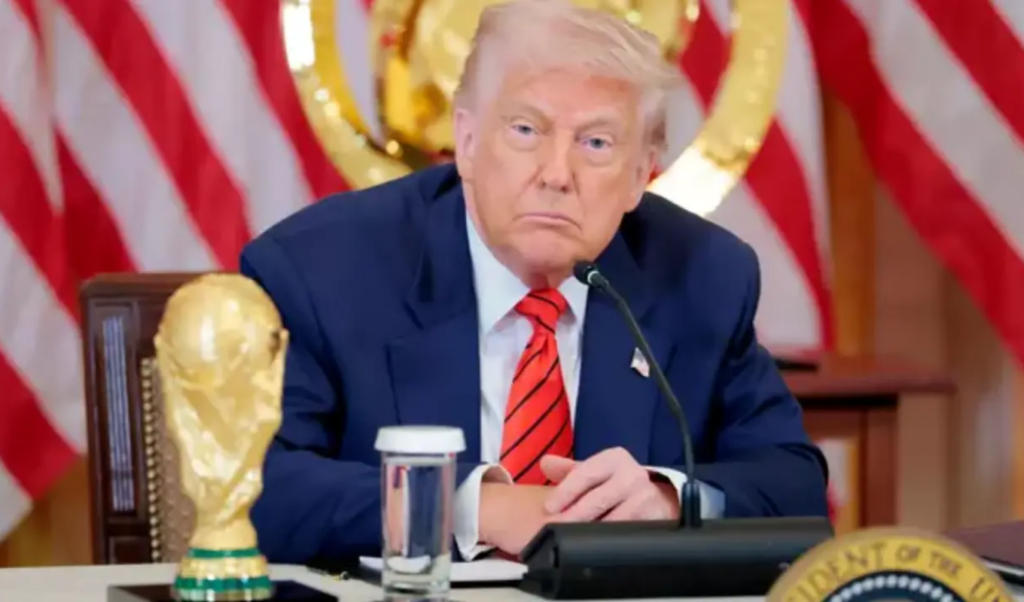
With just five months remaining until the 2026 FIFA World Cup, political tensions are already overshadowing the tournament, which will be jointly hosted by the United States, Canada, and Mexico. The controversy, however, is not about football itself but revolves around the recent actions of U.S. President Donald Trump, which have prompted renewed calls for a boycott.
Political voices in the United Kingdom have urged England and Scotland to reconsider their participation in the tournament. According to reports, British political leaders have criticised Trump’s ambitions over Greenland and his recent conduct, which they describe as “beyond international norms.” Some argue that under such circumstances, participating in the World Cup may be inappropriate. However, it should be noted that these proposals have not been endorsed by sporting authorities or national football federations.
In the group stage of the tournament, the scheduled fixtures are as follows:
| Team | Group | Opponents |
|---|---|---|
| England | B | Croatia, Ghana, Panama |
| Scotland | F | Brazil, Morocco, Haiti |
Amid mounting political pressure, certain MPs have suggested that national teams should align their participation in international sporting events with their broader political and ethical positions. Opposition politicians argue that international athletes and fans should not be subjected to an environment where political tensions overshadow the spirit of the sport.
Football supporters’ reactions to potential boycotts remain uncertain. Scotland’s football authorities have emphasised that their primary goal is to support and compete in the main event, rather than to engage in political posturing. Meanwhile, England’s political discourse has focused more on the debate itself than on any definitive decision to withdraw.
The official schedule for the 2026 World Cup was released last December, and participating nations, including England and Scotland, have already begun preparations. FIFA and other relevant football authorities have not issued any official statements regarding the boycott debate.
The intersection of football and politics is not a new phenomenon, but the 2026 World Cup has brought these issues into sharper focus than ever. Analysts note that political pressures now have the potential to affect the tournament’s dynamics, prompting broader discussions about the balance between sport and diplomacy. How these tensions will evolve in the coming months remains a critical question for teams, fans, and organisers alike.