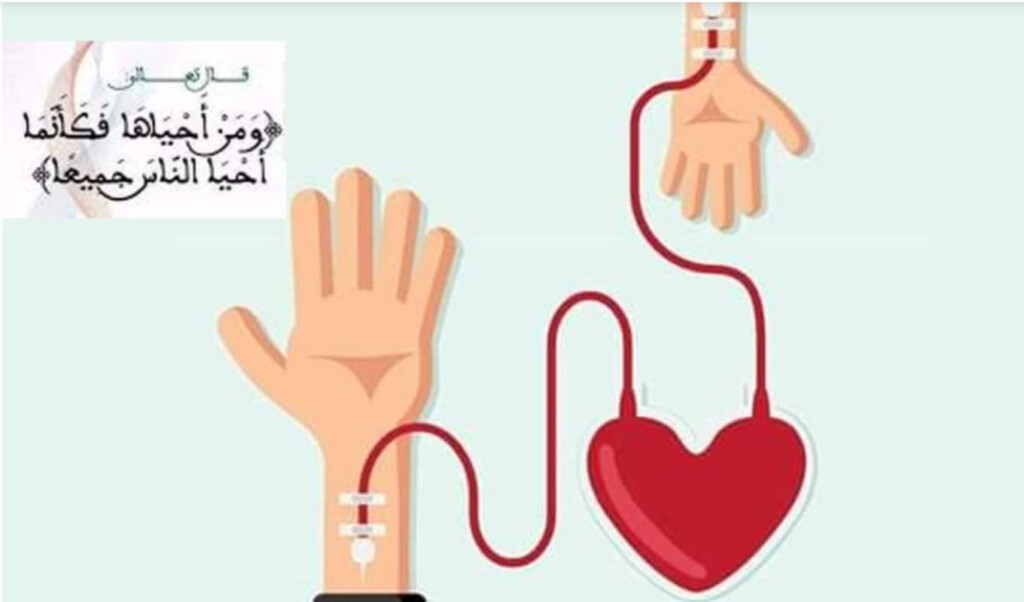
Few actions equal the moral gravity of saving a human life. Across hospitals and emergency wards, countless people face death each day due to a shortage of blood—whether following road accidents, major surgical procedures, childbirth complications, or chronic illnesses such as thalassaemia, cancer, and dengue fever. At such critical moments, voluntary blood donation often becomes the final lifeline. It is not merely an act of medical assistance; it represents compassion, moral responsibility, and, within Islam, a profoundly meritorious deed.
Islam places the preservation of human life among the highest forms of virtue. The Qur’an declares with unmistakable clarity that saving a single life is akin to saving all of humanity. This principle establishes a powerful ethical foundation: any action that directly safeguards life carries immense spiritual value. Blood donation stands as a tangible, practical application of this divine guidance. A healthy individual willingly endures minor inconvenience so that another person may continue to live—an act of selflessness that reflects the essence of Islamic ethics.
The Prophetic traditions further reinforce this ethos of service. The Prophet Muhammad (peace be upon him) taught that the best of people are those who are most beneficial to others. Another well-known narration states that whoever relieves a believer from hardship in this world, God will relieve him from hardship on the Day of Judgement. When a donor responds to an urgent call for blood, particularly for someone standing at the threshold between life and death, these teachings move from theory into lived reality.
From the perspective of Islamic jurisprudence, blood donation is permissible and commendable, provided it does not pose serious harm to the donor. Contemporary scholars agree that donating blood voluntarily, for genuine humanitarian need, and under safe medical conditions is a form of charity (sadaqah). As such, the donor is entitled to spiritual reward, especially when the intention is solely to please God and to alleviate human suffering.
Beyond its spiritual dimension, blood donation requires practical awareness. Not all blood types are compatible, and informed donors can make faster, more effective decisions in emergencies. The table below summarises common blood groups and their typical compatibility:
| Blood Group | Can Donate To | Emergency Importance |
|---|---|---|
| O Positive | Most positive groups | Highest demand |
| O Negative | All blood groups | Critical in emergencies |
| A Positive | A and AB positive | Common surgical use |
| B Positive | B and AB positive | Regular chronic patients |
| AB Positive | AB positive only | Rare but essential |
Blood donation also holds the potential of ongoing benefit. The individual whose life is saved may later contribute to society, support a family, or even save others in return. In this way, a single donation can generate a ripple effect of goodness, resembling continuous charity.
The responsibility, therefore, is clear: those who are healthy should donate blood regularly, encourage awareness within their communities, and offer help without seeking recognition. The intention should remain pure—to protect life for the sake of God.
In conclusion, voluntary blood donation embodies the Qur’anic and Prophetic call to human service. A single drop of blood may illuminate the path to renewed life for another. May we all be granted the ability and willingness to participate in this noble act.