Thursday, 20th August 2026

Khabor Wala Desk
Published: 24th January 2026, 11:32 AM
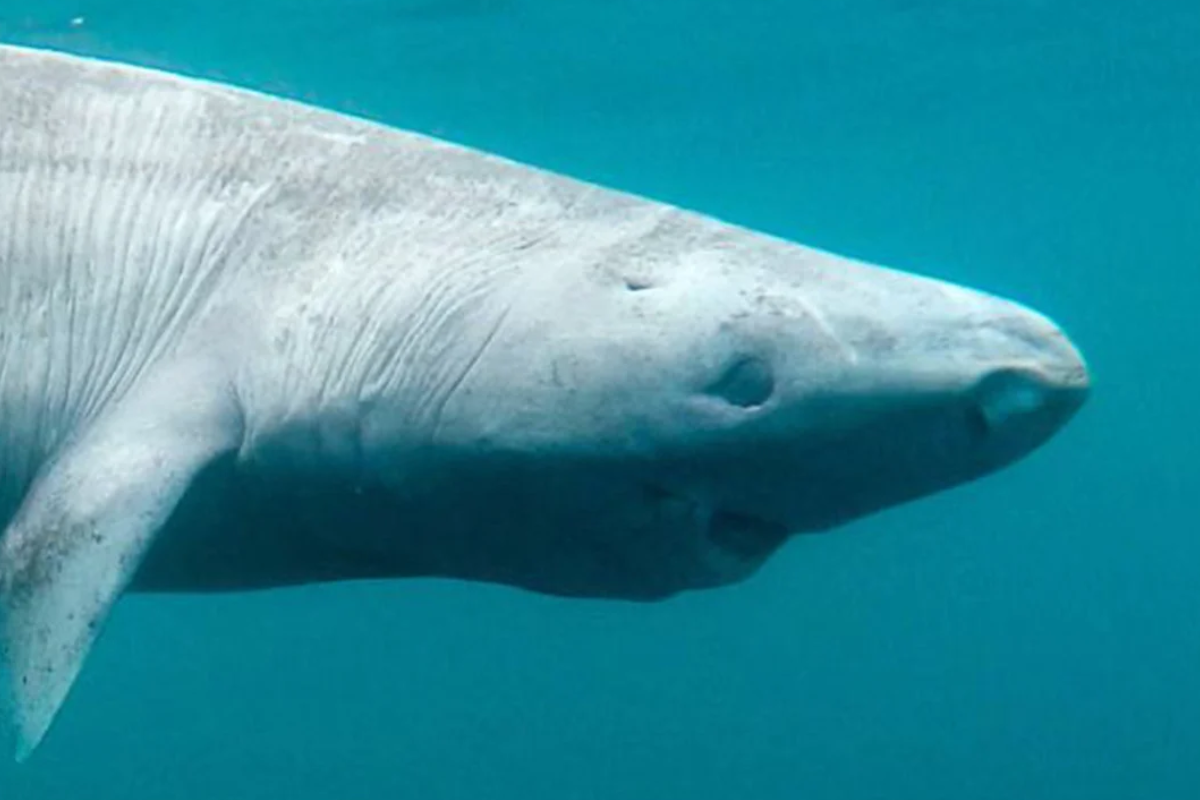
Greenland has recently emerged as a focal point of both scientific curiosity and geopolitical debate. The massive island, located between the North Atlantic and Arctic Oceans, is a semi-autonomous territory under Danish control. Former U.S. President Donald Trump once suggested acquiring the island under the guise of national security, sparking tensions across Europe. Yet amid this political buzz, scientists have uncovered groundbreaking revelations about one of Greenland’s most enigmatic inhabitants: the Greenland shark.
Until now, conventional wisdom painted these sharks as sluggish, nearly blind scavengers drifting in Arctic waters. Media reports described them as slow-moving, almost ghostly creatures, appearing as if “dead before their time,” drifting through twilight Arctic seas in search of carrion. They were often likened to torn, decaying garments rather than fearsome predators.
However, new research has overturned the long-standing belief that Greenland sharks are blind. Studies conducted by teams from five leading universities have revealed that their retinas are structurally intact, capable of detecting light and contrast. While many Greenland sharks’ eyes appear cloudy and are often host to parasitic copepods, their genetic and molecular analyses indicate that they can withstand parasitic invasions and thrive in the harsh Arctic environment.
Canadian marine biologist Jena Edwards remarks, “Greenland sharks remain a profound mystery. Even what we think we know is uncertain. Every discovery seems to pose more questions than answers.”
Despite their slow movement, Greenland sharks are formidable scavengers. Examination of stomach contents shows remains of caribou, polar bears, muskoxen, narwhals, and beluga whales, suggesting a diet that may include active hunting, not just scavenging. Nigel Hussey, a leading Greenland shark expert, corroborates these findings through direct observation, noting that the sharks dive vertically between the surface and the seafloor with remarkable precision—far more dynamically than previously believed.
| Feature | Detail |
|---|---|
| Length | Up to 20 feet |
| Lifespan | Estimated 200–500 years |
| Diet | Carrion, occasional active prey (caribou, whales, narwhals) |
| Vision | Structurally intact retinas; detect light and contrast |
| Movement | Slow but precise vertical dives; uses fins for delicate manoeuvring |
| Reproduction | Unknown; last recorded pregnant female in 1950 |
| Habitat | Arctic and sub-Arctic waters; capable of long migrations |
Scientists continue to grapple with unknowns, especially concerning reproduction. The last documented pregnant female was in 1950, leaving questions about breeding sites and litter sizes unresolved. The sharks’ ability to survive in a rapidly warming Arctic highlights their resilience, adaptability, and evolutionary ingenuity.
Hussey concludes, “These sharks are far more intelligent and capable predators than most assume. Their existence challenges human overconfidence and underscores the vast gaps in our knowledge of Arctic marine life.”




Comments