The government is considering lifting the purchase cap on national savings certificates as part of a broader effort to modernise Bangladesh’s financial markets and improve public debt management, the Finance Secretary has said.
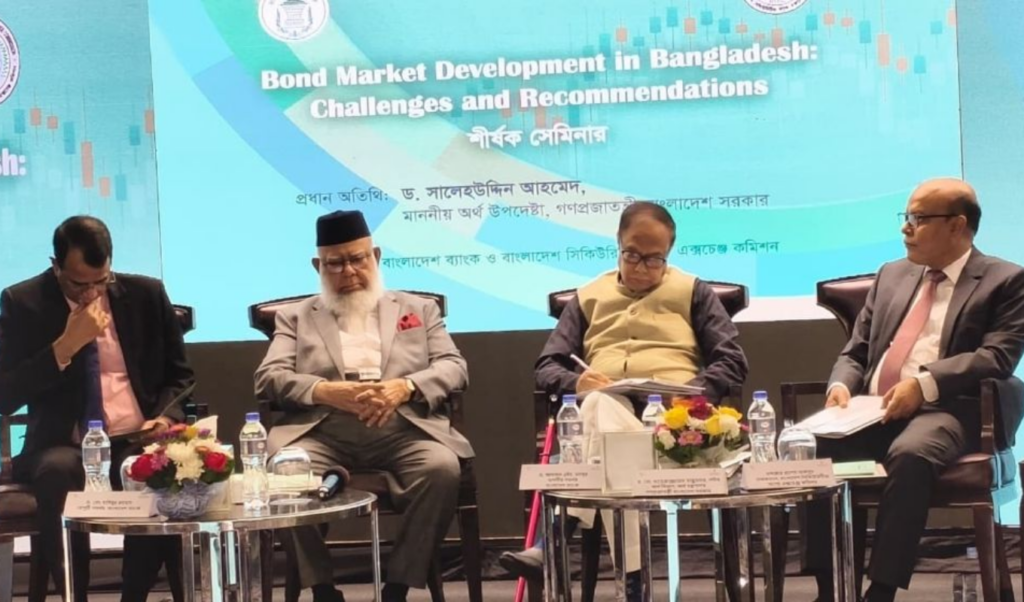
Speaking on Monday (26 January) at a seminar titled “Bond Market Development in Bangladesh: Challenges and Recommendations”, Finance Secretary Dr Md Khairuzzaman Mazumdar indicated that policymakers are reassessing existing rules governing savings instruments in light of changing economic conditions.
Dr Mazumdar noted that the government may take fresh decisions on the buying and selling of savings certificates, including the possible removal of the current purchase ceiling. He explained that while savings certificates have long played a crucial role in protecting small savers—particularly pensioners, retirees and middle-income households—the structure of these instruments must evolve alongside the country’s growing and diversifying financial system.
According to the Finance Secretary, lifting the cap could provide greater flexibility for investors and allow the government to better manage liquidity within the economy. At the same time, he emphasised that any reform would be approached cautiously to ensure that the social objective of safeguarding ordinary savers is not undermined.
The discussion at the seminar placed the issue of savings certificates within the wider context of capital market development. Bangladesh Bank Governor Dr Ahsan H Mansur highlighted the strategic importance of expanding the bond market, arguing that easier and more transparent bond trading could significantly deepen the market.
“If structural and regulatory barriers are removed, the bond market could expand by as much as Tk 6 trillion,” the Governor said. Such growth, he added, would reduce the excessive dependence of large commercial enterprises on bank loans. Instead, corporations would be encouraged either to attract foreign investment or to raise funds directly through the bond market.
Dr Mansur further observed that the long-term sustainability of the bond market depends heavily on controlling inflation and reforming interest rate policy. A unified and market-oriented interest rate framework, he argued, would help restore investor confidence and create a more predictable environment for long-term investment.
Economists attending the seminar noted that savings certificates, while popular, have at times posed challenges for fiscal management due to their relatively high interest rates. Excessive reliance on these instruments can increase the government’s debt servicing costs and distort competition with banks and capital markets. For this reason, experts argue that any relaxation of purchase limits should be coordinated with reforms in the bond and banking sectors.
The possible policy shift reflects a balancing act: maintaining an attractive and secure savings option for citizens while encouraging the development of a more diversified and resilient financial system. If implemented alongside inflation control and interest rate reform, changes to the savings certificate regime could complement efforts to strengthen the bond market and reduce systemic risks in the banking sector.
The key issues discussed at the seminar are summarised below:
| Policy Area | Current Situation | Proposed Direction |
|---|---|---|
| Savings certificates purchase limit | Fixed individual cap | Cap may be withdrawn |
| Investor flexibility | Relatively limited | Greater investment freedom |
| Bond market size | Limited depth and activity | Potential expansion of Tk 6 trillion |
| Corporate financing | Heavy reliance on banks | Shift to bonds and foreign investment |
| Interest rate framework | Multiple and distorted rates | Move towards a unified rate |
Overall, the government’s consideration of lifting the savings certificate cap signals a wider reform agenda aimed at aligning traditional savings instruments with modern capital market development, while carefully managing fiscal risks and investor protection.