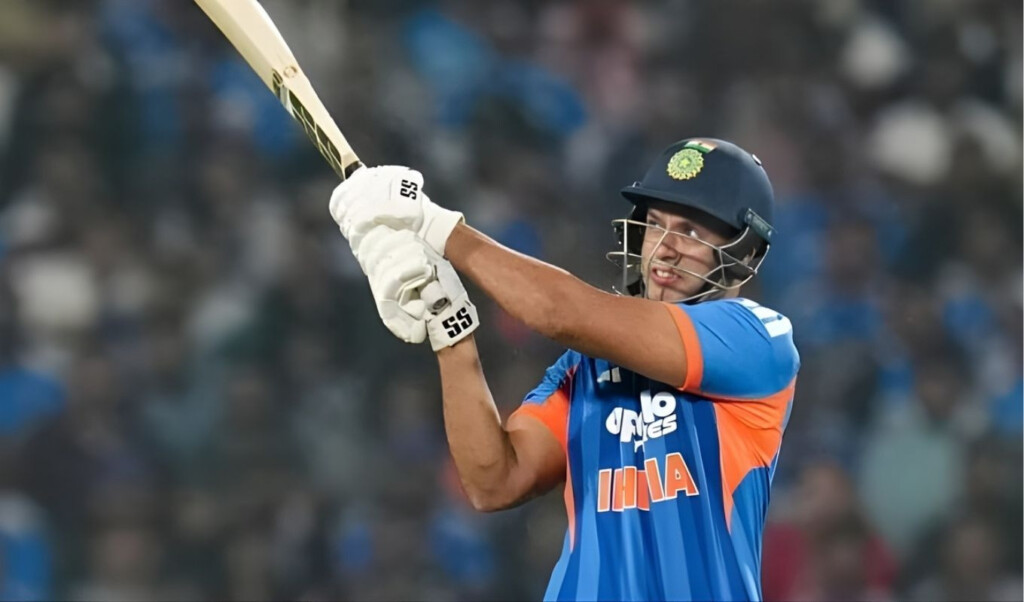
Something unusual unfolded in the tenth over of India’s run-chase against New Zealand in Vizag. Shivam Dube greeted the ball with a towering six before nudging a single to retain strike. Conventional wisdom suggested the captain should immediately turn to a seamer, Dube’s historical weakness. The initial six, dispatched against left-arm spinner and opposition captain Mitchell Santner, had travelled 101 metres—an emphatic statement.
Instead, Santner handed the ball to part-time offspinner Glenn Phillips, seeking to spin the ball away from Dube’s arc on a pitch offering modest grip. That single decision underscored how far Dube has evolved: he is no longer a batter who can be simply subdued with pace. His innings now reveal a deeper repertoire, both as a batter and an all-rounder, cementing his role as a vital cog in India’s T20I machinery.
Dube’s transformation has precedent. He scored 27 off 16 balls in the 2024 T20 World Cup final and 33 off 22 in the Asia Cup final shortly thereafter. On that occasion, he even took the new ball in Hardik Pandya’s absence. Both performances came in high-pressure situations, but the Vizag encounter posed a different challenge—a deliberate experiment.
India, leading the five-match series 3-0, opted to test combinations. Ishan Kishan’s absence stretched the batting, while Arshdeep Singh and a six-batter line-up offered insight into players’ responses to unfamiliar roles ahead of the World Cup. Rinku Singh was promoted to No. 4, and the five frontline bowlers delivered all overs, leaving no fallback for all-rounders.
Suryakumar Yadav explained: “We purposely played six batters today. We wanted five perfect bowlers and to challenge ourselves. It shows how a chase looks if two or three wickets fall early.”
By the time Dube arrived, India’s win probability was two per cent. Abhishek Sharma had fallen first ball, Sanju Samson was still settling, and Suryakumar had already perished. The dew, anticipated to ease batting, never arrived. In these conditions, Dube’s role was singular: lead the innings, with no margin for error.
The result was dazzling. Dube scored 65 off 23 balls, including 36 runs off spin at a strike rate of 400, and 29 runs off pace. His 15-ball half-century became India’s third-fastest in T20Is, briefly giving the chase life before a freak run-out ended his stay.
| Player | Runs | Balls | Strike Rate | Runs vs Spin | Runs vs Pace |
|---|---|---|---|---|---|
| Shivam Dube | 65 | 23 | 282.6 | 36 | 29 |
Santner summed it up: “Dube knows exactly what he wants. When a spinner comes on, he sees a match-up and attacks.” Dube himself credited repetition and trust: “I know what’s coming at me. Playing regularly has sharpened my mindset. Bowling has also made me smarter, even if I didn’t bowl tonight.”
Ultimately, India’s experiment revealed clarity: Dube is no longer a batter to merely target. He is a calculated threat teams must plan around—a player whose evolving skills are reshaping T20 strategies. The chase may have slipped away, but the image of Phillips turning to bowl to Dube captured the batter’s new stature: central, decisive, and uncontainable.