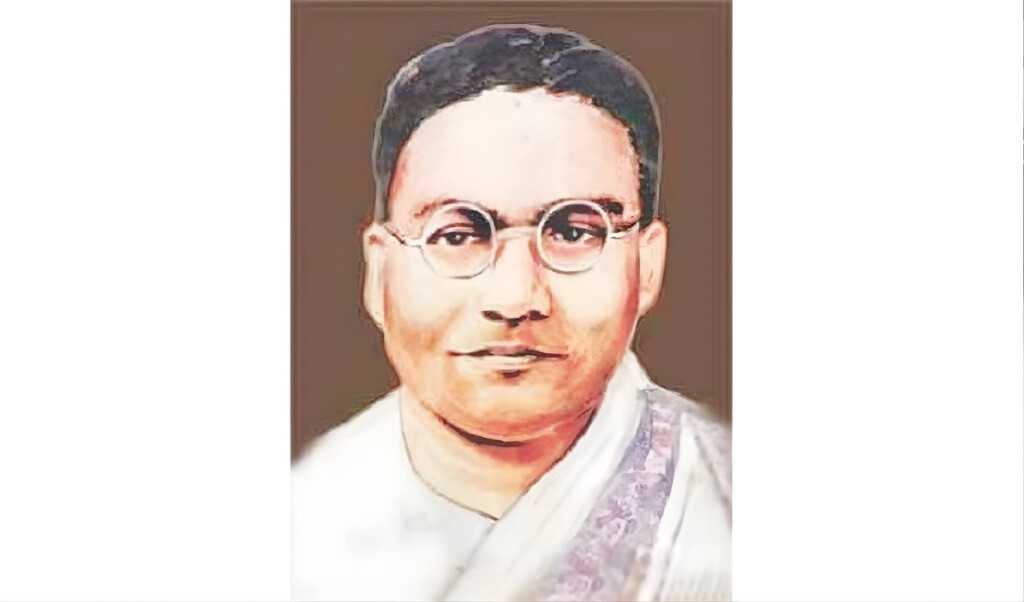
Pakistan’s First Law Minister
In South Asian political history, there are figures whose lives read like silent chronicles—tales of dreams, disillusionment, struggle, and self-respect. Jogendranath Mondal is one such largely uncelebrated yet profoundly significant personality. Despite serving as Pakistan’s first Law Minister, he resigned in protest against state discrimination and left the country—a chapter of history still unknown to many.
A prominent representative of the Bengali Namashudra community in colonial India, Mondal was unwavering in his advocacy for the rights, political empowerment, and dignity of society’s marginalised.
Early Life and Political Rise
Jogendranath Mondal was born on 29 January 1904 in the greater Barisal district.
In the 1937 provincial legislative assembly elections in undivided Bengal, he contested as an independent candidate and defeated the Congress nominee—a remarkable event in the politics of the time. Politically, he was a follower of Netaji Subhas Chandra Bose and Sarat Chandra Bose. When Netaji was expelled from the Congress in 1940, Mondal left the party and aligned with the Muslim League in a new political formation.
Dalit Politics and Collaboration with Ambedkar
Later, he became a member of Huseyn Shaheed Suhrawardy’s ministry. During this period, he collaborated with Dr B. R. Ambedkar to establish the Bengal branch of the Dalit Federation. This initiative was historic in giving institutional shape to Dalit politics.
Partition, Pakistan, and Broken Dreams
During the communal riots of 1946, he firmly urged the Namashudra community not to be drawn into the violence, fearing that they would become mere pawns in the power struggle between Congress and the Muslim League.
After the Partition of India in 1947, he was elected as one of the 69 members of Pakistan’s first legislative assembly and also served as its interim chairman. Subsequently, he was appointed Law and Labour Minister in Liaquat Ali Khan’s cabinet, earning recognition as one of the founding figures of Pakistan.
Mondal believed that, for the upliftment of Bengal’s Namashudra community, trust in Muslim political power offered more security and opportunity than relying on upper-caste Hindu leadership. Yet reality quickly shattered that belief.
Resignation and Protest
Citing discrimination, persecution, and insecurity faced by Hindus under the Pakistani state, he resigned from the cabinet on 8 October 1950. In his resignation letter, he candidly highlighted the government’s failures towards minorities. He then left Pakistan for India, refusing to be complicit in injustice despite being a founding father of the state.
Later Life and Death
Back in India, he settled permanently in Bangaon, in the 24 Parganas district. Though he stepped away from the political centre, his stance in history remained firm and unequivocal.
He passed away in Bangaon on 5 October 1968.
Legacy
From the corridors of power in Barisal and Karachi to a quiet life in Bangaon, the life of Jogendranath Mondal reminds us that politics ultimately belongs to principles and self-respect, not power. He was a politician who stood not with the convenient side of history but on the side of truth.