As geopolitical tensions between Iran and the United States reach a critical threshold, a series of high-level diplomatic manoeuvres have unfolded across the Middle East and South Asia. Regional powers, specifically Turkey and Pakistan, have intensified their mediation efforts in an urgent bid to prevent a wider conflagration.
Ankara’s Strategic Mediation
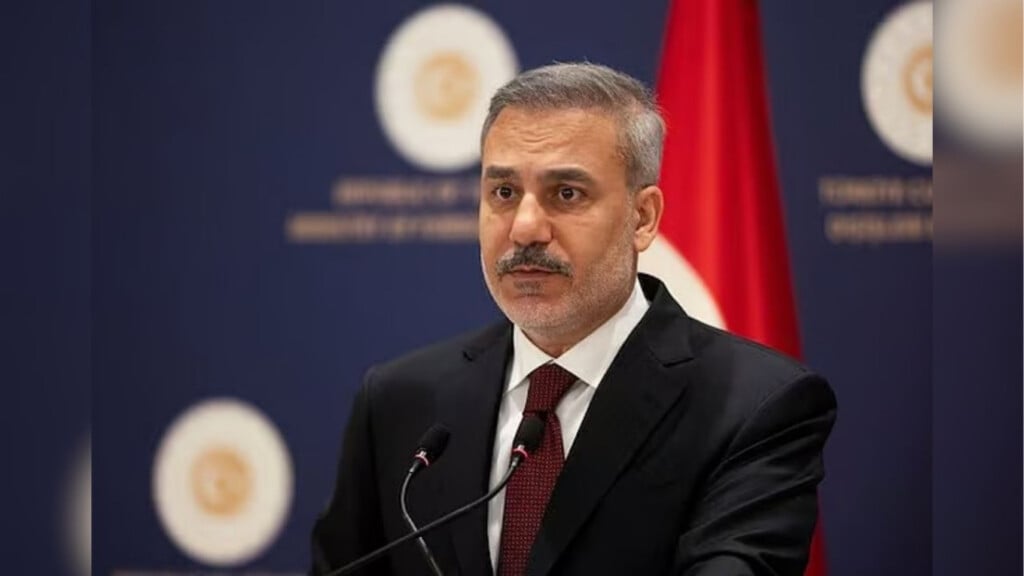
In Turkey, Foreign Minister Hakan Fidan convened a significant meeting in Ankara on Wednesday with the United States Ambassador and the Special Envoy for Syrian Affairs, Tom Barrack. Although the Turkish Foreign Ministry remained characteristically tight-lipped regarding the specific nuances of the dialogue, the timing is telling. Turkey, possessing the second-largest military in NATO while maintaining a complex pragmatic relationship with Tehran, is uniquely positioned to act as a backchannel.
The urgency of Ankara’s role is underscored by reports from the Iranian Foreign Ministry. Spokesman Esmail Baghaei confirmed that the Iranian Foreign Minister, Abbas Araghchi, is scheduled for an official state visit to Turkey this Friday. This visit is expected to focus on de-escalating military posturing and addressing the spillover effects of the conflict into Northern Syria.
Islamabad’s Call for Restraint
Simultaneously, Pakistan has entered the diplomatic fray. Ishaq Dar, Pakistan’s Deputy Prime Minister and Foreign Minister, held an extensive telephonic consultation with his Iranian counterpart, Abbas Araghchi. In a statement released on the social media platform X, the Pakistani Foreign Ministry expressed profound concern over the deteriorating regional security architecture.
Minister Dar emphasised that “dialogue and diplomacy remain the only viable paths forward,” echoing Islamabad’s long-standing policy of neutrality and its desire to prevent the instability from encroaching upon the Balochistan border region. The two leaders have reportedly agreed to maintain “constant and close communication” as the situation evolves.
Key Diplomatic Engagements
| Diplomatic Actor | Counterpart | Primary Objective | Status |
|---|---|---|---|
| Hakan Fidan (TR) | Tom Barrack (US Envoy) | De-escalation & Regional Security | Completed |
| Ishaq Dar (PK) | Abbas Araghchi (IR) | Crisis Management & Dialogue | Telephonic |
| Abbas Araghchi (IR) | Turkish Leadership | Formal State Visit | Friday (Pending) |
The Regional Stakes
The coordinated efforts by Turkey and Pakistan highlight a shared fear: that a direct confrontation between Washington and Tehran could destabilise the entire Islamic world. For Turkey, the concern is a new wave of refugees and the empowerment of Kurdish militias. For Pakistan, the risk involves energy security and internal sectarian harmony.
As Araghchi prepares for his visit to Ankara, the international community watches closely. The success of these “middle-power” mediators may represent the last line of defence against a full-scale regional war.