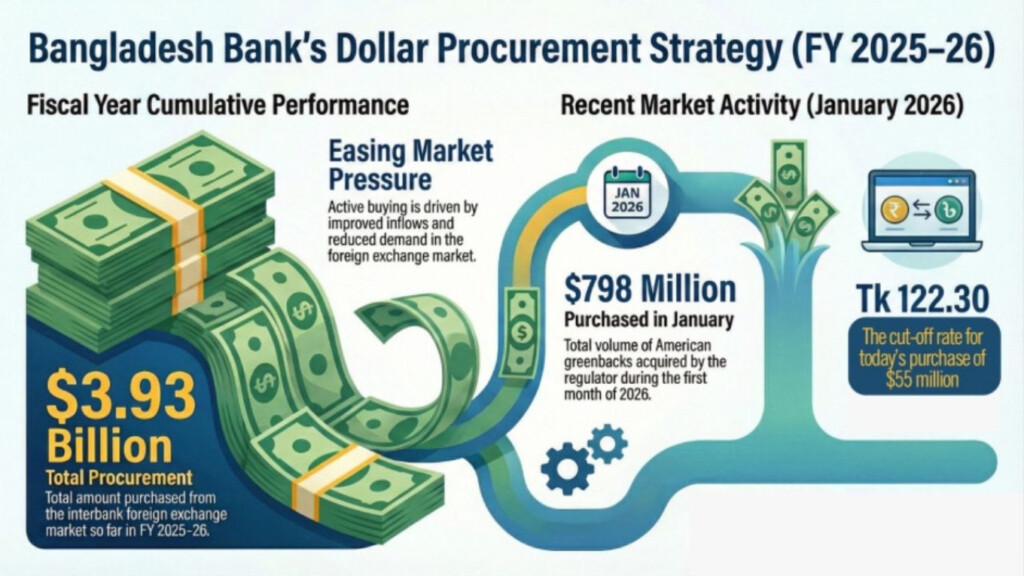
In a decisive shift in monetary policy, Bangladesh Bank (BB) has aggressively intervened in the foreign exchange market, purchasing approximately $3.93 billion since the commencement of the 2025–26 fiscal year (FY26). This strategic accumulation of the US dollar marks a significant departure from previous years, reflecting a newfound stability in the country’s external sector and an effort to manage burgeoning dollar liquidity.
A Reversal of Fortune
The central bank’s recent activity serves as a stark contrast to the period between FY21 and FY25, during which the regulator was forced to divest more than $25 billion from its reserves. Those sales were essential to facilitate the import of critical commodities, including fuel, fertiliser, and food, amidst a global surge in prices. However, since the start of the current fiscal year in July, improved export earnings and a robust uptick in overseas remittances have flipped the script, allowing the regulator to transition from a seller to a prolific buyer.
On the most recent day of trading, the banking watchdog acquired $55 million from five commercial banks. The transaction was settled at an exchange rate of Tk 122.30 per US dollar, which has established itself as the prevailing cut-off rate.
Monthly Trajectory and Reserve Health
January 2026 has proven particularly active, with total dollar purchases for the month reaching $798 million. This consistent intervention has provided a much-needed cushion to the national reserves, which have seen a steady appreciation throughout the month.
| Metric | Value (USD) | Reporting Standard |
|---|---|---|
| Total Purchases (FY26 to date) | $3.93 Billion | BB Internal Records |
| January 2026 Purchases | $798 Million | BB Internal Records |
| Gross Forex Reserves (Jan 22) | $32.66 Billion | BB Traditional Method |
| Net Forex Reserves (Jan 22) | $28.06 Billion | IMF BPM6 Standard |
Strategic Implications
The appreciation of the Bangladeshi Taka against the greenback since early July has granted the central bank the leverage to absorb excess supply without triggering inflationary pressures. Officials suggest that while the primary goal is to bolster the “war chest” of reserves, these purchases also serve to prevent the Taka from appreciating too rapidly, which could potentially hurt export competitiveness.
Despite the optimistic gross figures, the central bank remains mindful of the International Monetary Fund’s (IMF) BPM6 manual, which places the net reserves at a more conservative $28.06 billion. This gap underscores the importance of continued accumulation as the government seeks to meet international benchmarks and ensure long-term fiscal resilience.