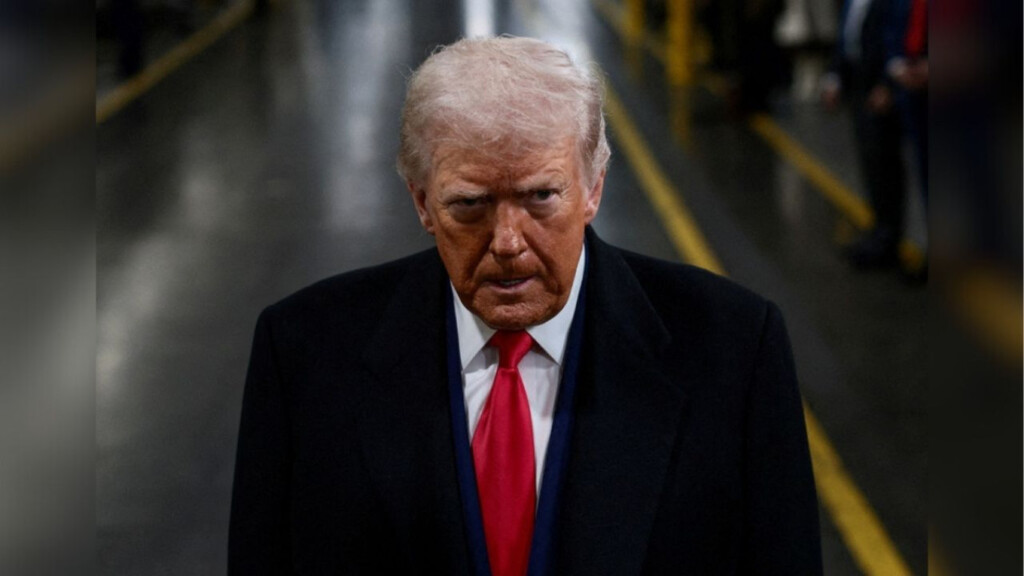
In a dramatic escalation of his administration’s “maximum pressure” campaign, US President Donald Trump announced late on Thursday a fresh directive aimed at crippling the energy lifelines of communist-ruled Cuba. Invoking powers under a declared national emergency, the President signed an executive order threatening to impose stiff trade tariffs on any nation that continues to supply oil to the Caribbean island, a move intended to isolate one of Washington’s oldest geopolitical adversaries.
Strategic Leverage and National Security
While the executive order provides the legal framework for these economic penalties, it notably stops short of specifying exact tariff percentages or naming the specific countries targeted. President Trump framed the measure as a vital necessity for safeguarding “American national security and foreign policy” against what he described as the “malign activities and detrimental policies” of the Cuban administration.
The timing of the order appears linked to the recent geopolitical shift in the region. Following the recent detention of former Venezuelan President Nicolás Maduro by US forces, Trump has intensified his rhetoric against the Cuban leadership. He asserted earlier this week that “Cuba will collapse very soon,” noting that Venezuela—once the island’s primary benefactor—is no longer in a position to subsidise Havana with petroleum or financial aid.
A Humanitarian and Economic Crisis
The Cuban government reacted with swift and stinging condemnation. President Miguel Díaz-Canel dismissed Trump’s justifications as entirely baseless, characterising the move as a display of “fascist, criminal, and genocidal” intent.
State media outlets in Havana warned that these measures could prove catastrophic for an island already reeling from its worst economic crisis in decades. The potential disruption of fuel supplies threatens to paralyse essential services across the country.
| Sector at Risk | Potential Impact of Oil Embargo |
|---|---|
| Power Grid | Increased frequency of nationwide blackouts and grid failure. |
| Agriculture | Crippling of mechanised farming and food distribution networks. |
| Healthcare | Disruption of hospital generators and refrigerated medicine storage. |
| Water Supply | Failure of electric pumping stations serving urban centres. |
Violation of International Norms
Foreign Minister Bruno Rodríguez denounced the threat as a flagrant violation of international law. He accused the United States of using “blackmail and coercion” to force third-party nations into adhering to an embargo that has been widely condemned by the United Nations General Assembly for over thirty years.
“They are resorting to arbitrary and abusive tariffs that violate all established rules of free trade,” Rodríguez stated, arguing that the policy holds the welfare of the Cuban people hostage to the personal political interests of the US leadership.
As Donald Trump continues to utilise tariffs as a primary instrument of his second-term foreign policy, the international community watches closely to see which oil-exporting nations will defy the mandate and risk a trade war with the world’s largest economy.