With just three days remaining before Bangladesh’s 13th general election, the caretaker government is preparing to sign a bilateral tariff agreement with the United States, a move that has raised questions and concerns among the country’s business community. The signing is scheduled for Monday, 9 February, in Washington, D.C.
The responsibility for implementing the agreement will fall to the next elected government. However, the draft text and terms of the deal have not yet been made public, leaving traders and analysts uncertain about its implications.
The government has previously signed a non-disclosure agreement (NDA) with the United States, which restricts disclosure of the deal’s contents. This secrecy has become the primary source of concern among business leaders, who are uncertain about what concessions or conditions might be included.
Exporters acknowledge potential benefits. According to Inamul Haque Khan, Senior Vice President of the Bangladesh Garment Manufacturers and Exporters Association (BGMEA), the tariff agreement could reduce US tariffs on Bangladeshi products from 20% to an estimated 15%. However, he emphasised that understanding the draft’s provisions is crucial to determine who might benefit or face losses.
Domestic-focused businesses have expressed similar apprehensions. Taskeen Ahmed, President of the Dhaka Chamber of Commerce, noted that, without access to the draft, it is difficult to comment. He argued that such agreements are more appropriately negotiated by an elected government, which enjoys a direct mandate from the people.
Experts stress that the deal’s significance extends beyond tariffs, encompassing economic, political, and geopolitical dimensions. Debapriya Bhattacharya, Senior Fellow at the Centre for Policy Dialogue (CPD), commented that the lack of transparency precludes a thorough assessment of potential advantages and drawbacks. “Post-election negotiations would have allowed political parties to scrutinise the agreement,” he noted.
Government sources indicate that the agreement covers tariff and non-tariff barriers, digital trade and technology, rules of origin, national security provisions, and other trade-related conditions. It may also include measures to reduce the bilateral trade deficit through imports of US agricultural products, aircraft parts, and LNG.
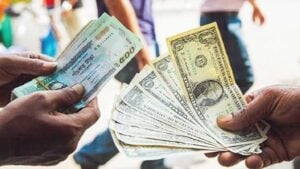
Currently, Bangladesh exports nearly $6 billion worth of goods to the United States, while importing around $2 billion. Business leaders fear that expanding the Bangladeshi market to accommodate US goods could disproportionately benefit the latter.
Key US-Bangladesh Trade Figures
| Indicator | Value (Approx.) | Notes |
|---|---|---|
| Bangladesh exports to US | $6 billion | Predominantly garments and textiles |
| Bangladesh imports from US | $2 billion | Includes machinery, aircraft parts, agricultural products |
| Current US tariff on Bangladeshi goods | 20% | Could fall to 15% under agreement |
Analysts argue that it is highly unusual for a caretaker government to sign such an agreement just days before an election. The hurried process has intensified debates about transparency and accountability.
This decision comes alongside other significant caretaker government policies, such as long-term port terminal agreements with foreign operators in Chattogram, which are expected to have long-term economic implications.
When asked about the US and other international deals, National Security Adviser Khalilur Rahman described the process as ongoing, avoiding specifics. Experts caution that such pre-election agreements may constrain the incoming government’s policy space and merit careful scrutiny.